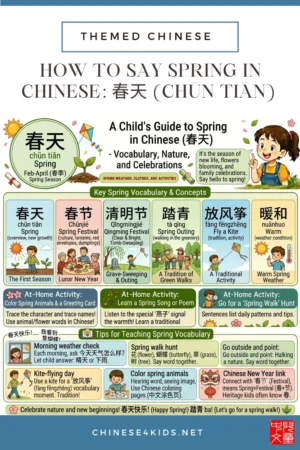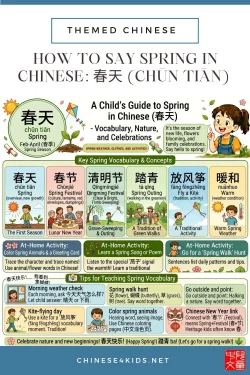
Spring is one of the most beloved seasons in Chinese culture.
It brings warmth, new growth, and two of the most important festivals in the Chinese calendar — Chinese New Year and Qingming Festival.
For children learning Mandarin, spring is a wonderful vocabulary theme. It connects language to nature, weather, clothes, animals, flowers, and celebrations they can see and touch in real life.
Quick Answer: How to Say Spring in Chinese
| English | Chinese | Pinyin |
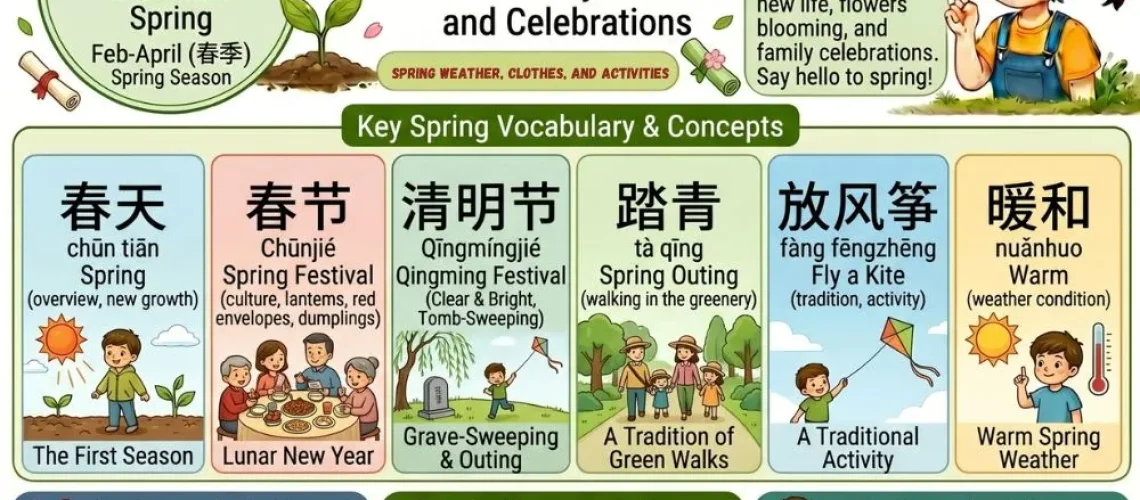
| Spring | 春天 | chūn tiān |
| Spring (formal) | 春季 | chūn jì |
| Spring Festival | 春节 | Chūnjié |
| Spring breeze | 春风 | chūn fēng |
| Spring rain | 春雨 | chūn yǔ |
Spring in Chinese is 春天 (chūn tiān). The word 天 means sky or day, giving the feeling of “the days of spring” — when the sky brightens and warmth returns.
Definition
Spring in Chinese: 春天 (chūn tiān)
Character: 春
Pinyin: chūn (1st tone) + tiān (1st tone)
Meaning: The first of the four seasons. In China, spring begins with the lunar new year and runs through to early summer. It is the season of new beginnings, blooming flowers, and family celebrations.
The four seasons together: 春夏秋冬 (chūn xià qiū dōng) — spring, summer, autumn, winter
→ Learn all four seasons in our complete guide: What Are the Four Seasons in Chinese? 春夏秋冬
What Does 春 Mean?
The character 春 is one of the most culturally rich characters in Chinese.
It originally had three components:
| Component | Chinese | Role in 春 |
| 艸 | cǎo | semantic — grass, plants |
| 屯 | tún | phonetic + semantic — a sprout pushing through the soil |
| 日 | rì | semantic — the sun |
In the original older form of the character (written 萅), all three components were clearly visible. Over time, 艸 and 屯 merged together into the upper portion of the modern character 春, with 日 (sun) sitting below.
Together, 春 paints a vivid picture: the sun warming the soil, grass sprouting, a bud pushing upward through the ground. Growth. Renewal. New life.
This is why 春 is used not just for the season, but in many words connected to hope and beginnings:
| Chinese | Pinyin | Meaning |
| 春天 | chūn tiān | spring |
| 春节 | Chūnjié | Spring Festival (Chinese New Year) |
| 春风 | chūn fēng | spring breeze |
| 春雨 | chūn yǔ | spring rain |
| 春联 | chūnlián | Spring Festival couplets (red banners) |
| 青春 | qīngchūn | youth (literally “green spring”) |
Teaching tip: Show children the character 春 and point out the sun at the bottom. Ask: “What happens when the sun warms the ground in spring?” Let them draw plants growing around the character.
Listen and Repeat
- 春天 — chūn tiān (spring)
- 春节 — Chūnjié (Spring Festival)
- 春风 — chūn fēng (spring breeze)
- 暖和 — nuǎnhuo (warm)
- 下雨 — xià yǔ (raining)
- 放风筝 — fàng fēngzhēng (fly a kite)
Listen to each word and repeat it out loud. Pay attention to the tones. 春 is 1st tone — long and flat, like you’re singing one steady note.
Spring Weather in Chinese
Spring weather in China is warm and changeable. It can be sunny one day and rainy the next — perfect for talking about the weather in Chinese every morning!
| Chinese | Pinyin | English |
| 天气 | tiānqì | weather |
| 暖和 | nuǎnhuo | warm |
| 晴天 | qíng tiān | sunny day |
| 下雨 | xià yǔ | raining |
| 春雨 | chūn yǔ | spring rain |
| 刮风 | guā fēng | windy |
| 春风 | chūn fēng | spring breeze |
| 多云 | duōyún | cloudy |
| 雷阵雨 | léi zhèn yǔ | thunderstorm |
| 彩虹 | cǎihóng | rainbow |
Useful daily question:
今天天气怎么样?
Jīntiān tiānqì zěnme yàng?
What is the weather like today?
On a warm spring morning, you can say:
今天很暖和,是春天!
Jīntiān hěn nuǎnhuo, shì chūntiān!
Today is warm — it’s spring!
→ Learn more weather vocabulary: Weather in Chinese — Talk About the Weather with Kids
Spring Clothes in Chinese
As the weather warms up, children change what they wear. Getting dressed is a perfect daily moment to practise clothes vocabulary in Chinese.
| Chinese | Pinyin | English |
| 薄外套 | báo wàitào | light jacket |
| T恤 | T xù | T-shirt |
| 牛仔裤 | niúzǎikù | jeans |
| 运动鞋 | yùndòngxié | trainers / sneakers |
| 雨衣 | yǔyī | raincoat |
| 雨靴 | yǔxuē | rain boots |
| 帽子 | màozi | hat |
| 围巾 | wéijīn | scarf (for cool spring mornings) |
Spring clothes tip: Spring mornings can be cool even when afternoons are warm. This makes it a great opportunity to talk about layering:
早上穿外套,下午脱外套。
Zǎoshang chuān wàitào, xiàwǔ tuō wàitào.
Wear a jacket in the morning, take it off in the afternoon.
🧥 Resource: Our Seasonal Clothes Theme Chinese Learning Pack covers all four seasons with flashcards, a word wall poster, vocabulary quiz, and audio. Print once and use all year.
Spring Activities in Chinese
Spring invites children outside. These activity words are easy to connect to real outings and play.
| Chinese | Pinyin | English |
| 放风筝 | fàng fēngzhēng | fly a kite |
| 赏花 | shǎng huā | admire flowers |
| 种花 | zhòng huā | plant flowers |
| 种树 | zhòng shù | plant a tree |
| 踏青 | tà qīng | spring outing (walking in the greenery) |
| 春游 | chūn yóu | spring trip / school outing |
| 捉蝴蝶 | zhuō húdié | catch butterflies |
| 野餐 | yěcān | picnic |
| 爬山 | pá shān | go hiking / climb a hill |
| 放学后去公园 | fàngxué hòu qù gōngyuán | go to the park after school |
踏青 (tà qīng) is a particularly beautiful spring tradition. It means going for a walk in the fresh green countryside — a custom Chinese families have practiced for over a thousand years.
春天来了,我们去踏青吧!
Chūntiān lái le, wǒmen qù tà qīng ba!
Spring is here — let’s go for a spring walk!
Spring Festivals in Chinese
Spring is the most festive season in Chinese culture. Two major holidays fall in spring, each with its own rich vocabulary and traditions.
春节 — Chinese New Year (Spring Festival)
春节 (Chūnjié) is the most important festival in the Chinese calendar. It marks the start of the lunar new year and falls between late January and mid-February.
The name literally means Spring Festival — a sign of hope and renewal for the new year ahead.
| Chinese | Pinyin | English |
| 春节 | Chūnjié | Spring Festival / Chinese New Year |
| 春节快乐 | Chūnjié kuàilè | Happy Spring Festival |
| 恭喜发财 | Gōngxǐ fācái | Wishing you wealth and prosperity |
| 红包 | hóngbāo | red envelope (lucky money) |
| 春联 | chūnlián | Spring Festival couplets |
| 年夜饭 | nián yè fàn | New Year’s Eve reunion dinner |
| 饺子 | jiǎozi | dumplings |
| 鞭炮 | biānpào | firecrackers |
| 灯笼 | dēnglong | lantern |
| 压岁钱 | yāsuìqián | lucky money given to children |
→ Learn more greetings: Lucky Phrases for Chinese New Year → Read our Chinese New Year activity guide: 8 Fun Chinese New Year-Themed Games for Kids
清明节 — Qingming Festival (Tomb-Sweeping Day)
清明节 (Qīngmíngjié) falls on April 4th or 5th each year — 15 days after the spring equinox.
The name 清明 means Clear and Bright — a description of the spring sky at this time of year.
Qingming is a day for families to visit the graves of ancestors, sweep and tidy the tombs, and pay their respects. It is also a spring celebration — families go on outings, fly kites, and enjoy the fresh greenery.
This festival is observed not only in mainland China but also in Taiwan, Hong Kong, Singapore, Malaysia, and Chinese communities around the world.
| Chinese | Pinyin | English |
| 清明节 | Qīngmíngjié | Qingming Festival / Tomb-Sweeping Day |
| 扫墓 | sǎo mù | sweep the tomb / visit graves |
| 祭祖 | jì zǔ | honour ancestors |
| 踏青 | tà qīng | spring outing |
| 放风筝 | fàng fēngzhēng | fly a kite |
| 柳树 | liǔ shù | willow tree |
| 柳枝 | liǔ zhī | willow branch |
| 青团 | qīng tuán | green rice balls (traditional Qingming food) |
Cultural note for parents: Qingming can feel like a solemn topic for young children. Keep it simple and age-appropriate: “This is a day when Chinese families remember the people they love who have passed away. They visit the graves, bring flowers, and go for a walk in the spring sunshine.”
→ Read more about this festival: Qingming Festival 清明节 → Spring and Easter connections: Learning Chinese During Easter: Fun Activities for Kids → All Chinese festivals: Celebrations, Festivals, and Special Occasions in Chinese Culture
Spring Animals in Chinese
Spring brings animals back to life. This vocabulary is rich, visual, and perfect for young learners.
| Chinese | Pinyin | English |
| 蝴蝶 | húdié | butterfly |
| 蜜蜂 | mìfēng | bee |
| 瓢虫 | piáochóng | ladybug |
| 蚯蚓 | qiūyǐn | earthworm |
| 燕子 | yànzi | swallow (the spring bird) |
| 青蛙 | qīngwā | frog |
| 小鸡 | xiǎo jī | chick |
| 兔子 | tùzi | rabbit |
| 蜗牛 | wōniú | snail |
| 毛毛虫 | máomao chóng | caterpillar |
The swallow (燕子, yànzi) is a special spring symbol in Chinese culture. Its return each year signals the arrival of warm weather. There is even a famous Chinese saying:
一燕不成春。
Yī yàn bù chéng chūn.
One swallow does not make a spring.
This proverb means you cannot draw conclusions from a single sign — very similar to the English equivalent!
🐦 Resource: Our Spring Animal Chinese Coloring Pages feature 20 spring animals with Chinese characters, pinyin, and English labels. Children color each animal and trace the Chinese character. Perfect for ages 3–8, and great for Easter holiday learning.
Spring Flowers in Chinese
Flowers are central to spring in Chinese culture — in art, poetry, and everyday life.
The plum blossom (梅花, méihuā) and peach blossom (桃花, táohuā) are two of the most beloved spring flowers in Chinese art and poetry. You will often see them in traditional ink paintings.
| Chinese | Pinyin | English |
| 花 | huā | flower |
| 开花 | kāi huā | to bloom |
| 梅花 | méihuā | plum blossom |
| 桃花 | táohuā | peach blossom |
| 樱花 | yīnghuā | cherry blossom |
| 郁金香 | yùjīnxiāng | tulip |
| 玫瑰 | méiguī | rose |
| 向日葵 | xiàngrìkuí | sunflower |
| 草 | cǎo | grass |
| 树叶 | shùyè | leaves (new leaves on trees) |
A famous spring image in Chinese poetry:
The plum blossom 梅花 blooms in late winter and early spring — even in the snow. It is a symbol of resilience and hope. Many Chinese children learn poems about 梅花 in primary school.
Art connection: Show children a traditional Chinese ink painting of plum blossoms. Point to each branch and ask: 这是什么花?(Zhè shì shénme huā?) “What flower is this?”
Sentence Patterns for Spring
Practise these sentences with your child. They are short, natural, and easy to use in everyday conversation.
Spring:
- 春天来了!(Chūntiān lái le!) — Spring is here!
- 我喜欢春天。(Wǒ xǐhuān chūntiān.) — I like spring.
- 春天很暖和。(Chūntiān hěn nuǎnhuo.) — Spring is warm.
- 春天是我最喜欢的季节。(Chūntiān shì wǒ zuì xǐhuān de jìjié.) — Spring is my favourite season.
Weather:
- 今天很暖和。(Jīntiān hěn nuǎnhuo.) — Today is warm.
- 春天有时下雨。(Chūntiān yǒushí xià yǔ.) — Sometimes it rains in sprin
- 外面在刮风。(Wàimiàn zài guā fēng.) — It’s windy outside.
Activities:
- 我想去放风筝。(Wǒ xiǎng qù fàng fēngzhēng.) — I want to go fly a kite.
- 我们去赏花吧!(Wǒmen qù shǎng huā ba!) — Let’s go look at the flowe
- 我看到一只蝴蝶!(Wǒ kàndào yī zhī húdié!) — I saw a butterfly!
Getting Dressed:
- 春天穿薄外套。(Chūntiān chuān báo wàitào.) — Wear a light jacket in spring.
- 今天要带雨伞。(Jīntiān yào dài yǔsǎn.) — Bring an umbrella today.
Tips for Teaching Spring Vocabulary
Spring is one of the easiest seasons to teach in Chinese — because it happens right outside the window.
Here are practical ways to connect vocabulary to real spring moments:
1. Morning weather check.
Each morning, look outside together and ask 今天天气怎么样?Let your child answer in Chinese — even just 晴天 or 下雨 is a great start.
2. Spring walk vocabulary hunt.
Go outside and point to things you know in Chinese: 花 (flower), 蝴蝶 (butterfly), 草 (grass), 树 (tree). Say the word together when you spot it.
3. Kite-flying day.
When you fly a kite, use it as a 放风筝 vocabulary moment. Spring kite-flying is a tradition for Qingming — and a joy that needs no translation.
4. Color spring animals.
Coloring is low-pressure repetition. Children hear the word, see the image, and color it in — all at once. Use Spring Animal Chinese Coloring Pages for simple, focused practice.
5. Chinese New Year springtime link.
If you celebrate Chinese New Year with your child, draw the connection: 春节 means Spring Festival. Spring = 春. New Year = spring. This makes 春 one of the first characters many heritage children already know.
Resources for Spring Chinese Vocabulary
🆓 Free Articles on Chinese4kids.net
- What Are the Four Seasons in Chinese? 春夏秋冬 — hub article for all four seasons
- Weather in Chinese — Talk About the Weather with Kids
- Qingming Festival 清明节 — dedicated Qingming article
- Learning Chinese During Easter: Fun Activities for Kids
- Lucky Phrases for Chinese New Year
- 8 Fun Chinese New Year-Themed Games for Kids
- Celebrations, Festivals, and Special Occasions in Chinese Culture
- Insects in Chinese Vocabulary — bees, butterflies, and more spring creatures
🛍️ Printable Products (Instant Download)
- Spring Animal Chinese Coloring Pages — 20 spring animals, coloring + character tracing, ages 3–8
- Seasonal Clothes Theme Chinese Learning Pack — flashcards, word wall, quiz, audio for all four seasons
- Chinese Monthly Coloring Pages (12 months) — spring months include March, April, and May themed pages
-
Chinese Visual Calendar for Kids – an interactive calendar that invites kids to talk about the dates, weather, and more
📚 Membership & Courses
- Chinese4kids Membership — access all worksheets, flashcard library, and coloring pages
- Speak Chinese with Kids Course — for parents who want to use Mandarin naturally at home
Quick Reference: Spring in Chinese
| English | Chinese | Pinyin | Tone |
| Spring | 春天 | chūn tiān | 1st + 1st |
| Spring Festival | 春节 | Chūnjié | 1st + 2nd |
| Warm | 暖和 | nuǎnhuo | 3rd + neutral |
| Sunny | 晴天 | qíng tiān | 2nd + 1st |
| Rainy | 下雨 | xià yǔ | 4th + 3rd |
| Butterfly | 蝴蝶 | húdié | 2nd + 2nd |
| Flower | 花 | huā | 1st |
| Kite | 风筝 | fēngzhēng | 1st + 1st |
| Fly a kite | 放风筝 | fàng fēngzhēng | 4th + 1st + 1st |
| Plum blossom | 梅花 | méihuā | 2nd + 1st |
| Cherry blossom | 樱花 | yīnghuā | 1st + 1st |
Frequently Asked Questions
How do you say spring in Chinese?
Spring in Chinese is 春天 (chūn tiān). The character 春 contains the sun radical 日 at the bottom, representing the return of warmth and the start of new growth.
What does 春天 mean?
春天 (chūn tiān) means spring. 春 means spring, and 天 means sky or day. Together, 春天 gives the feeling of “the days of spring” — the bright, warm days when nature comes back to life.
What does 春 mean in Chinese?
The character 春 means spring. It is composed of elements representing plants, the sun, and new growth. It also appears in 春节 (Spring Festival / Chinese New Year) and 青春 (youth).
What season is Chinese New Year?
Chinese New Year is a spring festival. It is called 春节 (Chūnjié), meaning Spring Festival. It falls between late January and mid-February on the lunar calendar, marking the start of spring and the new year.
What is Qingming Festival?
Qingming Festival (清明节, Qīngmíngjié) is a traditional Chinese spring festival falling around April 4th–5th each year. Families visit ancestors’ graves to sweep the tombs and pay their respects. It is also a spring celebration — families go on outings, fly kites, and enjoy the fresh season. Learn more: Qingming Festival 清明节
How do you say “spring is warm” in Chinese?
“Spring is warm” in Chinese is 春天很暖和 (Chūntiān hěn nuǎnhuo). You can also say 今天很暖和 (Jīntiān hěn nuǎnhuo) — “Today is warm” — when getting dressed in the morning.
What animals are associated with spring in Chinese culture?
The swallow 燕子 (yànzi) is the most iconic spring animal in Chinese culture — its return each year signals that spring has arrived. Other spring animals include the butterfly 蝴蝶 (húdié), bee 蜜蜂 (mìfēng), frog 青蛙 (qīngwā), and chick 小鸡 (xiǎo jī).
What flowers are associated with spring in Chinese culture?
The plum blossom 梅花 (méihuā) and peach blossom 桃花 (táohuā) are the most celebrated spring flowers in Chinese art and poetry. Cherry blossoms 樱花 (yīnghuā) are also popular in spring.
Summary
Spring in Chinese — 春天 (chūn tiān) — is one of the richest vocabulary themes in Mandarin for kids.
From weather words to festival greetings, from butterflies to plum blossoms, spring connects language to nature and culture in ways children remember naturally.
Start with the season name 春天. Add the weather (暖和, 下雨). Move on to activities (放风筝) and festivals (春节). Let real spring moments — kite-flying, flower walks, and morning weather checks — do the teaching.
你喜欢春天吗?Does your child love spring? Tell us in the comments!
If you like this article, share it