
Quick Answer
The most important Chinese New Year lucky phrase is 恭喜发财 (Gōng xǐ fā cái) — “Wishing you happiness and prosperity.” The four most commonly used greetings are 新年好, 过年好, 新年快乐, and 恭喜发财. Beyond these, lucky phrases (吉祥话 jíxiáng huà) are grouped by theme: good luck, health, family, and career/study.
The most important Chinese New Year lucky phrase is 恭喜发财 (Gōng xǐ fā cái) — “Wishing you happiness and prosperity.” The four most commonly used greetings are 新年好, 过年好, 新年快乐, and 恭喜发财. Beyond these, lucky phrases (吉祥话 jíxiáng huà) are grouped by theme: good luck, health, family, and career/study.
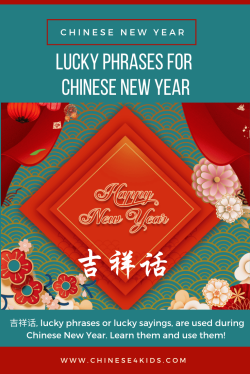
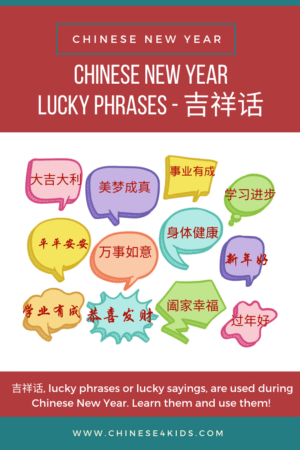
During Chinese New Year, Chinese people greet each other with 吉祥话 (jíxiáng huà) — literally “lucky talk.” These aren’t just pleasantries. They carry genuine wishes: for health, for prosperity, for family harmony, for a good year ahead. The right phrase said at the right moment is one of the most meaningful things you can offer someone during Spring Festival.
For children growing up outside China, learning these Mandarin New Year phrases is more than a language exercise. It’s a way to participate in family celebrations, connect with relatives, and feel that Chinese is a real, living language — not just something that happens in a classroom. A child who can say 恭喜发财 to a grandparent on a video call has experienced genuine communication in Chinese. That experience builds intrinsic motivation that no textbook can replicate.
Language researchers call this comprehensible input in context — the principle that language sticks fastest when it’s used in emotionally meaningful situations, not drilled in isolation. Chinese New Year is one of the richest natural contexts for this that overseas families have. The phrases in this guide are short, culturally embedded, and surrounded by colour, food, and family — exactly the conditions that make new language memorable.
This guide covers all the essential Chinese New Year lucky phrases and Spring Festival greetings — organized by category, with pinyin, meaning, pronunciation guidance, and practical notes on when and how to use them.
The Essential Chinese New Year Phrases at a Glance
| Chinese | Pinyin | Meaning | Best used with |
|---|---|---|---|
| 新年好 | Xīn nián hǎo | Have a good new year! | Everyone, any age, casual |
| 过年好 | Guò nián hǎo | Happy New Year! | Everyone; slightly warmer and more traditional than 新年好 |
| 新年快乐 | Xīn nián kuài lè | Happy New Year! | Everyone; modern, widely used in media and cards |
| 恭喜发财 | Gōng xǐ fā cái | Wishing you happiness and prosperity! | Adults, especially in business contexts; the most iconic CNY phrase globally |
| 身体健康 | Shēn tǐ jiàn kāng | Good health to you | Elders, grandparents; deeply appreciated by older generations |
| 万事如意 | Wàn shì rú yì | May all go well with you | Everyone; elegant, suitable for cards and formal greetings |
| 学业有成 | Xué yè yǒu chéng | Achievement in study | Children and students; parents love saying this to kids |
| Situation | Best Phrase(s) | Why It Works |
|---|---|---|
| Video call with grandparents | 过年好 + 身体健康 | Warm, traditional tone; health wish is especially meaningful to elders |
| WeChat message to relatives | 新年快乐 + 万事如意 | Modern, versatile; works for any age or relationship |
| Red envelope (hóngbāo) moment | 恭喜发财 + 红包拿来 (playful) | Classic pairing; children will love the red envelope phrase |
| Greeting a teacher or elder | 恭喜发财 or 过年好 | Shows respect and cultural knowledge |
| Wishing a child good results at school | 学习进步 or 学业有成 | Parents love using these with children; children love to say them too |
| Spring Festival card or decoration | 吉祥如意 or 万事如意 | Classical 4-character phrases look elegant in calligraphy or printed form |
| New Year’s Eve dinner toast | 阖家欢乐 + 年年有余 | Family-centred; celebrates reunion and abundance |
Whom Are These Lucky Phrases Best For
- Best for young children (ages 3–7)
Start with just two: 新年好 and 恭喜发财. These are short, memorable, and will delight every adult they say them to.
- Best for older children (ages 8–12)< Add 身体健康 for grandparents and 学习进步 for classmates. Four phrases used correctly signals real cultural fluency./li>
- Best for parents who aren’t fluent
新年快乐 and 万事如意 are easy to pronounce and universally understood. Learn these two and you’re ready for any CNY moment.
- Best for classroom use
Teach one phrase per day in the week before Chinese New Year. By festival day, children know seven phrases and can greet in a genuine cultural context.
The Complete 吉祥话 Library by Category
Lucky phrases in Chinese are organized by what they wish for. Knowing the category helps you choose the right phrase for the right person — and helps children understand that these aren’t random words, but deliberate expressions of care.
Most Commonly Used — Learn These First
新年好
Xīn nián hǎo
Have a good new year!
The simplest and friendliest greeting. Suitable for everyone. Children can say this to teachers, neighbors, and family members confidently.
Xīn nián hǎo
Have a good new year!
The simplest and friendliest greeting. Suitable for everyone. Children can say this to teachers, neighbors, and family members confidently.
过年好
Guò nián hǎo
Happy New Year!
Slightly warmer and more traditional than 新年好. The character 过 (to pass/celebrate) gives it a sense of actively celebrating the new year together.
Guò nián hǎo
Happy New Year!
Slightly warmer and more traditional than 新年好. The character 过 (to pass/celebrate) gives it a sense of actively celebrating the new year together.
新年快乐
Xīn nián kuài lè
Happy New Year!
The most widely used modern greeting. Appears in songs, cards, and media. If your child learns only one phrase, this is a solid choice.
Xīn nián kuài lè
Happy New Year!
The most widely used modern greeting. Appears in songs, cards, and media. If your child learns only one phrase, this is a solid choice.
恭喜发财
Gōng xǐ fā cái
Wishing you happiness and prosperity!
The iconic Chinese New Year phrase. Recognized across all Chinese-speaking communities worldwide. Often paired with red envelope giving — the perfect combination.
Gōng xǐ fā cái
Wishing you happiness and prosperity!
The iconic Chinese New Year phrase. Recognized across all Chinese-speaking communities worldwide. Often paired with red envelope giving — the perfect combination.
Lucky Phrases for Good Fortune
万事如意
Wàn shì rú yì
May all things go as you wish
万 = ten thousand; 事 = things; 如意 = as wished. One of the most elegant all-purpose blessings. Works in cards, speeches, and face-to-face greetings.
Wàn shì rú yì
May all things go as you wish
万 = ten thousand; 事 = things; 如意 = as wished. One of the most elegant all-purpose blessings. Works in cards, speeches, and face-to-face greetings.
心想事成
Xīn xiǎng shì chéng
May all your wishes come true
心 = heart; 想 = think/wish; 事成 = things accomplished. A dream-focused blessing. Children love this one — it sounds magical and isn’t hard to say.
Xīn xiǎng shì chéng
May all your wishes come true
心 = heart; 想 = think/wish; 事成 = things accomplished. A dream-focused blessing. Children love this one — it sounds magical and isn’t hard to say.
大吉大利
Dà jí dà lì
Great luck and great profit
Punchy and enthusiastic. Very popular in Cantonese communities. Often shouted as a toast at the New Year’s Eve dinner table.
Dà jí dà lì
Great luck and great profit
Punchy and enthusiastic. Very popular in Cantonese communities. Often shouted as a toast at the New Year’s Eve dinner table.
吉祥如意
Jí xiáng rú yì
Good fortune as you wish
Contains 吉祥 — the same word used in 吉祥话 (lucky phrases). A natural phrase to teach alongside explaining why we say these things.
Jí xiáng rú yì
Good fortune as you wish
Contains 吉祥 — the same word used in 吉祥话 (lucky phrases). A natural phrase to teach alongside explaining why we say these things.
一帆风顺
Yì fān fēng shùn
Smooth sailing through life
A nautical metaphor: one sail, a following wind. Wishes the recipient a year of ease and smooth progress. It is often used when someone is starting a new venture or journey.
Yì fān fēng shùn
Smooth sailing through life
A nautical metaphor: one sail, a following wind. Wishes the recipient a year of ease and smooth progress. It is often used when someone is starting a new venture or journey.
美梦成真
Měi mèng chéng zhēn
May beautiful dreams come true
美 = beautiful; 梦 = dream; 成真 = come true. A poetic blessing that resonates with children and idealists. Often seen on CNY cards and gifts.
Měi mèng chéng zhēn
May beautiful dreams come true
美 = beautiful; 梦 = dream; 成真 = come true. A poetic blessing that resonates with children and idealists. Often seen on CNY cards and gifts.
Lucky Phrases for Health and Safety
身体健康
Shēn tǐ jiàn kāng
Good health
The most treasured blessing for elderly relatives. 身体 = body; 健康 = healthy. Grandparents and older family members will be genuinely moved when a grandchild says this.
Shēn tǐ jiàn kāng
Good health
The most treasured blessing for elderly relatives. 身体 = body; 健康 = healthy. Grandparents and older family members will be genuinely moved when a grandchild says this.
岁岁平安
Suì suì píng ān
Peace and safety year after year
岁 sounds like 碎 (suì = to break), so 岁岁平安 is sometimes paired with the gesture of breaking something intentionally — to “smash” bad luck. A phrase with layers of cultural meaning.
Suì suì píng ān
Peace and safety year after year
岁 sounds like 碎 (suì = to break), so 岁岁平安 is sometimes paired with the gesture of breaking something intentionally — to “smash” bad luck. A phrase with layers of cultural meaning.
平平安安
Píng píng ān ān
Peace and safety
The repetition (平平 ān ān) sounds gentle and reassuring. Parents often say this to children; children can say it to parents. A phrase that flows naturally in both directions.
Píng píng ān ān
Peace and safety
The repetition (平平 ān ān) sounds gentle and reassuring. Parents often say this to children; children can say it to parents. A phrase that flows naturally in both directions.
富贵安康
Fù guì ān kāng
Wealth, honour, peace, and health
A comprehensive blessing that covers material and physical wellbeing. All four characters carry meaning: 富 (wealth) + 贵 (honour) + 安 (peace) + 康 (health).
Fù guì ān kāng
Wealth, honour, peace, and health
A comprehensive blessing that covers material and physical wellbeing. All four characters carry meaning: 富 (wealth) + 贵 (honour) + 安 (peace) + 康 (health).
Lucky Phrases for Family
阖家欢乐
Hé jiā huān lè
Joy for the whole family
阖家 = the entire household; 欢乐 = joy. The perfect phrase for family reunion dinners and video calls. Inclusive of every family member — a full-family blessing.
Hé jiā huān lè
Joy for the whole family
阖家 = the entire household; 欢乐 = joy. The perfect phrase for family reunion dinners and video calls. Inclusive of every family member — a full-family blessing.
阖家幸福
Hé jiā xìng fú
Happiness for the whole family
幸福 carries a deeper sense of happiness than 快乐 — it implies contentment and fulfilment, not just momentary joy. A beautiful phrase for New Year cards to parents or in-laws.
Hé jiā xìng fú
Happiness for the whole family
幸福 carries a deeper sense of happiness than 快乐 — it implies contentment and fulfilment, not just momentary joy. A beautiful phrase for New Year cards to parents or in-laws.
年年有余
Nián nián yǒu yú
Surplus year after year
余 (surplus) sounds like 鱼 (fish) — which is why a whole fish is served at New Year’s Eve dinner. Never eaten completely; the leftover fish represents prosperity. The phrase and the tradition are the same wish.
Nián nián yǒu yú
Surplus year after year
余 (surplus) sounds like 鱼 (fish) — which is why a whole fish is served at New Year’s Eve dinner. Never eaten completely; the leftover fish represents prosperity. The phrase and the tradition are the same wish.
团团圆圆
Tuán tuán yuán yuán
Complete reunion
团圆 means reunion. The repeated structure (团团 + 圆圆) intensifies the wish. Round shapes symbolise completeness in Chinese culture — dumplings, tangyuan, mooncakes are all round for this reason.
Tuán tuán yuán yuán
Complete reunion
团圆 means reunion. The repeated structure (团团 + 圆圆) intensifies the wish. Round shapes symbolise completeness in Chinese culture — dumplings, tangyuan, mooncakes are all round for this reason.
Lucky Phrases for Career and Study
学习进步
Xué xí jìn bù
Make progress in your studies
The most common blessing for students and children. Teachers say it to pupils; grandparents say it to grandchildren. If your child says this to their Chinese teacher, they’ll be remembered.
Xué xí jìn bù
Make progress in your studies
The most common blessing for students and children. Teachers say it to pupils; grandparents say it to grandchildren. If your child says this to their Chinese teacher, they’ll be remembered.
学业有成
Xué yè yǒu chéng
Achievement in study
学业 = academic career; 有成 = bear fruit, achieve success. A slightly more formal version of 学习进步. Beautiful for older students and on CNY cards to university-age family members.
Xué yè yǒu chéng
Achievement in study
学业 = academic career; 有成 = bear fruit, achieve success. A slightly more formal version of 学习进步. Beautiful for older students and on CNY cards to university-age family members.
事业有成
Shì yè yǒu chéng
May your career be successful
事业 = career; 有成 = bear fruit. The adult counterpart to 学业有成. Appropriate for parents, older siblings, and young professionals entering the workforce.
Shì yè yǒu chéng
May your career be successful
事业 = career; 有成 = bear fruit. The adult counterpart to 学业有成. Appropriate for parents, older siblings, and young professionals entering the workforce.
大展宏图
Dà zhǎn hóng tú
May you realise your great ambitions
宏图 = grand plan, ambitious vision. A powerful blessing for someone starting something new — a business, a new job, a creative project. Feels aspirational and motivating.
Dà zhǎn hóng tú
May you realise your great ambitions
宏图 = grand plan, ambitious vision. A powerful blessing for someone starting something new — a business, a new job, a creative project. Feels aspirational and motivating.
The Fun Phrase: Red Envelopes and Playful Wishes
恭喜发财,红包拿来!
Gōng xǐ fā cái, hóng bāo ná lái!
Wishing you happiness and prosperity — now give me a red envelope!
This cheeky extension of 恭喜发财 is a favourite among children and young people within families and close friend groups. The joke lands because everyone knows 红包 (hóngbāo) is coming — saying it out loud is playful, not rude, with the right people. Important: only use this with family members and very close friends. Never with strangers, elders you don’t know well, or in formal settings.
🧧 About Red Envelopes (红包 hóngbāo)
Giving red envelopes filled with money is one of the most beloved Chinese New Year traditions. Married adults give them to children and unmarried young people. The amounts are usually round numbers, often containing the lucky digit 8 (八 bā, which sounds like 发 fā — prosperity). Even a small amount carries enormous cultural weight: the envelope itself is the gesture, and the act of receiving it graciously — with both hands and a proper thank-you phrase — is a cultural skill children can learn and practise every Spring Festival.
Giving red envelopes filled with money is one of the most beloved Chinese New Year traditions. Married adults give them to children and unmarried young people. The amounts are usually round numbers, often containing the lucky digit 8 (八 bā, which sounds like 发 fā — prosperity). Even a small amount carries enormous cultural weight: the envelope itself is the gesture, and the act of receiving it graciously — with both hands and a proper thank-you phrase — is a cultural skill children can learn and practise every Spring Festival.
Why Chinese New Year Phrases Come in Fours
You may have noticed that most lucky phrases contain exactly four characters: 恭喜发财, 万事如意, 身体健康, 阖家欢乐. This is not a coincidence.
In Chinese, four-character phrases (四字格 sì zì gé) are considered elegant and auspicious. They trace back to classical Chinese literature and poetry, where brevity and density of meaning were prized. A single four-character phrase can carry a complete idea, a complete wish, and — often — a cultural reference all in four syllables.
For children learning Chinese, these phrases are surprisingly easy to memorize because they have a natural rhythm: two beats, then two beats. 恭喜 — 发财. 万事 — 如意. The rhythm makes them stick. Many children learn them as songs or chants before they understand the individual characters — and that’s perfectly fine. The melody comes first; the meaning follows.
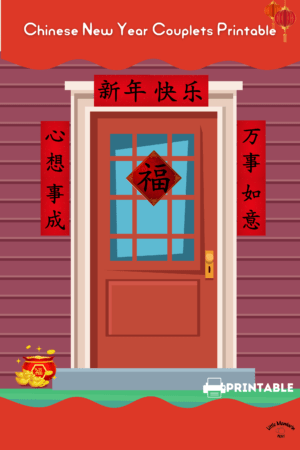
Some 4-character lucky phrases can be used as Spring couplets. For example,
🎶 Teaching tip from the classroom
I’ve watched children as young as three confidently shout 恭喜发财 during a Spring Festival celebration — weeks before they could read a single character. They learned it by hearing it repeatedly, associating it with the excitement of the holiday, and eventually connecting it to the red envelope moment. That experience — using real language in a real cultural context — is worth more than a hundred vocabulary drills.
I’ve watched children as young as three confidently shout 恭喜发财 during a Spring Festival celebration — weeks before they could read a single character. They learned it by hearing it repeatedly, associating it with the excitement of the holiday, and eventually connecting it to the red envelope moment. That experience — using real language in a real cultural context — is worth more than a hundred vocabulary drills.
How to Teach These Phrases to Children: Practical Strategies
Start with context, not memorisation
Children don’t learn language by sitting down and studying a list. They learn it by needing to say something. Create the moment first: a video call with grandparents, a Spring Festival card-making activity, a red envelope exchange. The phrase has a purpose. Purpose creates memory. This is what language researchers call contextual learning — vocabulary acquired in emotionally charged, meaningful situations is retained far longer than vocabulary studied in isolation.
One of the most effective classroom activities I’ve used: I give each child a small red envelope at the start of a CNY lesson and tell them they can only open it after they’ve said a complete greeting in Chinese to a classmate. The motivation is immediate, the context is authentic, and every child in the room has used at least one phrase before the lesson is five minutes old.
One phrase per day in the week before New Year
Choose seven phrases from the list above. Introduce one each morning for the seven days before Spring Festival. By New Year’s Day, your child knows seven phrases and has a full week of CNY learning to show for it. This method works for any age from about five upwards.
📅 Suggested 7-day sequence
Day 1: 新年好
Day 2: 恭喜发财
Day 3: 身体健康 (for grandparents)
Day 4: 万事如意
Day 5: 阖家欢乐
Day 6: 学习进步 (for the children to say to each other)
Day 7: 恭喜发财,红包拿来! (the fun one — save it for last)
Pair phrases with their cultural context
Don’t just teach the words — teach the moment. 年年有余 makes much more sense if your child knows that a whole fish is served at dinner deliberately uneaten, representing the “surplus.” 团团圆圆 lands differently once a child understands that round shapes (dumplings, tangyuan, mooncakes) symbolise family completeness in Chinese culture.
Let children teach others
Once a child knows a phrase, ask them to teach it to someone else — a sibling, a parent, a grandparent who doesn’t know the phrase. Teaching is the deepest form of learning, and the pride children feel when an adult learns something from them is genuinely motivating. I’ve seen this work especially well with 身体健康: a child teaches it to a non-Chinese-speaking parent, the parent says it to grandma on a video call, and grandma cries. That chain of teaching — child to parent to elder — turns a phrase into a family memory. The child doesn’t forget that phrase for years.
Use them year-round, not just at New Year
Many of these Chinese New Year blessings work outside of the festival.
- 学习进步 is appropriate any time a child takes an exam.
- 身体健康 is perfect when a grandparent is unwell.
- 心想事成 can be said on a birthday.
The more contexts in which children hear and use a phrase, the more securely it lodges in long-term memory — this is the principle of spaced retrieval, one of the most reliably effective techniques in vocabulary acquisition research. You don’t need to explain the theory to children; you just need to engineer the moments.
For families looking to build consistent Chinese speaking habits beyond festival occasions, our guide to building a Chinese immersion environment at home covers practical daily strategies that keep the language alive all year. And if pronunciation is a concern — for you or your child — our Chinese pronunciation guide for parents explains exactly which sounds need attention and how to practise them without pressure.
Pronunciation Guide: Which Phrases Are Easiest for Children?
Parents often ask which Mandarin New Year greetings are realistic for young children to say well, and which ones need more time. The answer depends largely on tone combinations and syllable count — not just how long the phrase looks on paper.
| Phrase | Difficulty | Why | What to watch |
|---|---|---|---|
| 新年好 Xīn nián hǎo | ⭐ Beginner | Only 3 syllables; tones are spread across the three most distinct tone shapes | The falling-rising tone on 好 (hǎo) — children often flatten it to a simple falling tone |
| 过年好 Guò nián hǎo | ⭐ Beginner | Same rhythm as 新年好; 过 (Tone 4, sharp drop) is easy to feel | The uo vowel in 过 — not quite “gwor,” more like “gwaw” with rounded lips |
| 新年快乐 Xīn nián kuài lè | ⭐⭐ Easy | 4 syllables with a satisfying Tone 4 + Tone 4 ending (快乐 feels punchy and emphatic) | The x- initial in 新 — tongue near the roof of the mouth with a slight smile; not like English “sh” |
| 身体健康 Shēn tǐ jiàn kāng | ⭐⭐ Easy | Four distinct tones in a clear sequence (1-3-4-1); the pattern is actually helpful | The sh- initial in 身 requires the tongue to curl back slightly — the most common error for English speakers |
| 恭喜发财 Gōng xǐ fā cái | ⭐⭐⭐ Intermediate | The x- in 喜 and the c- in 财 are both sounds without English equivalents | 财 (cái) — the c- is like the “ts” in “cats,” not like English “c” or “ch”. Practice slowly: ts-ai |
| 万事如意 Wàn shì rú yì | ⭐⭐⭐ Intermediate | The r- in 如 is the trickiest Mandarin initial for most children — no English equivalent | 如 (rú) — the r- requires the tongue curled back, slightly buzzing, like the middle of the word “leisure” said slowly |
| 阖家欢乐 Hé jiā huān lè | ⭐⭐⭐ Intermediate | 阖 (hé) is an uncommon character; the j- in 家 is easy but the ü vowel in some dialects causes confusion | In Mandarin, 家 (jiā) uses a plain “a” not “ü” — it’s “jyah,” not “jyew.” Very common confusion. |
📌 Teaching insight
In my experience, children consistently master 新年好 and 新年快乐 first — the tone patterns feel intuitive once they’ve heard them sung or said repeatedly. 恭喜发财 takes longer because of the c- initial in 财, but children often get the rhythm of the full phrase before they get that individual sound right. That’s perfectly fine: rhythm and melody come first. The precise sound follows with exposure.
Common Mistakes When Using Chinese New Year Greetings
Knowing a phrase is only half the picture. Knowing when not to use it — or how to use it correctly — is what separates a phrase someone has memorized from one they actually understand. These are the mistakes I see most often, from both children and parents.
Mistake 1: Using 红包拿来 with the wrong people
恭喜发财,红包拿来! is a family-only joke. It works because it’s cheeky, and cheeky is only funny when everyone is comfortable with each other. Said to a teacher, a family friend you don’t know well, or a neighbour, it comes across as rude or even greedy. Teach children the context explicitly: this phrase is for 家人 (family) and very close friends only.
Mistake 2: Assuming all CNY phrases mean “Happy New Year”
They don’t. 身体健康 means “good health.” 万事如意 means “may everything go as you wish.” 年年有余 means “surplus year after year.” Treating them as interchangeable variations of “Happy New Year” loses the specificity that makes them meaningful — and means you may wish prosperity to someone who really needed a health blessing, or vice versa.
Mistake 3: Thinking 恭喜发财 is the only important phrase
It’s the most famous internationally, largely because of Cantonese pop culture and overseas Chinese communities. But in mainland China, 新年快乐 and 过年好 are used just as frequently, if not more so. Knowing only 恭喜发财 is like knowing only “Auld Lang Syne” and thinking you know everything about New Year.
Mistake 4: Only using these phrases during the two-week festival window
Language researchers consistently find that spaced repetition — returning to vocabulary at increasing intervals over time — produces far stronger long-term retention than concentrated practice. A child who says 学习进步 in January at Chinese New Year, then again in March before exams, then in June at the end of term, will own that phrase in a way that a child who practised it intensively for one week never will. Use these phrases year-round wherever they naturally fit.
Mistake 5: Ignoring tone when children get phrases “almost right”
This is the most delicate mistake because correcting tone constantly is counterproductive (it kills confidence). But completely ignoring tone means a child can spend years saying 马 (horse) when they mean 妈 (mum). The balance: never interrupt a greeting to correct tone. But after the moment has passed, in a low-stakes context, gently model the correct tone and ask the child to copy. Keep the correction brief, specific, and warm.
Regional Variations: How Greetings Differ Across Chinese-Speaking Communities
Chinese New Year is celebrated across mainland China, Taiwan, Hong Kong, Singapore, Malaysia, and overseas communities on every continent. The phrases used — and the languages they’re said in — vary more than many people realise.
| Region | Primary language(s) | Common greeting | Notes |
|---|---|---|---|
| Mainland China | Mandarin (Putonghua) | 新年快乐, 过年好, 恭喜发财 | 过年好 is particularly warm and common in northern China; 新年快乐 is universal |
| Taiwan | Mandarin (Traditional characters); some Hokkien (Taiwanese) | 新年快乐, 恭喜发财 | Note: 新年快乐 is sometimes considered a mainland phrase by older Taiwanese speakers who may prefer 春节快乐 or Hokkien greetings |
| Hong Kong | Cantonese primarily; Mandarin widely understood | 恭喜發財 (Gung hei fat choy in Cantonese) | The Cantonese pronunciation “Gung hei fat choy” is the version most internationally recognized; Traditional characters used |
| Singapore & Malaysia | Mandarin, Hokkien, Cantonese, Teochew | 新年快乐, 恭喜发财; Hokkien: Xin nian kuai le | Dialect greetings are common in older generations; younger Singaporeans and Malaysians typically use Mandarin phrases |
| Overseas communities (global) | Varies widely by heritage region | 恭喜发财 most common; 新年快乐 increasingly used | Heritage community language often reflects the dialect of the original immigration wave (Hokkien in Southeast Asia, Cantonese in early North America/UK) |
💡 What this means for your family
If your family has roots in Hong Kong or Cantonese-speaking communities, your grandparents may respond more warmly to “Gung hei fat choy” than to the Mandarin equivalent. If you’re raising children in an environment where both Mandarin and Cantonese are spoken, it’s worth knowing both versions of 恭喜发财 since although the meaning is identical, the pronunciation signals which community you’re speaking to.
If your family has roots in Hong Kong or Cantonese-speaking communities, your grandparents may respond more warmly to “Gung hei fat choy” than to the Mandarin equivalent. If you’re raising children in an environment where both Mandarin and Cantonese are spoken, it’s worth knowing both versions of 恭喜发财 since although the meaning is identical, the pronunciation signals which community you’re speaking to.
Frequently Asked Questions
What is the most important Chinese New Year phrase to know?
恭喜发财 (Gōng xǐ fā cái) is the single most recognized and widely used Chinese New Year greeting across all Chinese-speaking communities globally. If you or your child learns only one phrase, this is the one. Paired with 新年快乐 (Happy New Year), you’re covered for almost every CNY situation.
Is there a difference between 新年好, 过年好, and 新年快乐?
All three mean “Happy New Year” but with slightly different nuances. 新年好 is the simplest and most casual. 过年好 is slightly warmer and more traditional — the 过 (to celebrate/pass the new year) adds a sense of shared celebration. 新年快乐 is the most widely used in modern media and is universally understood. All three are equally appropriate; the choice often comes down to personal or regional preference.
When exactly do you say these phrases?
Chinese New Year greetings begin on New Year’s Eve (除夕 Chúxī) and continue for the full 15-day Spring Festival period, ending at the Lantern Festival (元宵节 Yuánxiāojié). In practice, most greetings happen in the first three days of the new year. It’s entirely appropriate to send a WeChat message with a lucky phrase to anyone in your network during this period — Chinese people very much expect and appreciate it.
Can non-Chinese people use these phrases?
Absolutely — and it’s almost always appreciated. When a non-Chinese person makes the effort to say 恭喜发财 or 新年快乐, the response is almost universally warm and encouraging. Cultural engagement is welcomed, not gatekept. Children from non-heritage families benefit enormously from using these phrases in context: it signals that Chinese is a real, usable language, not just something they study.
Why do so many Chinese New Year phrases have four characters?
Four-character phrases (四字格 sì zì gé) are a feature of classical Chinese and are considered elegant and auspicious. The two-two rhythm (恭喜 — 发财, 万事 — 如意) makes them easy to remember and pleasant to say. This structure appears throughout Chinese idioms (成语 chéngyǔ) and classical poetry. When children learn these four-character phrases, they’re also getting an early introduction to one of the most distinctive features of the Chinese literary tradition.
My child is a heritage learner with beginner Mandarin — which phrases should they start with?
Start with 新年好 and 恭喜发财. Both are short, memorable, and will be immediately celebrated by any Chinese-speaking relative who hears them. Once those are solid, add 身体健康 for grandparents — the emotional response from an elder when a grandchild says this in Chinese is something neither parent nor child will forget quickly.
Are these simplified or traditional characters?
The phrases in this guide are written in simplified characters, which are standard in mainland China. The traditional character equivalents used in Taiwan, Hong Kong, and many overseas community schools are visually different but phonetically identical — the pinyin and meaning are the same. If your family or school uses traditional characters, the children learn the phrases the same way; only the written form differs.
What’s the difference between Lunar New Year and Chinese New Year?
They refer to the same holiday. “Chinese New Year” emphasises the cultural origin; “Lunar New Year” is a broader, more inclusive term that acknowledges the holiday is also celebrated in Korea (Seollal), Vietnam (Tết), and other cultures that follow the lunar calendar. Both terms are widely used and both are correct. In Chinese, people use 春节 (Chūnjié — Spring Festival) or 农历新年 (Nónglì xīnnián — Lunar New Year).
Can I say 恭喜发财 after New Year’s Day?
Yes. Chinese New Year greetings are appropriate throughout the 15-day festival period, from New Year’s Eve (除夕) through to the Lantern Festival (元宵节). Using these phrases in the first week is the most common, but there is no hard rule that they expire on New Year’s Day. After the 15-day period, the greetings naturally fade until the following year.
Is 新年快乐 used in Taiwan?
Yes, 新年快乐 is widely understood and used in Taiwan, though some older Taiwanese speakers associate it more strongly with mainland China and may prefer 春节快乐 or Hokkien expressions. In practice, 新年快乐 is universally understood and accepted across all Mandarin-speaking communities. Teaching children 新年快乐 will serve them in any Chinese-speaking context.
What’s the best greeting for a Chinese teacher?
新年快乐 is safe, respectful, and universally appropriate for a teacher. If a child wants to make a stronger impression, 新年快乐 followed by 身体健康 (good health) shows awareness of the cultural greeting tradition and genuine respect. When receiving 身体健康 from a young student, a teacher will almost always be genuinely touched — it’s a phrase that carries weight.
How do children greet grandparents during Chinese New Year?
A traditional greeting to grandparents combines a phrase with a gesture. The child says 新年快乐 or 过年好, then adds 身体健康 — “good health to you.” In more traditional families, a respectful bow (鞠躬 jū gōng) accompanies the greeting. In return, grandparents typically give a red envelope. Teaching children both the phrase and the gesture together makes the greeting feel authentic, not just performative.
Which Lunar New Year wishes are best for a business contact?
恭喜发财 is the most appropriate business greeting — it directly wishes prosperity and success, which is fitting in a professional context. 万事如意 (may all go well) and 事业有成 (may your career flourish) are also suitable for professional relationships. Avoid overly personal or family-focused phrases like 阖家欢乐 with business contacts you don’t know well.
Key Takeaways
- 吉祥话 (lucky phrases) are grouped by theme: good fortune, health, family, and career/study — choose based on who you’re speaking to.
- The four essential phrases to learn first: 新年好, 新年快乐, 恭喜发财, and 身体健康.
- For children, start with 新年好 (3 syllables, beginner tones) and build up to 恭喜发财 (harder c- and x- initials).
- Four-character phrases dominate because they have a natural two-two rhythm that makes them easy for children to memorise.
- Context creates memory: pair each phrase with a real CNY moment (red envelope, family call, card-making) rather than drilling from a list.
- 恭喜发财,红包拿来!is only for family and very close friends — teach children the context, not just the words.
- Regional differences matter: Hong Kong uses Cantonese “Gung hei fat choy”; Taiwan may prefer 春节快乐; mainland China uses 新年快乐 and 过年好 widely.
- Spaced repetition beats festival-only practice: use 学习进步 before exams, 身体健康 when relatives are unwell, 心想事成 on birthdays — year-round use locks phrases into long-term memory.
Want to Go Further?
The Chinese New Year theme packs in the Special Events section of the shop include printable vocabulary cards, Spring Festival activity sheets, and classroom display materials organized around the holiday. These are practical companions to the phrases in this guide — children can see the characters, practise writing them, and use the materials to decorate a CNY display at home or in the classroom.
If your goal is to build the kind of Chinese-speaking home environment where phrases like these come naturally — not just during Chinese New Year but throughout the year — the Speak Chinese with Kids course gives you a scene-by-scene framework for daily Mandarin conversation. Each scene includes 30 ready-to-use phrases with audio and video, so you and your child are hearing and using real Chinese in context every day, not just once a year at the festival.
If you like this post, PIN IT!
Further Reading
- 📖 Chinese New Year celebration — what Chinese to learn
- 📖 Celebrating New Year — a Chinese chant for Spring Festival
- 📖 Chinese Festivals for Kids: A Complete Guide for Overseas Families and Teachers
- 📖 Chinese Zodiac Animals — the Great Race story
- 📖 Chinese holiday wishes, greetings and messages