Learning the four seasons in Chinese is one of the easiest ways for children to build practical Mandarin vocabulary. Seasons connect naturally to weather, clothing, festivals, food, and everyday conversations — making them an ideal topic for beginners, heritage learners, and young Mandarin students alike.
In this guide, you will learn the four season names in Chinese, how to describe the weather and clothes each season, how to read the characters in 春夏秋冬, and find free and paid resources to practise.
Let’s get started.、
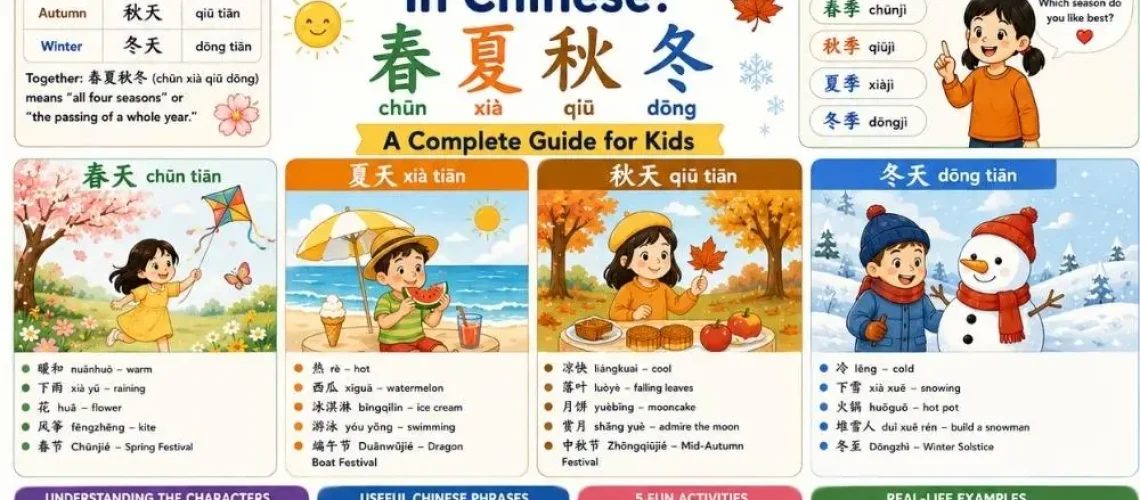
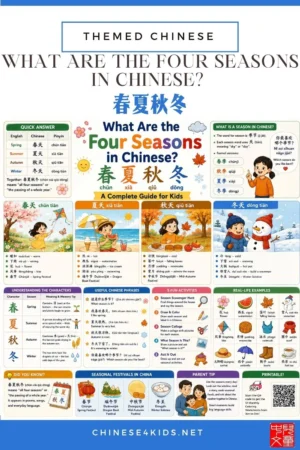
Quick Answer: The Four Seasons in Chinese
| English | Chinese | Pinyin |
| Spring | 春天 | chūn tiān |
| Summer | 夏天 | xià tiān |
| Autumn | 秋天 | qiū tiān |
| Winter | 冬天 | dōng tiān |
Together, the four seasons are written as 春夏秋冬 (chūn xià qiū dōng). This phrase means “all four seasons” or “the passing of a whole year.” Chinese people use it in poetry, song, and everyday speech.
Season Definition
Four seasons in Chinese:
春天 (chūn tiān) = spring
夏天 (xià tiān) = summer
秋天 (qiū tiān) = autumn
冬天 (dōng tiān) = winter
Chinese word for season: 季节 (jì jié)
The phrase 春夏秋冬 refers to all four seasons together, and is commonly used to describe the passing of a full year.
What Are the Four Seasons in Chinese?
The Chinese word for season is 季节 (jì jié).
Each season name uses the character 天 (tiān), meaning “sky” or “day.” It gives the feeling of “the days of spring” or “the winter sky.”
You can also use the more formal versions:
春季 (chūnjì) — spring season
夏季 (xiàjì) — summer season
秋季 (qiūjì) — autumn season
冬季 (dōngjì) — winter season
For children, 春天, 夏天, 秋天, 冬天 are the most natural and common forms.
A great conversation starter to practise with your child:
你最喜欢哪个季节?
Nǐ zuì xǐhuān nǎge jìjié?
Which season do you like best?
Understanding the Characters in 春夏秋冬
One of the best ways to help children remember season vocabulary is to explore the characters themselves.
| Character | Season | Meaning & Memory Tip |
| 春 | Spring | Contains the radical 日 (sun) at the bottom — the sun returns and plants begin to grow |
| 夏 | Summer | A person standing tall with arms spread wide — think of someone enjoying the warm open sky |
| 秋 | Autumn | Combines 禾 (grain) and 火 (fire) — the harvest grain drying in the autumn sun |
| 冬 | Winter | The two dots at the bottom look like droplets of ice — the last cold days of the year |
Talking through these visual stories makes the characters much more memorable for young learners.
Teaching tip: Have children draw their own version of each character and add a little illustration around it. 春 with flowers. 冬 with snowflakes.
Listen and Repeat
-
- 春天 — chūn tiān (spring)
- 夏天 — xià tiān (summer)
- 秋天 — qiū tiān (autumn)
- 冬天 — dōng tiān (winter)
- 季节 — jì jié (season)
- 春夏秋冬 — chūn xià qiū dōng (the four seasons)
Listening and repeating out loud is one of the most effective ways to lock in tones. Even 60 seconds of daily practice makes a real difference.
How to Say Spring in Chinese: 春天 (chūn tiān)
Spring is the first season of the year. In China, it begins with Chinese New Year — 春节 (Chūnjié), literally the Spring Festival.
Spring vocabulary:
Chinese Pinyin English 春天 chūn tiān spring 暖和 nuǎnhuo warm 下雨 xià yǔ raining 刮风 guā fēng windy 晴天 qíng tiān sunny day 花 <huā flower 风筝 fēngzhēng kite 蝴蝶 húdié butterfly 种树 zhòng shù plant a tree 春节 Chūnjié Spring Festival Spring clothes: Light jacket 薄外套 (báo wàitào), T-shirt T恤 (T xù), jeans 牛仔裤 (niúzǎikù)
Spring activities:
- 放风筝 (fàng fēngzhēng) — fly a kite
- 赏花 (shǎng huā) — admire flowers
- 种花 (zhòng huā) — plant flowers
🌸 Resource: Our Spring Animal Chinese Coloring Pages feature 20 cute spring animals with Chinese names. Kids can color, trace, and write the characters — perfect for Easter and spring learning units.
How to Say Summer in Chinese: 夏天 (xià tiān)
Summer is hot! In China, summer brings the Dragon Boat Festival — 端午节 (Duānwǔjié).
Summer vocabulary:
Chinese Pinyin English 夏天 xià tiān summer 热 rè hot 潮湿 cháoshī humid 晴天 qíng tiān sunny 打雷 dǎ léi thunder 西瓜 xīguā watermelon 冰淇淋 bīngqílín ice cream 泳衣 yǒngyī swimsuit 太阳帽 tàiyángmào sunhat 端午节 Duānwǔjié Dragon Boat Festival Summer clothes: Shorts 短裤 (duǎnkù), sandals 凉鞋 (liángxié), sunhat 太阳帽 (tàiyángmào), swimsuit 泳衣 (yǒngyī)
Summer activities:
- 游泳 (yóu yǒng) — swimming
- 去海边 (qù hǎibiān) — go to the beach
- 吃冰淇淋 (chī bīngqílín) — eat ice cream
Summer clothes: Shorts 短裤 (duǎnkù), sandals 凉鞋 (liángxié), sunhat 太阳帽 (tàiyángmào), swimsuit 泳衣 (yǒngyī)
Summer activities:
- 游泳 (yóu yǒng) — swimming
- 去海边 (qù hǎibiān) — go to the beach
- 吃冰淇淋 (chī bīngqílín) — eat ice cream
☀️ Resource: The Color and Learn Summer Chinese Vocabulary Workbook covers 45 summer words with coloring sheets and a mini vocabulary book children can assemble and keep.
How to Say Autumn in Chinese: 秋天 (qiū tiān)
Autumn is cool and colourful. The Mid-Autumn Festival — 中秋节 (Zhōngqiūjié) falls in this season.
Autumn vocabulary:
Chinese Pinyin English 秋天 qiū tiān autumn 凉快 liángkuai cool 干燥 gānzào dry 刮风 guā fēng windy 落叶 luòyè falling leaves 月饼 yuèbǐng mooncake 南瓜 nánguā pumpkin 苹果 píngguǒ apple 灯笼 dēnglong lantern 中秋节 Zhōngqiūjié Mid-Autumn Festival Autumn clothes: Sweater 毛衣 (máoyī), long trousers 长裤 (chángkù), boots 靴子 (xuēzi), light coat 薄大衣 (báo dàyī)
Autumn activities:
- 赏月 (shǎng yuè) — admire the moon
- 吃月饼 (chī yuèbǐng) — eat mooncakes
- 捡落叶 (jiǎn luòyè) — collect fallen leaves
🍂 Resource: The Color and Learn Autumn Chinese Vocabulary Workbook includes 45 autumn vocabulary words, worksheets, and a mini book kids can cut and assemble.
How to Say Winter in Chinese: 冬天 (dōng tiān)
Winter is cold. In China, winter ends with preparations for Chinese New Year.
Winter vocabulary:
Chinese Pinyin English 冬天 dōng tiān winter 冷 lěng cold 下雪 xià xuě snowing 结冰 jié bīng icy 阴天 yīn tiān cloudy/grey day 火锅 huǒguō hot pot 饺子 jiǎozi dumplings 汤圆 tāngyuán glutinous rice balls 雪人 xuě rén snowman 冬至 Dōngzhì Winter Solstice Winter clothes: Coat 大衣 (dàyī), scarf 围巾 (wéijīn), gloves 手套 (shǒutào), boots 靴子 (xuēzi), hat 帽子 (màozi)
Winter activities:
- 堆雪人 (duī xuě rén) — build a snowman
- 溜冰 (liū bīng) — ice skating
- 喝热茶 (hē rè chá) — drink hot tea
Seasonal Clothes in Chinese
Learning seasonal clothes is one of the most practical vocabulary topics for children. It connects to real daily life — every morning when getting dressed, you can practise!
Season Clothes Pinyin Spring T恤、薄外套 T xù, báo wàitào Summer 短裤、凉鞋、泳衣 duǎnkù, liángxié, yǒngyī Autumn 毛衣、长裤、靴子 máoyī, chángkù, xuēzi Winter 大衣、围巾、手套、帽子 dàyī, wéijīn, shǒutào, màozi 🧥 Resource: The Seasonal Clothes Theme Chinese Learning Pack includes flashcards, a word wall poster, a vocabulary quiz, and an audio file — printable and ready to use immediately.
You can also explore general clothing vocabulary in our guide to Mandarin words for clothing.
Weather in Chinese: Across All Four Seasons
Weather is deeply connected to the seasons. Once children know the season names, weather vocabulary is a natural next step.
Chinese Pinyin English 天气 tiānqì weather 晴天 qíngtiān sunny day 雨天 yǔtiān rainy day 雪天 xuětiān snowy day 多云 duōyún cloudy 刮风 guā fēng windy 热 rè hot 冷 lěng cold 温暖 wēnnuǎn warm 凉爽 liángshuǎng cool Key question to use every day:
今天天气怎么样? Jīntiān tiānqì zěnme yàng? “What is the weather like today?”
→ Learn more: Weather in Chinese — Talk About the Weather with Kids
The 12 Months and the Seasons
Once children know the four seasons, months are the natural next step. Months in Chinese are wonderfully simple — just add a number in front of 月 (yuè):
Month Chinese Season January 一月 (yīyuè) Winter February 二月 (èryuè) Winter March 三月 (sānyuè) Spring April 四月 (sìyuè) Spring May 五月 (wǔyuè) Spring June 六月 (liùyuè) Summer July 七月 (qīyuè) Summer August 八月 (bāyuè) Summer September 九月 (jiǔyuè) Autumn October 十月 (shíyuè) Autumn November 十一月 (shíyīyuè) Autumn December 十二月 (shíèryuè) Winter → Learn all 12 months: Learn Chinese Vocabulary — Months and Weekdays
🎨 Resource: Our Chinese Monthly Coloring Pages — one themed coloring page per month, each teaching a seasonal Chinese word. From January’s lanterns to October’s pumpkins. Read more: Fun Chinese Learning with Monthly Coloring Pages
Chinese Festivals by Season
Connecting seasons to festivals makes vocabulary feel real and meaningful.
Season Festival Chinese Pinyin Spring Chinese New Year 春节 Chūnjié Summer Dragon Boat Festival 端午节 Duānwǔjié Autumn Mid-Autumn Festival 中秋节 Zhōngqiūjié Winter Winter Solstice 冬至 Dōngzhì → Read our complete guide: Celebrations, Festivals, and Special Occasions in Chinese Culture
Useful Sentence Patterns for Every Season
Practise these simple sentences with your child. Swap the season name to use in any season.
Talk about your favourite season:
- 我最喜欢夏天。(Wǒ zuì xǐhuān xiàtiān.) — I like summer best.
- 你喜欢哪个季节?(Nǐ xǐhuān nǎge jìjié?) — Which season do you like
Describe the weather:
- 春天很暖和。(Chūntiān hěn nuǎnhuo.) — Spring is warm.
- 夏天很热。(Xiàtiān hěn rè.) — Summer is hot.
- 秋天很凉快。(Qiūtiān hěn liángkuai.) — Autumn is cool.
- 冬天很冷。(Dōngtiān hěn lěng.) — Winter is cold.
Describe what you wear:
- 冬天我穿大衣和手套。(Dōngtiān wǒ chuān dàyī hé shǒutào.) — In winter I wear a coat and gloves.
- 夏天我穿短裤和凉鞋。(Xiàtiān wǒ chuān duǎnkù hé liángxié.) — In summer I wear shorts and sandals.
Tips for Teaching the Seasons in Chinese
Teaching children Mandarin Chinese through everyday themes like seasons is one of the most effective approaches — especially for heritage learners who need to connect the language to their real lives.
After working with children and heritage families on Mandarin learning for many years, one pattern stands out clearly: children remember vocabulary far better when it is tied to something they experience every day. The seasons provide that natural anchor. The moment a child can say 下雪 when it snows outside, or 好热!on a summer’s day, the language becomes real and personal to them.
Here are practical strategies:
1. Use visuals. Season vocabulary is easy to illustrate. Label a seasonal nature walk or a weather chart on the fridge.
2. Connect to getting dressed. Before putting on a coat, ask: 你穿什么?It’s winter — 冬天很冷!
3. Use coloring pages. Coloring is low-pressure. Children hear the word, see the image, and color it in. Repetition without stress. Explore all our Color and Learn Chinese vocabulary resources.
4. Flashcards on the fridge. A 2-minute daily review of seasonal vocabulary builds strong memory over time.
5. Chant 春夏秋冬. Saying “chūn xià qiū dōng” to a simple beat is one of the quickest ways to lock in the four seasons for young learners.Resources for Learning the Four Seasons in Chinese
🆓 Free Articles on Chinese4kids.net
- Weather in Chinese — Talk About the Weather with Kids
- Learn Chinese Vocabulary — Months and Weekdays
- Celebrations and Festivals in Chinese Culture
- Fun Chinese Learning with Monthly Coloring Pages
- Color and Learn Chinese Vocabulary
- Mandarin Words for Clothing
🛍️ Printable Products (Instant Download)
- Seasonal Clothes Theme Chinese Learning Pack — flashcards, word wall, quiz, audio
- Chinese Monthly Coloring Pages (12 months) — one themed coloring page per month
- Spring Animal Chinese Coloring Pages — 20 pages with character tracing
- Color and Learn Seasons Chinese Vocabulary Workbook
- Color and Learn Spring Chinese Vocabulary Workbook — 45 Spring vocabulary words
- Color and Learn Summer Chinese Vocabulary Workbook — 45 summer vocabulary words
- Color and Learn Autumn Chinese Vocabulary Workbook — 45 autumn vocabulary words
- Color and Learn Winter Chinese Vocabulary Workbook — 45 Winter vocabulary words
📚 Membership & Courses
- Chinese4kids Membership — access all worksheets, flashcard library, and coloring pages in one place
- Chinese Vocabulary Made Easy Course — structured vocabulary learning for children
- Speak Chinese with Kids Course — for parents who want to use Mandarin at home
Quick Reference: Four Seasons in Chinese
English Chinese Pinyin Tones Spring 春天 chūn tiān 1st + 1st Summer 夏天 xià tiān 4th + 1st Autumn 秋天 qiū tiān 1st + 1st Winter 冬天 dōng tiān 1st + 1st Season 季节 jì jié 4th + 2nd Weather 天气 tiān qì 1st + 4th Clothes 衣服 yī fu 1st + neutral Hot 热 rè 4th Cold 冷 lěng 3rd Warm 暖和 nuǎnhuo 3rd + neutral Cool 凉快 liángkuai 2nd + neutral Frequently Asked Questions
How do you say the four seasons in Chinese?
The four seasons in Chinese are 春天 (chūn tiān) for spring, 夏天 (xià tiān) for summer, 秋天 (qiū tiān) for autumn, and 冬天 (dōng tiān) for winter. Together they are written as 春夏秋冬.What does 春夏秋冬 mean?
春夏秋冬 (chūn xià qiū dōng) literally means spring, summer, autumn, and winter. The phrase is used in Chinese to refer to all four seasons together, or to the passing of a full year.How do you say “season” in Chinese?
The word for season in Chinese is 季节 (jì jié). To ask “which season do you like best?” say: 你最喜欢哪个季节?(Nǐ zuì xǐhuān nǎge jìjié?)What season is Chinese New Year?
Chinese New Year is associated with spring. It is called 春节 (Chūnjié), which means Spring Festival. It marks the start of the lunar new year and typically falls between late January and mid-February.How do you say spring in Chinese?
Spring in Chinese is 春天 (chūn tiān). The character 春 contains the sun radical 日, symbolising the return of warmth and growth after winter.How do you say summer in Chinese?
Summer in Chinese is 夏天 (xià tiān). The character 夏 suggests a person standing tall — evoking warm, open summer days.How do you say autumn in Chinese?
Autumn in Chinese is 秋天 (qiū tiān). The character 秋 combines grain 禾 and fire 火 — a reference to the harvest season and drying crops.How do you say winter in Chinese?
Winter in Chinese is 冬天 (dōng tiān). The two dots at the bottom of 冬 suggest droplets of ice or the last days of the year drawing to a close.Summary
The four seasons in Chinese — 春夏秋冬 — are a wonderful gateway into everyday Mandarin vocabulary.
From weather words to seasonal clothes to festivals and characters, this theme connects naturally to your child’s daily life.
Start simple. Learn the four season names first. Then add weather, clothes, and activities one season at a time.
Use coloring pages, flashcards, and daily conversations to make it stick.
你最喜欢哪个季节? Which season does your child like best? Tell us in the comments!If you like this post, PIN IT!
- 春天 — chūn tiān (spring)