

 Textbook
 Textbook | Workbook


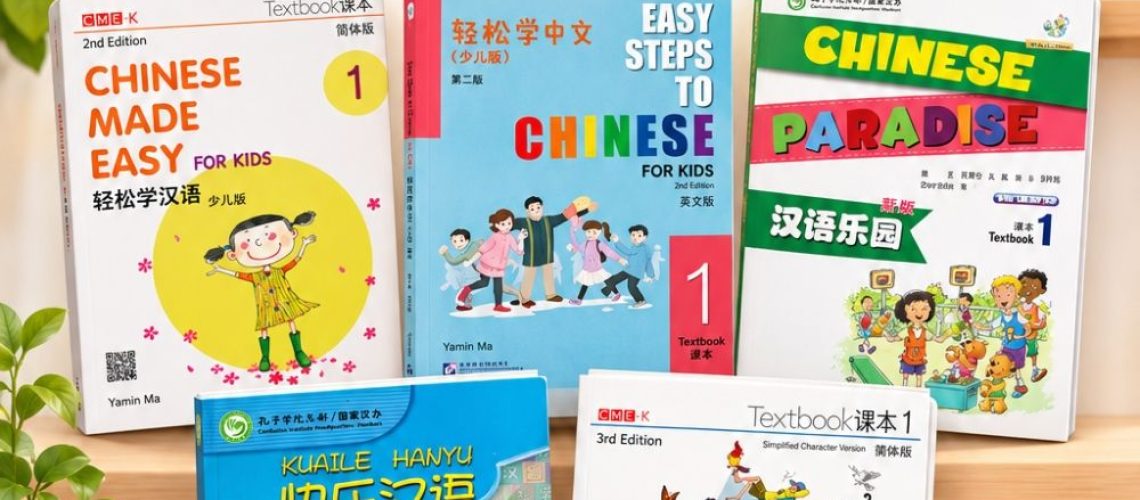
Which Chinese textbook should you buy? It is one of the most common questions from parents and teachers outside China. The answer depends on your child, not on a single “best” book.
Some textbooks assume a child hears Chinese all day. Others were written for adult beginners. A few are great in a classroom but leave a parent sitting at the kitchen table with no plan. This guide helps you sort through them by age, current Chinese level, and how much support you have at home.
This post contains Amazon affiliate links. As an Amazon Associate I earn from qualifying purchases. That does not change the price you pay.
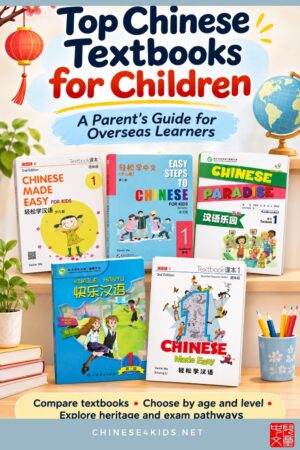
If you want a quick answer: For a young child starting Chinese from scratch, compare Chinese Made Easy for Kids with Easy Steps to Chinese for Kids. For a child who already understands Chinese but cannot read it yet (often called a heritage learner), look at a heritage curriculum. For older learners, choose a course that matches their age and, where it applies, their exam.
Chinese textbooks for children at a glance
| Textbook | Best starting point | Main strength |
|---|---|---|
| Chinese Made Easy for Kids (2nd ed.) | Young beginners with no prior Chinese | Structured listening and speaking |
| Easy Steps to Chinese for Kids (2nd ed.) | Preschool to grade 4 beginners who need early character reading and writing | Gradual character and reading development |
| Chinese Paradise (new edition, 2023–2025) | Primary-school learners in a structured course | Six levels with workbooks and digital resources |
| YCT Standard Course (for the Youth Chinese Test) | Learners following a test pathway | Listening and speaking first, with a clear goal |
| Kuaile Hanyu (Happy Chinese), 2nd ed. | Older beginners, around ages 11–16 | Age-appropriate topics |
| Chinese Made Easy (4th ed., 2026) | Older beginners, from upper primary to university | A step up from the Kids series, with exam-style practice |
| Ma Liping Chinese | Children with basic spoken Chinese | Character recognition and literacy |
| Huayu of the Americas (美洲华语) | Chinese-school students in North America | Written for U.S. students, grades 1–12 |
| Zhongwen (中文), Jinan University Press | Weekend-school students taught in Chinese | A long, 12-volume literacy path |
How to choose a Chinese textbook for your child
Start with what your child hears at home
This one question matters more than age. A child who understands Chinese at home but cannot read needs a very different book from a child who has never heard a Mandarin sentence.
Speaking and reading can sit at very different levels. One child chats comfortably with grandparents but recognizes few characters. Another reads some words from school but struggles to follow spoken Chinese. Families vary a lot, and all of these situations are normal. Pick the book that fits where your child is now.
Think about age and current level
Young beginners need short activities, pictures, and lots of repetition. Older beginners get bored with books built around cartoon animals. They usually prefer age-appropriate topics and more text. Ages in this guide are approximate. Treat them as a starting point, not a rule.
Not sure where your child stands? Our guide to the 5 phases of Chinese literacy development can help you place them.
Simplified or traditional characters
Choose based on your family’s language use, your child’s school or Chinese class, and future goals. Many series come in both versions. Check which one your listing opens before you buy.
Pinyin, audio, workbooks, and parent support
Courses differ on pinyin. Some teach it early. Others, such as Easy Steps to Chinese for Kids and Ma Liping Chinese, delay it or teach it differently. Neither approach is wrong. Pick the one that matches your child’s class or your plan at home.
A textbook is the main course book. A workbook is the practice book that goes with it. Workbooks are often sold separately, so check whether you need both.
Can you use the textbook at home?
A textbook can be excellent in a classroom and still be hard to use at home. This matters most if you cannot read Chinese or explain pronunciation.
If you are teaching your child yourself, look for English instructions, audio you can easily get, answer keys, and a clear lesson order. Some courses were designed mainly for teachers and may need a teacher’s book or extra support. You do not need one winner for every home. You need a book whose instructions you can follow.
Look at one lesson before you buy
Read one sample lesson, if you can find it. Can your child understand the pictures and instructions? Is the amount of text manageable? Is the audio easy to get? Does the workbook give enough practice without making every lesson feel like homework?
One book is rarely the whole plan
A core textbook works best when children also have regular opportunities to listen to Chinese, speak it, and read books at a comfortable level.
Textbooks for children learning Chinese as an additional language
1. Chinese Made Easy for Kids (2nd edition)
Best for: primary-school beginners, around age 5 and up.
This series by Yamin Ma (Joint Publishing, Hong Kong) has been around since 2005. Publishers say it is used in more than 30 countries. The second edition has four textbooks, each with a workbook. Worksheets, readers, a teacher’s book, word cards, and picture cards are also available.
What it does well: The course puts listening and speaking first. Early topics include greetings, numbers and dates, parts of the body, the house, and classroom language. It gives beginners a clear path from book to book.
Where it may fall short: It was written for children learning Chinese as a foreign or second language. A child who already understands Chinese at home may find the early books slow. Editions also vary. Older first-edition copies are still on sale, and there are simplified and traditional versions. Some retailer listings also mix this series up with Chinese Made Easy, a separate series for older students. Check that the title says “for Kids” and that the books are numbered 1–4.
Where to Buy: click on the links below to purchase the books on Amazon.
Textbook 1 | Workbook 1
Textbook 2 | Workbook 2
Textbook 3 | Workbook 3
Textbook 4 | Workbook 4
2. Easy Steps to Chinese for Kids (2nd edition)
Best for: preschoolers and grades 1–4 who have no Chinese background.
The second edition came out in 2023–2024 from Beijing Language and Culture University Press. It builds a foundation in characters, words, and short sentences. A writing exercise book, word cards, and picture flashcards are part of the series.
What it does well: Children read conversations, rhymes, and short texts, not just word lists. The second edition teaches 61 simple characters formally, up from 28 in the first edition. The publisher suggests that most students can finish one book, textbook and workbook together, in a school year with one lesson a day. Treat that as the publisher’s suggested pace, not a promise for every family. Because the books continue from one another, the publisher says you can start at the book that matches your child’s level.
Where it may fall short: One important thing to know: the second edition does not teach pinyin as a separate skill, although pinyin appears above the characters. It also introduces characters without a formal stroke-order lesson. Stroke-order information and writing practice are provided, so check whether your child needs additional instruction in these areas. Watch the listing carefully too. The first edition and the Easy Steps to Chinese series for older students have similar names.
Where to buy: click on the links below to purchase the books on Amazon.
Textbook 1 | Workbook 1 | Chinese Character Writing Book 1
Textbook 2 | Workbook 2 | Chinese Character Writing Book 2
Textbook 3 | Workbook 3
Textbook 4 | Workbook 4
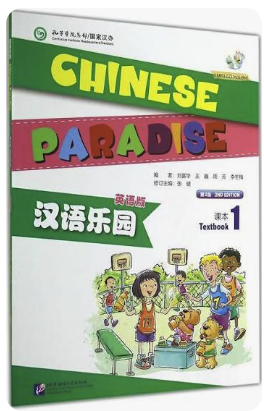
3. Chinese Paradise (2nd edition)
Best for: primary-school children learning Chinese outside China, especially in a class.
Chinese Paradise was designed for primary-school children learning Chinese in other countries. Beijing Language and Culture University Press began a new edition in November 2023 with Level 1 and added levels over the next two years. All six levels appear in publisher listings by the end of 2025. The levels follow overseas primary grades 1–6. Level 4, for example, suits fourth graders who have already learned about 440 words.
What it does well: The publisher suggests one level per school year, used with the workbook and digital resources. That gives a clear plan. Later levels read like short stories. Level 5 includes fairy tales, stories about historical figures, and animals.
Where it may fall short: It was built with classrooms in mind. Check what support materials come with your listing before you plan to teach from it at home. Older second-edition volumes (2014–2020) are still sold next to the new ones, and there are versions for other languages. Confirm that you are buying the new English edition.
Where to buy: click on the links below to purchase the books on Amazon.
Textbook 1 | Workbook 1
Textbook 2 | Workbook 2
Textbook 3 | Workbook 3
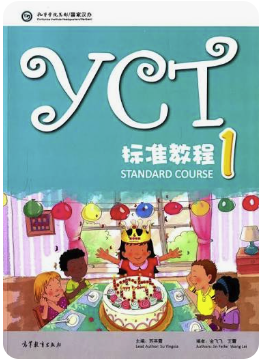
4. YCT Standard Course
Best for: school-age beginners who like clear goals, or families aiming for the Youth Chinese Test (YCT).
The series is made for overseas primary and middle-school students who take Chinese as an elective. Higher Education Press developed it with Chinese Testing International. Book 1 matches YCT Level 1, Book 2 matches Level 2, and Books 3 and 4 match Level 3. The YCT has four written levels and a separate speaking test.
What it does well: The first four books do not require children to write characters. That keeps early learning focused on listening and speaking. Preparing for the YCT can give children a clear goal and help them see how their Chinese is progressing.
Where it may fall short: Not every child needs an exam. Some families prefer a less test-focused approach. Most volumes also date from the mid-2010s.
Where to buy: click on the links below to purchase the books on Amazon.
Textbook 1 | Activity Book 1
Textbook 2 | Activity Book 2
Textbook 3 | Activity Book 3
Textbook 4 | Activity Book 4
Textbook 5 | Activity Book 5
Textbook 6 | Activity Book 6
Textbooks for older beginners
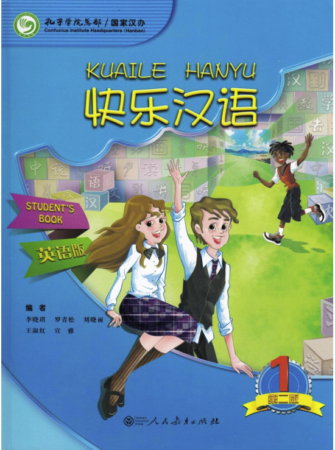
5. Kuaile Hanyu (Happy Chinese), 2nd edition
Best for: beginners around ages 11–16 with no Chinese background.
People’s Education Press published the second edition in 2014. It added a Chinese culture section. Student’s books, workbooks, and teacher’s books are available.
What it does well: The units are well organized and easy to follow. The tone suits middle-school and high-school students better than a book written for six-year-olds.
Where it may fall short: The second edition was designed around the HSK, YCT, and UK GCSE requirements in place at the time. (The HSK is China’s standard Chinese proficiency test.) Because exam specifications have changed, check the current syllabus before using it as an exam-preparation course. Also check that your listing includes the audio, since packages vary.
Where to buy:click on the links below to purchase the books on Amazon.
Student’s Book 1 | Workbook 1
Student’s Book 2 | Workbook 2
Student’s Book 3 | Workbook 3
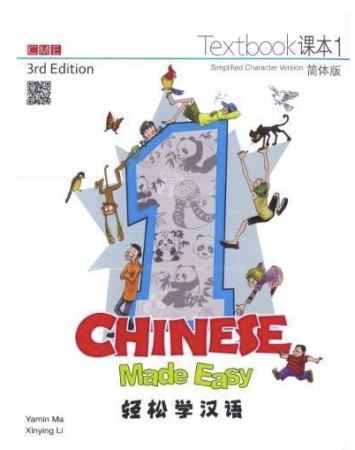
6. Chinese Made Easy (3rd edition)
Best for: older beginners, from upper primary through the first years of university.
Joint Publishing’s fourth edition came out in 2026, and its companion workbook is listed with a publication date of September 30, 2026. The publisher describes the series as suitable mainly for upper-primary students, secondary students, and first- or second-year university students learning Chinese as a second or foreign language. It is a different series from Chinese Made Easy for Kids.
What it does well: It gives children who finish the Kids series, or older beginners, a path to keep going. The publisher says the workbook aims to help learners practice for exams.
Where it may fall short: It is very new, so reviews are few and listings may not all be in stock yet. The third edition (seven books, published 2014–2018) is still widely sold, and some retailer listings mix it up with the Kids series, so check the edition on the cover.
Where to buy: click on the links below to purchase the books on Amazon.
Textbook 1 | Workbook 1
Textbook 2 | Workbook 2
Textbook 3 | Workbook 3
Textbook 4 | Workbook 4
Curricula for heritage learners
Heritage learners are children who hear Chinese in the family, even if they do not speak or read much of it. Many overseas families fit this description. Their children understand Chinese, but they cannot read or write it yet. The books above were mostly written for children learning Chinese as an additional language. A heritage child may need a literacy-first curriculum instead.
The three programs below are worth knowing about, especially if your child attends a weekend Chinese school. They are mainly sold through publishers and schools, so I have not added affiliate links. Ask your child’s school which materials it uses before you buy anything.
Ma Liping Chinese (马立平中文)
Liping Ma started the Stanford Chinese School in 1994 and wrote this curriculum for heritage students. It emphasizes reading and character recognition. Grade 1 is aimed at children around age six who come from Mandarin-speaking families and have basic listening and speaking skills. Students recognize 302 new characters and learn to write 102 over the year. Some schools that use it teach characters before pinyin.
Keep in mind: The program assumes your child understands Chinese at home and that your family can keep a Chinese-language environment going. It is not designed for a child with little spoken Chinese. It is also a substantial program, with real weekly practice.
Huayu of the Americas (美洲华语)
The National Council of Associations of Chinese Schools publishes this series for students in America. It is written for grades 1–12, and it aims for children who study Chinese a few hours each week. Its content follows U.S. world language standards and connects to Advanced Placement (AP) Chinese. Some schools that use it offer traditional or simplified characters and a choice of pinyin or zhuyin.
Keep in mind: The curriculum is designed for Chinese learners in the United States, so its examples and cultural references may feel more familiar to children attending Chinese school there. Families in Europe may also find the books harder to source. Check the character version before you order.
Zhongwen (中文), Jinan University Press
This series is designed for overseas students in after-school programs. It has 12 volumes. Volumes 1–9 cover characters, pinyin, sentence patterns, and short compositions. Volumes 10–12 move into Chinese geography, history, and philosophy. In total it introduces about 2,500 characters. Class descriptions place Volume 1 at ages 6–7, for children with basic listening and speaking skills.
Keep in mind: Classes often teach it entirely in Chinese. Plan on a teacher, or on a parent who reads Chinese, to guide it.
Choosing a textbook for exams
Exams change, and old book lists go out of date fast. Check the date and syllabus for your child’s test before you buy.
HSK
HSK 3.0 replaces the six-level HSK 2.0 with nine levels. Some test centers hold a final HSK 2.0 sitting on December 5, 2026, and the new version is due to launch worldwide in mid-December 2026. Confirm dates and availability with your local test center and on chinesetest.cn.
The official books for the new test are the New HSK Course from Foreign Language Teaching and Research Press, made with Chinese Testing International. Courses 1 to 3 came out in early 2026. The older HSK Standard Course follows the 2.0 syllabus. No “HSK Standard Course 3.0” exists, so be careful with listings that use that name.
If your child tests after mid-December, choose the New HSK Course. For younger children, the YCT is often a better fit than the HSK.
Where to buy: click on the links below to purchase the books on Amazon.
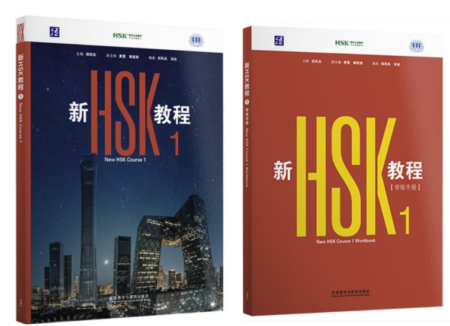
New HSK Course 1 – Textbook +Workbook
New HSK Course 2 – Textbook +Workbook
New HSK Course 3 – Textbook +Workbook
AP Chinese
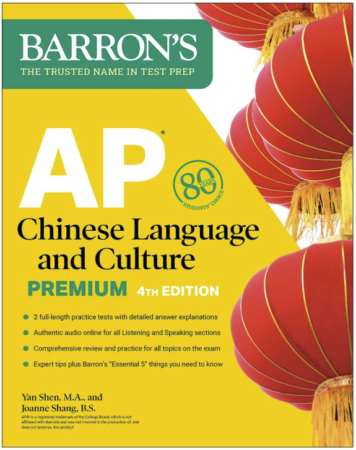
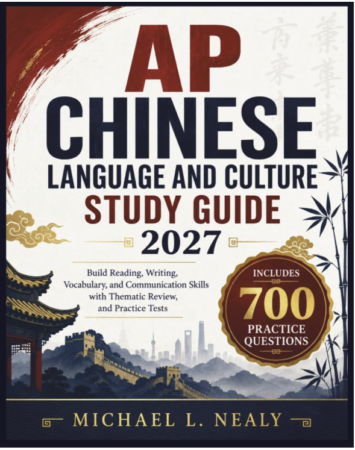
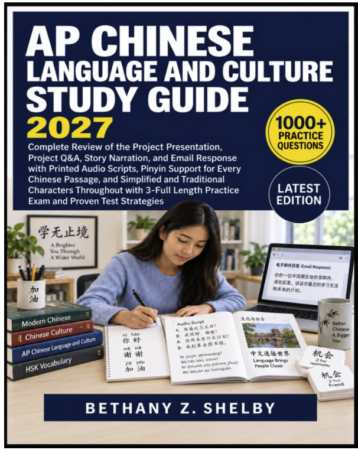
College Board revised AP Chinese for the 2026–27 school year. In May 2027 the exam moves to the Bluebook app. Students now prepare a course project. The Project Presentation counts for 20% of the score, and the Project Q&A counts for 15%. Prep books written before the redesign may teach the old speaking tasks. Check the publication date, and look for a cover that says it covers the 2027 exam. College Board’s AP Chinese page has the current requirements.
Cambridge IGCSE
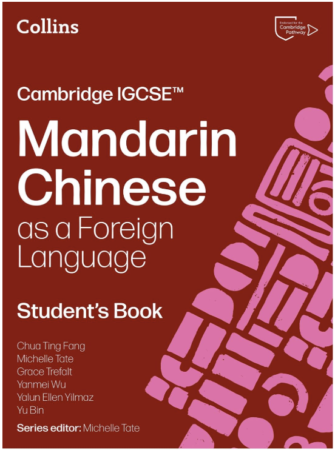
The Cambridge IGCSE Mandarin Chinese syllabus (0547) changes for exams taken from 2028. Two publishers have released new courses to match: Cambridge University Press with Mandarin Chinese for Cambridge IGCSE (2nd edition, 2026), and Collins with Cambridge IGCSE Mandarin Chinese as a Foreign Language (2026). Older books, such as Oxford’s Gu Wu from 2017, were written before the change, so make sure a book matches the new syllabus before you buy it.
Where to buy: click on the links below to purchase the books on Amazon.
Cambridge IGCSE™ Mandarin Chinese as a Foreign Language
IB Diploma
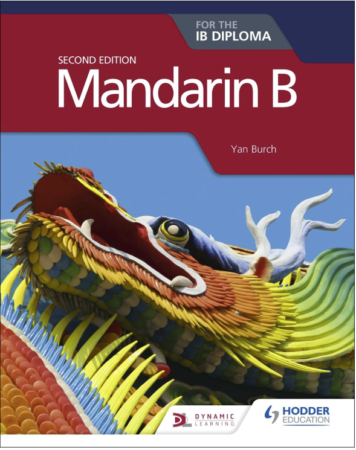
For International Baccalaureate (IB) Mandarin B, Mandarin B for the IB Diploma, second edition (Hodder Education, 2019), was written for the course first examined in 2020. It covers Standard and Higher Level. A separate grammar and skills workbook is available. Check that the edition fits your child’s course and level.
Where to buy: click on the links below to purchase the books on Amazon.
Vocabulary books and graded readers
These are not full courses. They solve different problems, so I keep them separate from the textbooks above.
Illustrated vocabulary books help younger children and parents practice everyday words together. First Thousand Words in Chinese from Usborne is one example. Use a book like this next to a systematic course, not instead of one.
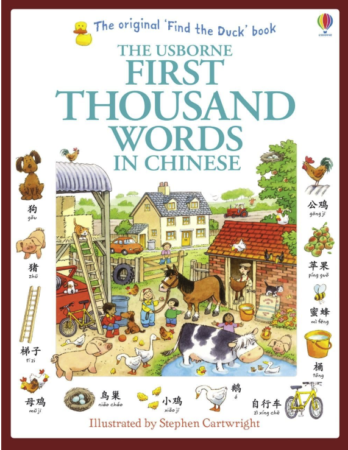
Graded readers come next. Once your child has a core textbook, the challenge is finding Chinese books they can read on their own. Choose readers that use familiar characters and vocabulary, so your child can practice without looking up every word. You can browse our Chinese reading books for kids for leveled options.
What to check before you buy
- The exact edition, and whether the characters are simplified or traditional.
- Whether the listing is a textbook, a workbook, or a complete set.
- Whether audio and digital resources are included, and whether access expires.
- Whether the course suits home learning or expects a teacher.
- The total cost of everything you need for one level, including the workbook.
Where to start
- Decide what your child can do now: understand spoken Chinese, read a few characters, or neither.
- Pick two books that fit, and read a sample lesson from each.
- Start at the level that feels comfortable, and add listening, speaking, and easy reading alongside it.
Frequently asked questions
Can I teach from a Chinese textbook if I don’t read Chinese?
Often you can, if the book has English instructions, audio, and answer keys. Check these before you buy. If the lessons assume a Chinese-reading adult, a class or tutor may be a better fit.
How long does one book take?
It depends on your child and how often you practice. Some publishers suggest about a school year per level with a lesson a day. Treat that as a guide. Go at a pace your child enjoys.
Is the YCT or the HSK better for younger children?
The YCT was designed for primary and middle-school students whose first language is not Chinese. Many younger learners find it a more natural first goal. The HSK suits older children and teens, especially those with university or long-term goals.
Do I need the teacher’s book?
Not always. A teacher’s book can help parents who teach at home, because it often includes answers and lesson ideas. Check whether the series offers one for the level you are buying.
My child already started a different book. Should I switch?
Not necessarily. If your child is making progress and enjoys the lessons, stay with it. Switch when the book no longer matches your child’s level, or when the pacing or format stops working.
Want help building the rest of the plan? Our leveled Chinese readers (aa–C) give your child easy reading practice that matches what a textbook teaches. And Chinese Vocabulary Made Easy walks through the 300 most common words, with strong overlap with HSK levels 1–2.
If you find this article useful, share it !