Quick Answer
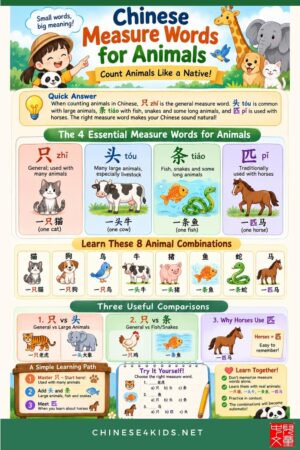
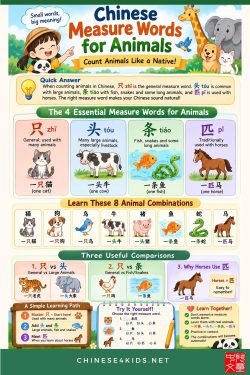
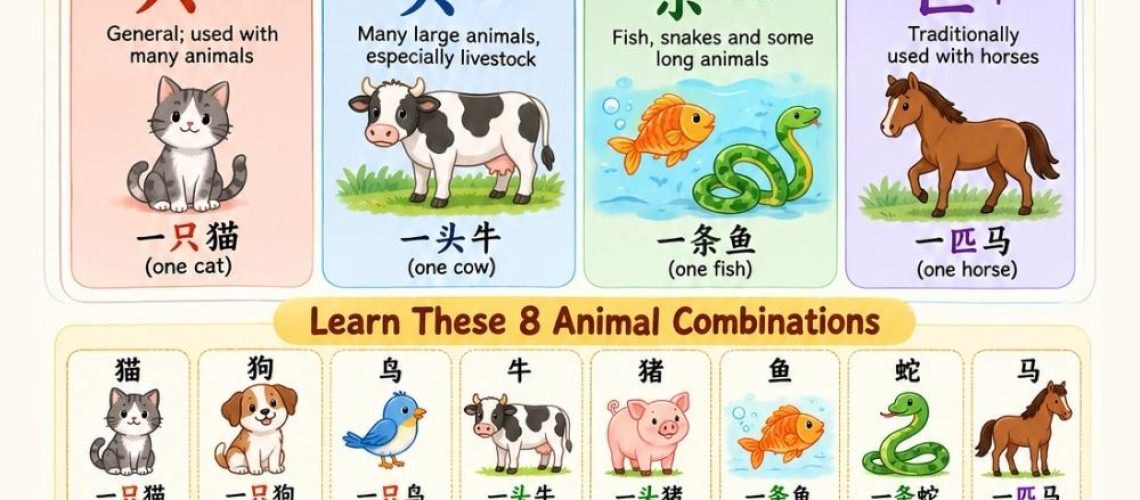
When counting animals in Chinese, 只 (zhī) is the general measure word used with many animals. 头 (tóu) is common with large animals, 条 (tiáo) with fish, snakes, and some long animals, and 匹 (pǐ) is traditionally used with horses. Learning which measure word goes with which animal helps your Chinese sound natural.
When counting animals in Chinese, 只 (zhī) is the general measure word used with many animals. 头 (tóu) is common with large animals, 条 (tiáo) with fish, snakes, and some long animals, and 匹 (pǐ) is traditionally used with horses. Learning which measure word goes with which animal helps your Chinese sound natural.
What Are Measure Words for Animals?
In Chinese, you can’t just say “one animal” or “three birds.” You need to use a measure word (量词, liàngcí) between the number and the noun.
One cat: 一只猫 (yī zhī māo)
Two cows: 两头牛 (liǎng tóu niú)
Three fish: 三条鱼 (sān tiáo yú)
Two cows: 两头牛 (liǎng tóu niú)
Three fish: 三条鱼 (sān tiáo yú)
Different animals use different measure words. Some patterns relate to size or shape, while others are conventional expressions that you learn with the animal itself. Understanding these patterns helps you remember the combinations.
New to measure words? Start with our complete guide to Chinese measure words, which explains how the system works across all categories. This article focuses on animals specifically.
The 4 Essential Measure Words for Animals
| Measure Word | Pinyin | When to Use | Example |
|---|---|---|---|
| 只 | zhī | General; used with many animals | 一只猫 (one cat) |
| 头 | tóu | Many large animals, especially livestock | 一头牛 (one cow) |
| 条 | tiáo | Fish, snakes, and some long/narrow animals | 一条鱼 (one fish) |
| 匹 | pǐ | Traditionally used with horses | 一匹马 (one horse) |
Learn These 8 Animal Combinations
These are the combinations you’ll encounter most often:
| Animal | Chinese | Measure Word | Example |
|---|---|---|---|
| Cat | 猫 | 只 | 一只猫 |
| Dog | 狗 | 只 | 一只狗 |
| Bird | 鸟 | 只 | 一只鸟 |
| Cow | 牛 | 头 | 一头牛 |
| Pig | 猪 | 头 | 一头猪 |
| Fish | 鱼 | 条 | 一条鱼 |
| Snake | 蛇 | 条 | 一条蛇 |
| Horse | 马 | 匹 | 一匹马 |
Learning these eight combinations will give you a solid foundation for talking about animals.
A Better Way to Remember
Don’t memorize rules alone. Learn these combinations:
🐱 一只猫 (yī zhī māo) One cat
🐄 一头牛 (yī tóu niú) One cow
🐠 一条鱼 (yī tiáo yú) One fish
🐴 一匹马 (yī pǐ mǎ) One horse
Over time, these combinations become automatic. That’s much more effective than trying to deduce the right measure word from the animal’s size or shape.
Three Useful Comparisons
1. 只 vs 头 — General vs Large Animals, Especially Livestock
一只老虎 = one tiger (uses 只)
一只狮子 = one lion (uses 只)
一只鸟 = one bird (uses 只)
一头大象 = one elephant (uses 头)
只 is used with many animals. 头 is commonly used with large animals, especially livestock, and some very large animals.
Kid takeaway: Learn which animals take 只 and which take 头 as you encounter them.
2. 只 vs 条 — General vs Fish/Snakes
一只虫 = one insect (uses 只)
一条鱼 = one fish (uses 条)
一只鸡 = one chicken (uses 只)
一条蛇 = one snake (uses 条)
只 is used with most animals. 条 is commonly used with fish, snakes, and some other long animals.
Kid takeaway: When you learn about fish or snakes, remember they use 条.
3. Why Horses Use 匹
一匹马 = one horse
匹 (pǐ) is the traditional measure word used with horses. For beginners, just learn it as the standard way to count horses. You don’t need to analyze why—it’s simply how Chinese speakers say it.
Kid takeaway: Horses = 匹. Easy to remember.
Common Misconceptions (Not Mistakes!)
Are all big animals 头?
No. 头 is commonly used with large animals, especially livestock and some large wild animals. But you learn these through combinations, not from predicting rules.
一只大狗 = one big dog (still uses 只, not 头)
一头驴 = one donkey (头 is commonly used with donkeys)
Is 条 only for fish?
No. 条 is commonly used with fish, snakes, and some other long animals:
- 一条鱼 (one fish)
- 一条蛇 (one snake)
- 一条蚯蚓 (one earthworm)
But you learn these as specific combinations, not by analyzing the animal’s shape.
Why do horses use 匹?
匹 (pǐ) is simply the traditional measure word used with horses. It’s a conventional expression you memorize as part of learning the animal. For beginners, just remember 一匹马 as a unit.
Can I use 只 for every animal?
只 is the most general measure word and works with many animals. But some animals commonly use other measure words:
- Cows, elephants, donkeys = 头
- Fish, snakes = 条
- Horses = 匹
You learn these through exposure and practice, not from rules.
A Simple Learning Path
You don’t need to learn all four at once. Here’s how to build your knowledge:
Phase 1: Master 只
Start with 只 (zhī). It’s used with many animals:
- 一只猫 (one cat)
- 一只狗 (one dog)
- 一只鸟 (one bird)
- 一只兔子 (one rabbit)
- 一只蝴蝶 (one butterfly)
Get comfortable with these first. 只 is your starting point.
Phase 2: Learn 头 and 条
Once 只 feels natural, add these two:
头 — commonly used with large animals, especially livestock
- 一头牛 (one cow)
- 一头猪 (one pig)
- 一头大象 (one elephant)
条 — commonly used with fish, snakes, and some long animals
- 一条鱼 (one fish)
- 一条蛇 (one snake)
- 一条蚯蚓 (one earthworm)
Learn these as useful combinations, not as rule-based exceptions.
Phase 3: Meet 匹
When you encounter horses:
- 一匹马 (one horse)
This is the traditional measure word for horses. Learn it as you need it.
Other Measure Words You May Encounter
You might see these in stories or conversations, but children don’t need to memorize them initially.
群 (qún) — a group/flock of animals
一群鸟 — a flock of birds
一群羊 — a flock of sheep
窝 (wō) — a nest/litter (for small animals together)
一窝小猫 — a litter of kittens
一窝小鸡 — a brood of chicks
Tip: Children learn these naturally when they encounter them in stories. No need to memorize them now.
Try It Yourself: Quick Practice
Can you choose the right measure word?
1. ___ 老虎 (tiger) a) 只 b) 头 c) 条
2. ___ 鱼 (fish) a) 只 b) 头 c) 条
3. ___ 蛇 (snake) a) 只 b) 头 c) 条
4. ___ 兔子 (rabbit) a) 只 b) 头 c) 条
5. ___ 马 (horse) a) 只 b) 匹 c) 头
Answers
- 只 (一只老虎 = one tiger; 只 is commonly used for tigers)
- 条 (一条鱼 = one fish; 条 is commonly used for fish)
- 条 (一条蛇 = one snake; 条 is commonly used for snakes)
- 只 (一只兔子 = one rabbit; 只 is commonly used for rabbits)
- 匹 (一匹马 = one horse; 匹 is the traditional measure word for horses)
Quick Matching Exercise
Match the animal to the correct measure word:
🐱 猫 a) 头
🐄 牛. b) 条
🐍 蛇. c) 只
🐴 马. d) 匹
Answers🐱 猫 → c) 只 (一只猫)
🐄 牛 → a) 头 (一头牛)
🐍 蛇 → b) 条 (一条蛇)
🐴 马 → d) 匹 (一匹马)
Learn Measure Words with Real Vocabulary
The most important principle: Learn measure words together with the animal names they describe.
Don’t memorize “只” in isolation. Learn real combinations:
- 一只猫 (one cat)
- 一只狗 (one dog)
- 一只鸟 (one bird)
- 一只蝴蝶 (one butterfly)
When measure words are connected to real animals, children learn them naturally and remember them longer.
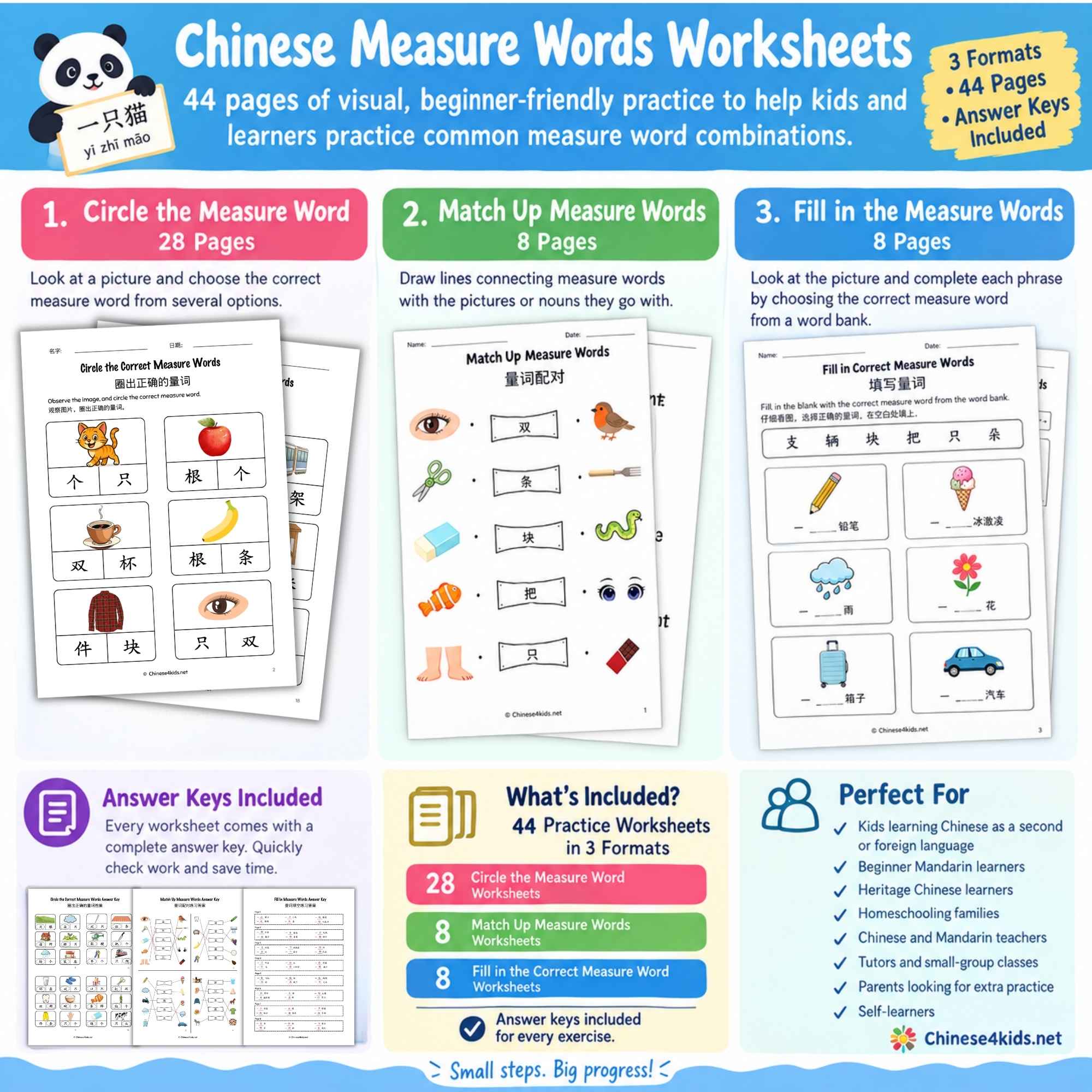
Practice at home Want printable practice for these measure words? Both resources use the same set of nouns, so your child can move from reading to writing without switching materials.
- Chinese Measure Words Flashcards — pair each noun with its measure word for quick review
- Chinese Measure Words Worksheets — written practice with answer keys
Related Measure Words
Once you’ve mastered animal measure words, explore other categories:
- Measure Words for People — Learn 个, 位, 群, 家, 口
- Measure Words for Food — Different foods use different logic
- Measure Words for Household Items — Common objects around the home
- Complete Guide to Chinese Measure Words — See how all categories connect
Frequently Asked Questions
What is the Chinese classifier for animals?
In Chinese, these are called measure words (量词, liàngcí). English-language Chinese-learning resources also call them classifiers or quantifiers. There isn’t one single classifier for every animal. 只 (zhī) is the general measure word used with many animals, while 头, 条, and 匹 are used with particular types of animals.
What measure word do you use for a cow in Chinese?
The usual measure word for a cow is 头 (tóu): 一头牛 means “one cow.”
What measure word do you use for a fish in Chinese?
The usual measure word for a fish is 条 (tiáo): 一条鱼 means “one fish.”
What measure word do you use for a dog in Chinese?
一只狗 is the standard beginner-friendly expression.
What measure word do you use for a cat?
一只猫 is the standard way to say “one cat.”
Can I use 只 for every animal?
只 is the most general measure word and works with many animals. But some animals commonly use other measure words:
Cows, elephants, donkeys = 头
Fish, snakes = 条
Horses = 匹
Do I have to memorize all four right away?
No. Start with 只 (the most common). Add 头 and 条 as you learn about large animals and fish/snakes. Learn 匹 when you encounter horses.
What about insects—只 or 条?
Usually 只 for bugs and insects: 一只蜜蜂 (one bee), 一只蝴蝶 (one butterfly).
Use 条 for worms and other long, wriggly creatures: 一条蚯蚓 (one earthworm), 一条毛毛虫 (one caterpillar).
Is 群 a measure word for animals?
Yes, 群 means a group or flock (一群鸟 = a flock of birds). Learn it when you need to count groups of animals, not individual animals.
Final Thoughts
Animal measure words are easiest to learn as combinations: 一只猫, 一头牛, 一条鱼, 一匹马. Some patterns can help you remember them, but children don’t need to work out the rule every time. Learn the measure word together with the animal, practice it in context, and the correct combination will gradually become automatic.
Ready to practice more? Our Chinese Measure Words Flashcards let children see measure words paired with each noun, and Chinese Measure Words Worksheets to practice.
If you find this article useful, please share it