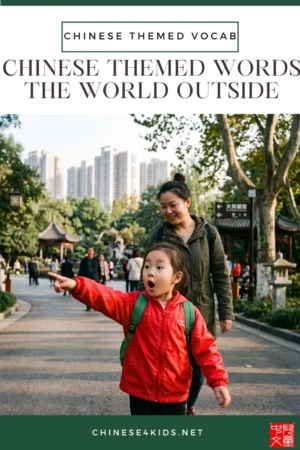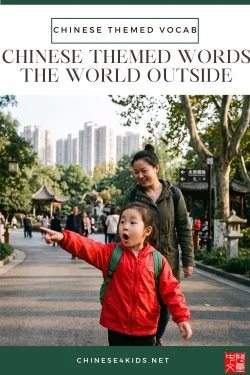

The world outside your front door is enormous in Chinese vocabulary terms: animals in dozens of categories, every form of transportation, the places you visit, the landscape you move through. This is the largest cluster in the bundle — 80 words across 8 themes — and the one that most directly connects Mandarin to the wider world.
Every trip becomes a language lesson, if you have the words.
Contents
hide
Why these themes belong together
These eight themes all share a common context: movement through the world outside home and school. From the pets you encounter every day to the wild animals you see at the zoo, from the bus you take to school to the airplane you board to visit family — all of it becomes speakable in Chinese when these themes are learned together.
我们坐公共汽车去动物园,看到了大象和长颈鹿。回家路上经过了公园和图书馆。
Wǒmen zuò gōnggòng qìchē qù dòngwùyuán, kàndào le dàxiàng hé chángjǐnglù. Huíjiā lùshàng jīngguò le gōngyuán hé túshūguǎn.
We took the bus to the zoo and saw elephants and giraffes. On the way home we passed a park and a library.
Transportation (公共汽车), wild animals (大象, 长颈鹿), and city places (公园, 图书馆) — a whole family outing described entirely in Chinese.
宠物 | Pets
Pets are children’s favourite animals, which makes this vocabulary extraordinarily sticky. Each word in this theme connects to an animal children already have feelings about — and feelings make words memorable.
▶️ Watch: hear all 10 words in native Mandarin
The 10 words:
| Chinese | Pinyin | English |
|---|---|---|
| 狗 | gǒu | Dog |
| 猫 | māo | Cat |
| 鱼 | yú | Fish |
| 鸟 | niǎo | Bird |
| 兔子 | tùzi | Rabbit |
| 仓鼠 | cāngshǔ | Hamster |
| 乌龟 | wūguī | Turtle / Tortoise |
| 宠物 | chǒngwù | Pet |
| 豚鼠 | túnshǔ | Guinea Pig |
| 蜥蜴 | xīyì | lizard |
Example sentences:
| Sentence | Pinyin | English |
|---|---|---|
| 我有一只狗。 | Wǒ yǒu yì zhī gǒu. | I have a dog. |
| 兔子喜欢吃胡萝卜。 | Tùzi xǐhuān chī húluóbo. | Rabbits like to eat carrots. |
| 我想养一只蜥蜴。 | Wǒ xiǎng yǎng yì zhī xīyì. | I want to keep (raise) a cat. |
🃏 Get the 宠物 | Pets Flashcard Set — €5 → Montessori 3-part cards + sentence cards + audio. Instant download, €5.
农场动物 | Farm Animals
Farm animals are a perennially popular vocabulary theme for young children, and in Chinese they also connect to the zodiac and folk culture. Cows, goats, sheep, pigs, and roosters all appear here.
▶️ Watch: hear all 10 words in native Mandarin
The 10 words:
| Chinese | Pinyin | English |
|---|---|---|
| 牛 | niú | Cow / Ox |
| 山羊 | shānyáng | Goat |
| 绵羊 | miányáng | Sheep |
| 猪 | zhū | Pig |
| 公鸡 | gōngjī | rooster |
| 母鸡 | mǔjī | Chicken |
| 马 | mǎ | Horse |
| 鸭子 | yāzi | Duck |
| 老鼠 | lǎoshǔ | Mouse / Rat |
| 农场 | nóngchǎng | Farm |
Example sentences:
| Sentence | Pinyin | English |
|---|---|---|
| 牛在吃草。 | Niú zài chī cǎo. | The cow is eating grass. |
| 公鸡在叫。 | gōngjī zài jiào. | The rooster is crowing. |
| 爷爷家有一个农场。 | Yéye jiā yǒu yí ge nóngchǎng. | Grandpa’s family has a farm. |
🃏 Get the 农场动物 | Farm Animals Flashcard Set — €5 → Montessori 3-part cards + sentence cards + audio. Instant download, €5.
动物园野生动物 | Zoo / Wild Animals
Wild and zoo animals capture children’s imaginations in ways that household vocabulary rarely does. Lions, tigers, pandas, elephants — these words come with natural enthusiasm that makes learning fast.
▶️ Watch: hear all 10 words in native Mandarin
The 10 words:
| Chinese | Pinyin | English |
|---|---|---|
| 狮子 | shīzi | Lion |
| 老虎 | lǎohǔ | Tiger |
| 大象 | dàxiàng | Elephant |
| 猴子 | hóuzi | Monkey |
| 熊 | xióng | Bear |
| 长颈鹿 | chángjǐnglù | Giraffe |
| 斑马 | bānmǎ | Zebra |
| 动物园 | dòngwùyuán | Zoo |
| 蛇 | shé | Snake |
| 熊猫 | xióngmāo | Panda |
Example sentences:
| Sentence | Pinyin | English |
|---|---|---|
| 狮子是动物之王。 | Shīzi shì dòngwù zhī wáng. | The lion is the king of animals. |
| 熊在睡觉。 | Xióng zài shuìjiào. | The bear is sleeping. |
| 熊猫很可爱。 | Xióngmāo hěn kě’ài. | Pandas are very cute. |
🃏 Get the 动物园野生动物 | Zoo / Wild Animals Flashcard Set — €5 → Montessori 3-part cards + sentence cards + audio. Instant download, €5.
方向和位置 | Directions and Positions
Direction and position words are the invisible glue of everyday Mandarin — used constantly in instructions, descriptions, and navigation, but rarely taught explicitly. 上, 下, 左, 右, 前, 后 appear in sentences children hear and say every single day.
▶️ Watch: hear all 10 words in native Mandarin
The 10 words:
| Chinese | Pinyin | English |
|---|---|---|
| 上 | shàng | Up / On / Above |
| 下 | xià | Down / Under / Below |
| 左 | zuǒ | Left |
| 右 | yòu | Right |
| 前 | qián | Front / Before |
| 后 | hòu | Back / Behind / After |
| 里 | lǐ | Inside |
| 外 | wài | Outside |
| 中间 | zhōngjiān | Middle / Between |
| 旁边 | pángbiān | Beside / Next to |
Example sentences:
| Sentence | Pinyin | English |
|---|---|---|
| 书在桌子上。 | Shū zài zhuōzi shàng. | The book is on the table. |
| 我家前面有一棵树。 | Wǒ jiā qiánmiàn yǒu yì kē shù. | There is a tree in front of my house. |
| 邮局在银行旁边。 | Yóujú zài yínháng pángbiān. | The post office is next to the bank. |
🃏 Get the 方向和位置 | Directions and Positions Flashcard Set — €5 → Montessori 3-part cards + sentence cards + audio. Instant download, €5.
交通工具 | Transportation
Transportation vocabulary connects Mandarin to the world children move through every day — the bus to school, the car to the supermarket, the train to visit family. Each sentence in this theme describes a real journey.
▶️ Watch: hear all 10 words in native Mandarin
The 10 words:
| Chinese | Pinyin | English |
|---|---|---|
| 汽车 | qìchē | Car / Automobile |
| 公交车 | gōngjiāochē | Public Bus |
| 地铁 | dìtiě | Subway / Metro / Underground |
| 火车 | huǒchē | Train |
| 飞机 | fēijī | Airplane |
| 轮船 | lúnchuán | Ship / Steamboat |
| 出租车 | chūzūchē | Taxi / Cab |
| 自行车 | zìxíngchē | Bicycle |
| 摩托车 | mótuōchē | Motorcycle |
| 房车 | fángchē | RV / Campervan / Motorhome |
Example sentences:
| Sentence | Pinyin | English |
|---|---|---|
| 我爸爸有一辆汽车。 | Wǒ bàba yǒu yí liàng qìchē. | My dad has a car. |
| 飞机在天上飞。 | Fēijī zài tiānshàng fēi. | Airplanes fly in the sky. |
| 他们开房车去度假。 | Tāmen kāi fángchē qù dùjià. | They drive an RV to go on vacation. |
🃏 Get the 交通工具 | Transportation Flashcard Set — €5 → Montessori 3-part cards + sentence cards + audio. Instant download, €5.
旅行有关地点 | Places Related to Travel
Travel location vocabulary is especially meaningful for overseas Chinese families who visit China or other Chinese-speaking regions. These are the words children need at airports, train stations, and tourist sites.
▶️ Watch: hear all 10 words in native Mandarin
The 10 words:
| Chinese | Pinyin | English |
|---|---|---|
| 车站 | chēzhàn | Station (Bus/Train) |
| 机场 | jīchǎng | Airport |
| 港口 | gǎngkǒu | Port / Harbor |
| 路 | lù | Road / Street / Path |
| 桥 | qiáo | Bridge |
| 停车场 | tíngchēchǎng | Parking lot |
| 加油站 | jiāyóuzhàn | Gas station / Petrol station |
| 十字路口 | shízì lùkǒu | Crossroads / Intersection |
| 地图 | dìtú | Map |
| 站 | zhàn | Stop / Station (simplified) |
Example sentences:
| Sentence | Pinyin | English |
|---|---|---|
| 火车站在哪里? | Huǒchēzhàn zài nǎlǐ? | Where is the train station? |
| 我们开车过桥。 | Wǒmen kāichē guò qiáo. | We drive across the bridge. |
| 下一站是哪里? | Xià yí zhàn shì nǎlǐ? | Where is the next stop? |
🃏 Get the 旅行有关地点 | Places Related to Travel Flashcard Set — €5 → Montessori 3-part cards + sentence cards + audio. Instant download, €5.
| Chinese | Pinyin | English |
|---|---|---|
| 公园 | gōngyuán | Park |
| 商店 | shāngdiàn | Shop / Store |
| 超市 | chāoshì | Supermarket |
| 医院 | yīyuàn | Hospital |
| 车站 | chēzhàn | Station (bus/train) |
| 邮局 | yóujú | Post office |
| 银行 | yínháng | Bank |
| 饭馆 | fànguǎn | Restaurant |
| 学校 | xuéxiào | School |
| 图书馆 | túshūguǎn | Library |
Example sentences:
| Sentence | Pinyin | English |
|---|---|---|
| 我们去公园玩吧。 | Wǒmen qù gōngyuán wán ba. | Let’s go play in the park. |
| 我在车车站等你。 | Wǒ zài chēzhàn děng nǐ. | I’ll wait for you at the station. |
| 我喜欢去图书馆看书。 | Wǒ xǐhuān qù túshūguǎn kàn shū. | I like going to the library to read. |
🃏 Get the 城市 | Places in the City Flashcard Set — €5 → Montessori 3-part cards + sentence cards + audio. Instant download, €5.
自然元素 | Nature Elements
Nature vocabulary opens up the world outdoors in Mandarin — trees, flowers, grass, rivers, mountains. This theme pairs naturally with walks, gardening, and any time spent outside.
▶️ Watch: hear all 10 words in native Mandarin
The 10 words:
| Chinese | Pinyin | English |
|---|---|---|
| 树 | shù | Tree |
| 花 | huā | Flower |
| 草 | cǎo | Grass |
| 河 | hé | River |
| 山 | shān | Mountain / Hill |
| 天空 | tiānkōng | Sky |
| 云 | yún | Cloud |
| 太阳 | tàiyáng | Sun |
| 月亮 | yuèliang | Moon |
| 星星 | xīngxing | Star |
Example sentences:
| Sentence | Pinyin | English |
|---|---|---|
| 公园里有很多树。 | Gōngyuán lǐ yǒu hěn duō shù. | There are many trees in the park. |
| 我们去爬山吧。 | Wǒmen qù pá shān ba. | Let’s go climb the mountain. |
| 天上有很多星星。 | Tiānshàng yǒu hěn duō xīngxing. | There are many stars in the sky. |
🃏 Get the 自然元素 | Nature Elements Flashcard Set — €5 → Montessori 3-part cards + sentence cards + audio. Instant download, €5.
What can your child do with these 80 words?
Not fluent conversation — that’s unrealistic at this stage. But after this cluster, your child or student can:
✅ Name pets, farm animals, and wild animals in Chinese
✅ Give and follow directions in Mandarin — left, right, up, down, in front, behind
✅ Talk about transportation: the bus they take to school, the car, the airplane to visit family
✅ Name the places they visit in the city — park, supermarket, library, hospital
✅ Describe a full family outing entirely in Chinese — transport, places, animals seen
The world outside doesn’t stop at your front door. These 80 words mean Chinese doesn’t have to either.
How to actually get these words to stick
Many parents and teachers think “show the word, say the word, done.” But getting words to the point where a child spontaneously uses them takes three layers:
Input layer — daily exposure. 5–10 minutes a day of these words in conversation, songs, picture books, or flashcards.
Interaction layer — the parent or teacher asks using these words, and the child responds. Even a one-word answer counts. Don’t demand full sentences yet.
Application layer — the child uses the words unprompted. This is the real “knows it” benchmark.
Most overseas families get stuck at layer 2 — the child is asked in Chinese but answers in English. This isn’t the child’s failure; it’s a missing tool.
For parents who don’t speak Mandarin themselves
If you want your child to learn Mandarin but don’t speak it fluently yourself: don’t give up. Speak Chinese with Kids was built for exactly this situation. Each daily-life scenario comes with 30 of the most useful Mandarin sentences, complete with audio and video. You don’t need to know any Chinese to use it — you read along with the audio. Combined with these flashcard themes, you and your child can start learning together at home.
Learn more about Speak Chinese with Kids →
Putting it all together
The dinner table is the oldest and most reliable Chinese classroom overseas families have. Three meals a day, every day, for years — if the words are there, the language follows. These 50 words are the ones to start with.
Get the Full Bundle — €79 → Or browse all 30 individual themesfrom €5 each.
→ Cluster 1: All About Me (family members, body parts, personal pronouns, emotions)
→ Cluster 2: Building Blocks (numbers, colors, action verbs)
→ Cluster 3: Food & Meals — the most natural Mandarin context for overseas Chinese families
→ Cluster 4: Home & Daily Life — wiring Mandarin into the daily routine
→ Cluster 5: School Life — words your child can use today
→ Cluster 6: The World Outside — animals, transportation, places, nature
Each cluster has its own complete guide with vocabulary, sentences, and teaching tips.
If you like this post, share it