Quick Answer
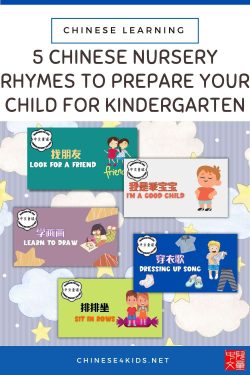
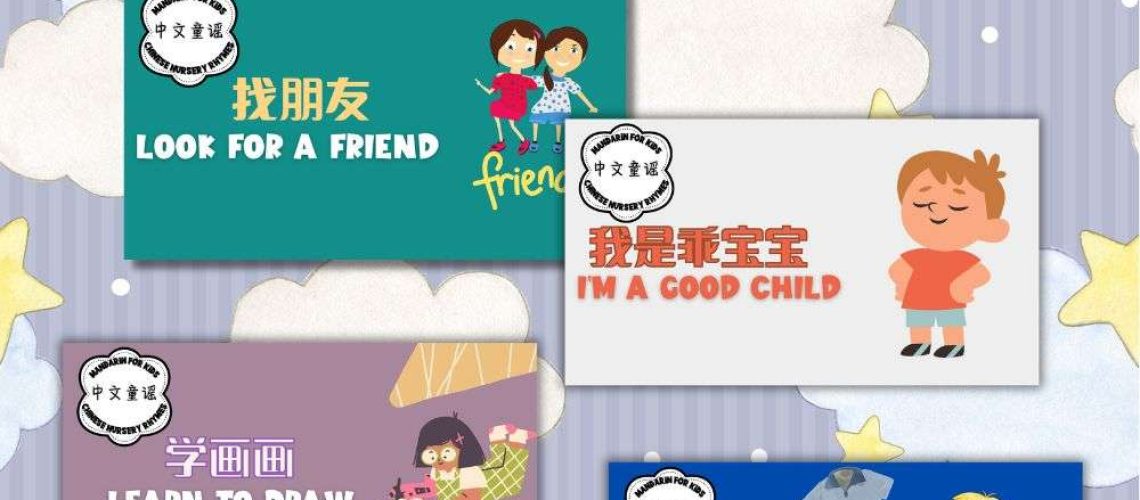
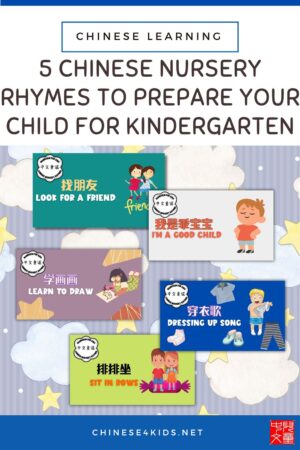
The five essential Chinese nursery rhymes for kindergarten readiness are 我是乖宝宝 (independence), 找朋友 (socialization), 学画画 (creativity), 排排坐 (sharing & empathy), and 穿衣歌 (self-care routines) — each addresses a critical kindergarten skill through repetitive, melody-driven learning.
The five essential Chinese nursery rhymes for kindergarten readiness are 我是乖宝宝 (independence), 找朋友 (socialization), 学画画 (creativity), 排排坐 (sharing & empathy), and 穿衣歌 (self-care routines) — each addresses a critical kindergarten skill through repetitive, melody-driven learning.
Nursery rhymes play an essential role in early childhood development. They are more than just fun songs to sing; they also help children develop language skills, social behaviors, and a sense of rhythm. For parents preparing their kids for kindergarten or pre-K, Chinese nursery rhymes can be an exceptional tool—far more effective than flashcard drills because they combine language, melody, movement, and emotion simultaneously.
Here’s what I’ve learned after teaching hundreds of young Mandarin learners: Children almost always remember the actions and melody before they remember the words. The rhythm of a song wires the language into their brain differently than spoken instruction alone. After the first three weeks of regular singing, even children who initially resisted the rhymes start humming them unprompted during unrelated activities—a sign that the language has moved from “external input” to “internal processing.”
By incorporating these rhymes into daily routines, you can help your child develop the confidence and skills they need to thrive in their new school environment. The five rhymes below aren’t random picks—each addresses a specific kindergarten readiness gap that I’ve watched hold children back year after year.
Nursery Rhyme Overview & Skill Focus
| Rhyme (Chinese) | Key Skill | Best Age | Difficulty |
|---|---|---|---|
| 我是乖宝宝 I Am A Good Child |
Independence | 2–4 years | Beginner |
| 找朋友 Look for A Friend |
Socialization & Greetings | 3–5 years | Beginner–Intermediate |
| 学画画 Learning to Draw |
Fine Motor & Creativity | 2–4 years | Beginner |
| 排排坐 Sit in A Row |
Sharing & Empathy | 3–5 years | Intermediate |
| 穿衣歌 Dressing Up Song |
Self-Care Independence | 2–4 years | Beginner |
Which Rhyme is Right for Your Child?
Every child develops differently. Use this table to match your child’s current needs to the rhyme that will have the most impact:
| Your Child’s Profile | Top Pick Rhyme | Why It Works |
|---|---|---|
| Shy or anxious about new social situations | 找朋友 (Look for A Friend) |
Provides a scripted, repeatable way to initiate social contact. The fixed melody and actions reduce social anxiety. |
| Still needs help dressing / getting ready in the morning | 穿衣歌 (Dressing Up Song) |
Breaks dressing into digestible steps. Singing while dressing makes the routine feel predictable and fun. |
| Struggles with independence / clings to parent at drop-off | 我是乖宝宝 (I Am A Good Child) |
Reinforces the positive identity of “being capable on my own.” Repeated singing builds confidence. |
| Has weak pencil grip / avoids drawing activities | 学画画 (Learning to Draw) |
Combines fine motor practice with musical engagement. Children hold a crayon and mimic drawing motions while singing. |
| Struggles with sharing / taking turns / impulse control | 排排坐 (Sit in A Row) |
Embeds sharing and turn-taking into a structured, familiar activity. The fixed order (you, me, someone absent) teaches fairness. |
| Heritage learner with Chinese exposure / non-heritage learner building from zero | All five — use in rotation | These five rhymes cover the phonetic range of Mandarin and hit every kindergarten-readiness skill. Start all five and let your child gravitate toward favorites. |
| Skill Domain | Why It Matters | Which Rhyme(s) |
|---|---|---|
| Emotional Independence | Children who can dress, eat, and play without constant adult help transition smoothly to classroom routines. | 我是乖宝宝, 穿衣歌 |
| Social Confidence | The ability to greet peers, ask to join play, and follow turn-taking rules is essential for classroom success. | 找朋友, 排排坐 |
| Fine Motor Control | Strength and coordination in fingers and wrists are prerequisites for holding pencils and writing. | 学画画 |
| Language Phonetics | Exposure to Mandarin’s four tones and common phoneme patterns builds auditory discrimination for literacy. | All five rhymes |
Best for Building Independence
Sing 我是乖宝宝 and 穿衣歌 during morning routines. Children learn that self-sufficiency is valued and achievable.
Best for Classroom Socialization
Lead 找朋友 as a group activity. The rhyme teaches greetings, handshakes, and the social dance of making friends — exactly what happens on Day 1 of kindergarten.
Best for Creative Play
学画画 pairs beautifully with hands-on art time. Sing while they draw, linking the rhyme’s imagery to their own creative output.
Best for Empathy & Sharing
排排坐 introduces turn-taking and caring for others in a concrete, food-based context that children understand intuitively.
The Five Essential Nursery Rhymes
我是乖宝宝 (Wǒ Shì Guāi Bǎobǎo) — I Am A Good Child
小鸟自己飞
Xiǎo niǎo zìjǐ fēi
Little birds fly on their own小马自己跑
Xiǎo mǎ zìjǐ pǎo
Little horses run on their own我是乖宝宝
Wǒ shì guāi bǎobǎo
I am a good baby不要妈妈抱
Bù yào māmā bào
No need for mommy’s hug
This rhyme is perfect for encouraging independence in young children. The lyrics emphasize the idea of being self-sufficient, which is crucial as kids transition to a school environment where they will need to do many things on their own. By singing this rhyme, children can gain confidence in their abilities to complete tasks without constant parental assistance.
Kindergarten connection: Children who sing this regularly arrive at school prepared to attempt things independently—asking for help only when genuinely needed, not out of habit.
找朋友 (Zhǎo Péngyǒu) — Look for A Friend
找呀找呀找朋友
Zhǎo ya zhǎo ya zhǎo péngyǒu
Looking around, I searched for a friend找到一个好朋友
Zhǎo dào yīgè hǎo péngyǒu
I found a good friend敬个礼呀
Jìng gè lǐ ya
I saluted握握手
Wò wò shǒu
We shook hands你是我的好朋友
Nǐ shì wǒ de hǎo péngyǒu
You are my good friend再见!
Zàijiàn!
Bye-bye!
Socialization is a critical part of kindergarten, and 找朋友 helps children practice making friends. The rhyme teaches them how to greet others, introduce themselves, and say goodbye. These basic social skills will help children navigate new social settings like a classroom. It’s especially valuable because it pairs the words with physical actions—saluting and shaking hands—creating a multi-sensory memory.
Kindergarten connection: On the first day of school, this rhyme becomes muscle memory. Children naturally extend greetings to new classmates because the song has already wired the behavior into their social toolkit.
学画画 (Xué Huàhuà) — Learning to Draw
小宝宝,
Xiǎo bǎobǎo,
Little baby,学画画,
Xué huàhuà,
Learning to draw,大蜡笔,
Dà làbǐ,
Holding a big crayon,手中拿,
Shǒu zhōng ná,
Holding it in the hand,画小鸭,
Huà xiǎo yā,
Drawing a little duck,叫嘎嘎,
Jiào gāgā,
That goes quack quack,画小马,
Huà xiǎo mǎ,
Drawing a little horse,骑回家。
Qí huí jiā.
Riding it back home.
This rhyme is excellent for developing fine motor skills. As children mimic the actions of drawing while singing the song, they are practicing the control and precision needed for tasks like writing. Plus, it fosters creativity and imagination, which are vital for early learning.
Kindergarten connection: Children who regularly engage with this rhyme arrive at kindergarten with stronger pencil grip and hand-eye coordination—both essential for the early writing and drawing activities that fill the first few weeks of school.
排排坐 (Pái Pái Zuò) — Sit in A Row
排排坐 (Pái pái zuò)
Sit in a row吃水果
Chī shuǐguǒ
And eat fruit你一个
Nǐ yīgè
One for you我一个
Wǒ yīgè
One for me宝宝不在
Bǎobǎo bù zài
The baby is here留一个
Liú yīgè
Let’s save one for him
排排坐 teaches children about sharing and taking turns, which are essential behaviors in any classroom setting. The rhyme makes these concepts tangible by associating them with something familiar—eating fruit. It also introduces the idea of caring for others, as seen in the line “Let’s save one for them,” fostering empathy and consideration.
Kindergarten connection: In a classroom where snacks are shared and turn-taking is constant, children who know this rhyme understand the principle intuitively. They’re less likely to hoard materials or interrupt peers because the song has already normalized generosity.
穿衣歌 (Chuān Yī Gē) — Dressing Up Song
小胳膊, 穿袖子
Xiǎo gēbo, chuān xiùzi
Little arms, put into sleeves穿上衣, 扣扣子
Chuān shàngyī, kòu kòuzi
Put on the top, button up小脚丫, 穿裤子
Xiǎo jiǎo yā, chuān kùzi
Little toes, put into the pants穿上袜子, 穿鞋子
Chuān shàng wàzi, chuān xiézi.
Put on socks, put on shoes
This rhyme is practical and fun, teaching children how to dress themselves. Independence in dressing is a significant milestone for pre-K kids, and this song breaks down the process into simple, manageable steps. By regularly singing this rhyme, children can internalize the routine of getting dressed. This will help them be more self-reliant in the mornings before school.
Kindergarten connection: Morning transitions become smoother when children have internalized a dressing sequence through song. Teachers appreciate students who can manage their own coats, shoes, and jackets without prompting—and this rhyme builds exactly that habit.
Why Mandarin Songs and Nursery Rhymes Work Better Than Flashcards
Many parents ask: Why should I use songs when flashcards are faster? Research in early childhood education explains why music-based learning creates stronger, more durable language retention than visual drill methods alone.
Early childhood educators consistently recommend songs combined with movement because they engage multiple neural pathways simultaneously: auditory processing, motor planning, emotional memory, and semantic meaning. When a child sings while mimicking the actions, the language is wired into their brain through rhythm, muscle memory, and emotional association—not just visual recognition.
In Mandarin specifically, this matters more than in English. Mandarin’s four lexical tones (高 high, 上 rising, 去 falling, 入 entering) are melodic by nature. A child who learns words through tonal songs (where pitch variation is exaggerated for music) develops better tone discrimination than a child who hears tones only in speech. This is why native speakers often use singsongy exaggeration when teaching young children—they’re unconsciously leveraging the music-language connection to reinforce tonal awareness.
Beyond the specific skills each rhyme teaches, singing together offers several broader developmental benefits:
- Auditory discrimination: Repeated exposure to Mandarin’s four tones strengthens the child’s ability to hear and reproduce the language’s essential phonetic features.
- Memory anchoring: Melody-driven learning creates stronger neural pathways than spoken language alone, making new concepts “stick” faster.
- Emotional bonding: Singing together creates positive associations with Chinese-language learning and reinforces the parent–child connection.
- Predictability & safety: Familiar routines (singing the same rhyme each morning, for example) give children a sense of control and security as they prepare for a new environment.
How to Use These Rhymes at Home: Practical Strategies from the Classroom
Strategy 1: Anchor Each Rhyme to a Specific Daily Routine
Pair each rhyme with a specific time of day. For example, sing 穿衣歌 every morning while getting dressed, and 我是乖宝宝 after breakfast. Consistency turns the rhymes into behavioral cues—children begin to anticipate the next step in their routine just from hearing the opening notes.
Pro tip from years of teaching: Children who use songs as routine anchors show significantly fewer morning meltdowns because the transitions feel predictable. The song becomes the signal for what comes next, reducing parental prompting.
Strategy 2: Bedtime Wind-Down with Chinese Songs
A quiet version of any of these rhymes (or all five in rotation) can signal that the day is ending and bedtime is approaching. The familiar melody helps regulate the child’s nervous system as they transition from active play to sleep. A quiet singing voice works better than recorded audio for this—your voice is more soothing.
Strategy 3: Group Learning and Peer Teaching
If you have multiple children or do playdates, sing these rhymes together. 找朋友 and 排排坐 are especially powerful in group settings because they reinforce social skills in real time. I’ve watched shy children lead the group in singing these rhymes, building social confidence in the process.
Strategy 4: Pair Songs with Visual Learning
Combine these rhymes with related kindergarten vocabulary themes (animals, clothing, self-care actions) or Chinese picture books that reinforce the rhyme’s content. For example, read a book about getting dressed, then sing 穿衣歌. The repetition across modalities (listening, reading, singing, doing) accelerates retention.
Strategy 5: Record Your Own Singing
After you and your child learn a rhyme together, record yourself singing it on your phone. Play it during car rides or background downtime. Hearing you (rather than a professional recording) creates a stronger emotional connection and reinforces that this is “our family’s song,” not a distant media product.
Common Mistakes Parents Make With Chinese Nursery Rhymes
After watching hundreds of families teach their children these rhymes, I’ve noticed patterns in what works and what backfires. Here are the most common mistakes—and how to avoid them:
Mistake 1: Expecting memorisation too quickly
Parents often expect their child to know all five rhymes within a week. In reality, most children need 3–4 weeks of daily exposure to retain a single rhyme. This is normal and expected—don’t interpret slow progress as disinterest.
Better approach: Start with one rhyme for the first 2 weeks. Add a second rhyme only after the child can hum the melody unprompted. This prevents overwhelm and ensures deeper learning.
Mistake 2: Correcting pronunciation constantly
Parents who are fluent in Mandarin sometimes over-correct their child’s tones or sounds. This turns singing into a lesson, not a play activity. Children who feel “corrected” often stop trying to sing altogether.
Better approach: Ignore mispronunciations. Your job is to expose; the child’s job is to absorb. Corrections can come later, if at all. Right now, the goal is confidence and repetition.
Mistake 3: Using songs only during designated “lesson time”
When parents treat rhyme-singing as a formal lesson (“OK, lesson time now, sing your rhyme”), children often resist. The activity feels like work, not play.
Better approach: Sing during natural moments: morning routine, car rides, cooking, bedtime. The more casual and integrated into daily life, the more your child absorbs without resistance.
Mistake 4: Skipping the actions and gestures
Some parents only play the audio, assuming the words alone are enough. This misses the motor-memory component that makes the learning stick.
Better approach: Always include actions. Even simple gestures (pointing, swaying, pretending to draw, miming putting on clothes) activate the motor cortex and create multi-sensory memory anchors.
Mistake 5: Not connecting the rhyme to real-world behavior
A child can sing 穿衣歌 perfectly but still resist getting dressed the next morning. The song and the behavior live in separate mental boxes.
Better approach: Sing the rhyme during the activity, not before it. Sing 穿衣歌 while putting on clothes, not at some other time. This links the melody to the action, turning the song into a behavioral cue.
Chinese Nursery Rhymes vs. English Nursery Rhymes: What’s Different?
Parents sometimes ask: Aren’t English nursery rhymes enough? Why add Chinese? The answer lies in how Mandarin’s phonetic system differs fundamentally from English.
English nursery rhymes (like “Twinkle Twinkle Little Star”) are optimized for English phonetics: consonant clusters, connected speech, stress-timed rhythm. They reinforce English-language patterns beautifully—but they don’t train a child’s ear for Mandarin.
Mandarin nursery rhymes (like the five you’re learning here) are optimized for Mandarin phonetics: single consonants, clear syllable separation, four lexical tones, and syllable-timed rhythm. A child who grows up hearing English nursery rhymes but no Mandarin ones will develop excellent English phonetic discrimination—but their Mandarin tone perception will lag behind a child exposed to tonal songs.
The takeaway: If your goal is bilingual fluency, you need both. English nursery rhymes alone are not sufficient for Mandarin readiness. The good news? You don’t have to choose—use both. English rhymes build English literacy; Mandarin rhymes build Mandarin literacy. A child can learn both simultaneously without confusion.
Do I need to speak fluent Chinese to teach these rhymes to my child?
No. The YouTube videos provide clear audio models. Play the video, sing along, and let your child hear the correct pronunciation repeatedly. Your willingness to sing, even imperfectly, is far more valuable to your child than native-level accuracy.
What if my child doesn’t seem interested in singing?
Start small. Play the video without pressure. Some children warm up to singing slowly. Others prefer to watch first, then participate weeks later. Avoid forcing it; interest builds naturally when singing feels like play, not a lesson.
When should I introduce these rhymes—how far in advance of kindergarten?
Ideally, begin 6–12 months before kindergarten entry. This gives the child time to internalize the rhymes and connect them to the behaviors they describe. Even 2–3 months is valuable, though earlier is better.
My child speaks English at home but will learn Chinese at school. Will these rhymes help with that transition?
Absolutely. Even if your child is a non-heritage learner, these rhymes build phonetic familiarity and classroom behavioral skills simultaneously. Teachers often use the same rhymes in Chinese classes, so your child will be prepared to join in immediately.
Can these rhymes replace formal Chinese lessons?
They’re an excellent supplement to formal learning, but they work best as one component of a broader Chinese language exposure. Pair them with picture books, daily conversation, and structured vocabulary practice for the fastest progress.
What if my child only knows simplified characters but kindergarten teaches traditional?
The rhymes themselves are language-based, not character-dependent. Your child can sing them without worrying about written form. The teacher will handle character introduction; your job is to build the auditory and behavioral foundation.
How long does it take for a child to learn these rhymes?
Most children grasp the basic melody and key words within 2–3 weeks of regular exposure (5–10 minutes daily). Full lyrics and fluent singing typically take 2–3 months. Progress depends on the child’s age, exposure frequency, and individual learning pace.
Key Takeaways
- These five rhymes directly target the five core kindergarten-readiness skills: independence, socialization, creativity, empathy, and self-care.
- Pair each rhyme with a specific daily routine (dressing, mealtimes, bedtime) to reinforce both language and behavior.
- Repetition and melody—not perfect pronunciation—are what matter most for young learners.
- Start 6–12 months before kindergarten entry for strongest impact, but even 2–3 months of daily singing builds measurable advantage.
- These rhymes work equally well for heritage learners consolidating Chinese and non-heritage learners building foundational phonetic awareness.
- Combine rhymes with a broader Chinese-learning strategy (picture books, daily phrases, structured vocabulary) for comprehensive readiness.
Product Recommendations
Chinese Children’s Songs Lyrics Book expands on this foundation by providing lyrics, pinyin, and translations for 20+ additional children’s songs organized by theme (animals, numbers, seasons, emotions). It pairs perfectly with the YouTube videos above and gives you a complete song library for daily singing—extending beyond these five rhymes into a comprehensive audio-learning toolkit. This is ideal if you want to layer in additional songs as your child’s confidence grows, or if you have younger siblings who benefit from different songs at different stages.
Speak Chinese with Kids course complements the rhymes by teaching you (the parent) how to create a Chinese-language-rich environment at home—even if you don’t speak fluent Chinese yourself. The course includes daily scene-based dialogue scripts with audio, so you can model spoken Chinese naturally during feeding, dressing, bathtime, and playtime. When combined with these rhymes, the course ensures your child hears consistent, comprehensible Chinese input throughout the day, dramatically accelerating phonetic learning and confidence-building before kindergarten entry.
If you like this post, share it
Related Articles and Products
- Chinese Children’s Song Lyrics Book
- 6 Chinese Nursery Rhythms on Animals – Learn Chinese with Children’s Poems
- 3 Chinese Nursery Rhythms For Summer Time
- A Little Snowman – The Snowman Is Gone Chinese Nursery Rhythms
- Chinese Nursery Rhythms for Spring
- 6 Nursery Rhythms to Welcome Chinese New Year
- Sing Children’s Songs – Learn Chinese Language
- Summer Theme Chinese Learning Pack for Kids
- Ice Cream Theme Chinese Learning Pack for Kids
- Animals Rock – Chinese Nursery Rhythms on Animals