Hanyu Pinyin (汉语拼音), also called the Chinese Phonetic Alphabet, is the official romanization system for standard Mandarin Chinese. It uses the Latin alphabet to show you exactly how to pronounce each Chinese character — no guessing needed.
Whether you’re a parent teaching your child at home, a classroom teacher, or a heritage learner yourself, understanding how pinyin works is essential. It’s the bridge between the sounds you hear and the characters you see in Mandarin. This guide breaks down the system into its core components, gives you practical study methods, and shares strategies for teaching pinyin effectively.
Want to understand why pinyin is especially important for overseas learners? Check out our detailed guide: Why Pinyin Is Essential for Kids Learning Chinese Abroad. That article explains the “why” behind this system. This one focuses on the “how” — the actual components and techniques.
What Does Hanyu Pinyin Stand for?
Hanyu (汉语) means “the spoken language of the Han people”.
Pinyin (拼音) literally means “spelled sounds”.
The pinyin system was developed in the 1950s and published by the Chinese government in 1958. It was adopted as an international standard by the International Organization for Standardization (ISO) in 1982, making it the globally recognized system for Mandarin pronunciation.
Initials and Finals
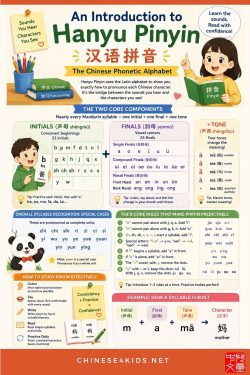
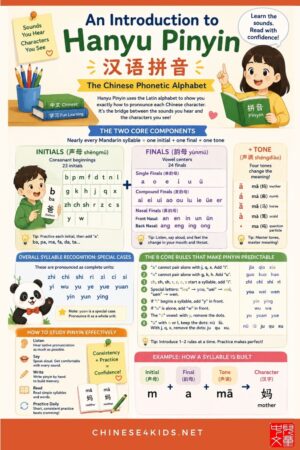
Nearly every Mandarin syllable follows one simple pattern: one initial + one final + one tone.
Understanding this structure is the first step to mastering pinyin.
Initials: The Consonant Beginnings
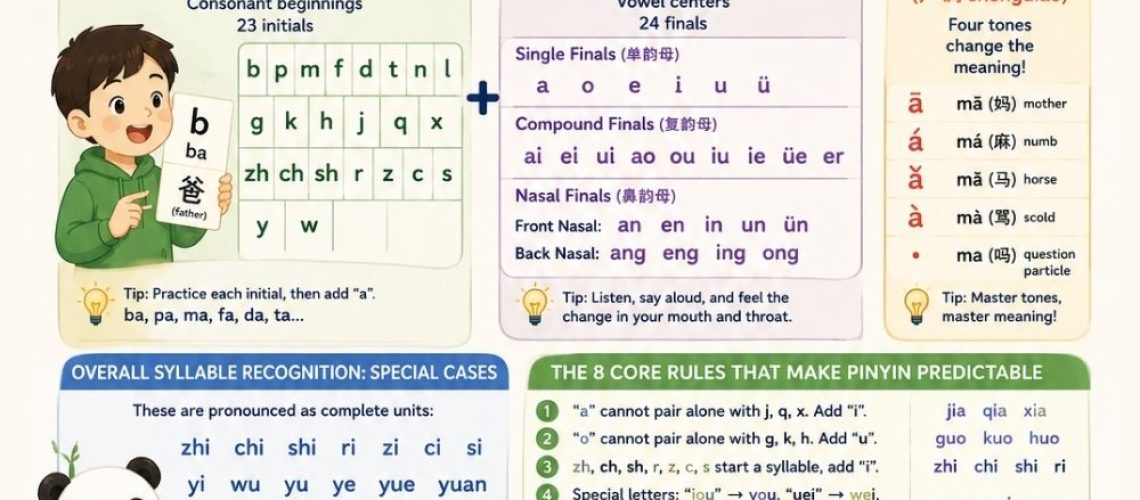
Initials (声母, shēngmǔ) are the consonant sounds that begin a syllable. There are 23 initials in pinyin:
b、p、m、f、d、t、n、l、g、k、h、j、q、x、zh、ch、sh、r、z、c、s、y、w
Think of initials as the opening sound of a word. Just like “b” starts the English word “ball,” the initial b in pinyin starts the syllable ba (爸, father).
Learning tip for students:
Practice saying each initial sound in isolation, then combine it with the vowel “a” to create simple syllables like ba, pa, ma, fa, da, ta. This builds muscle memory for each consonant sound.
Practice saying each initial sound in isolation, then combine it with the vowel “a” to create simple syllables like ba, pa, ma, fa, da, ta. This builds muscle memory for each consonant sound.
Finals: The Vowel Centers
Finals (韵母, yùnmǔ) are the vowel sounds that follow the initial. There are 24 finals in pinyin, organized into three types:Single Finals (单韵母): a, o, e, i, u, ü
These are pure vowel sounds. The final a in the character 妈 (mother) is a single final.
Compound Finals (复韵母): ai, ei, ui, ao, ou, iu, ie, üe, er
These combine two vowels. The final ai in 爱 (love) is a compound final.
Nasal Finals (鼻韵母):
- Front nasal finals: an, en, in, un, ün
- Back nasal finals: ang, eng, ing, ong
These finals end with a nasal sound (through the nose). The final ang in 唱 (sing) is a back nasal final.
Learning tip for students:
Create a chart with three columns — one for each final type. Say each final aloud and listen to how your mouth and throat position changes. Write down what you notice. Pairing visuals with spoken practice makes the sounds stick.
Create a chart with three columns — one for each final type. Say each final aloud and listen to how your mouth and throat position changes. Write down what you notice. Pairing visuals with spoken practice makes the sounds stick.
Overall Syllable Recognition: Special Cases
Some syllables don’t follow the initial + final pattern exactly. Instead, they’re pronounced as a complete unit:
zhi、chi、shi、ri、zi、ci、si、yi、wu、yu、ye、yue、yuan、yin、yun、ying
For example, zhi isn’t pronounced “z-ee” — it’s said as one smooth sound, like the “j” in English “jump” but with the tongue rolled back slightly.
Note: yuan is a special case. Pronounce it as a whole unit rather than breaking it into parts.
The 8 Core Rules That Make Pinyin Predictable
Pinyin has consistent rules that make it easier to predict which sounds go together. Learn these patterns, and you can decode almost any syllable:
- “a” cannot pair alone with j, q, x. An “i” must go between them. Examples: jia, qia, xia
- “o” cannot pair alone with g, k, h. A “u” must go between them. Examples: guo, kuo, huo
- When zh, ch, sh, r, z, c, s start a syllable, add “i” at the end. Examples: zhi, chi, shi, ri, zi, ci, si
- Special letter changes: When used alone, “iou” becomes you, “uei” becomes wei, and “uen” becomes wen
- If “i” begins a syllable, add “y” in front. Examples: yin, ying (not “ia”, “ing”)
- If “u” is alone, add “w” in front. Examples: wu, wa (not just “u”, “a”)
- The “ü” vowel: If it goes with y, remove the dots. Examples: yu, yuan, yue (shown as “ü” in technical writing, but written without dots when paired with y)
- When “ü” goes with n or l, keep the dots. Examples: nü, lü. But when “ü” goes with j, q, x, remove the dots. Examples: ju, qu, xu
Teaching tip:
Don’t teach all 8 rules at once. Introduce one or two rules per lesson, then have students practice writing pinyin combinations that follow that rule. This gradual approach builds confidence.
Don’t teach all 8 rules at once. Introduce one or two rules per lesson, then have students practice writing pinyin combinations that follow that rule. This gradual approach builds confidence.
How to Study Pinyin Effectively
Pinyin requires active practice — just reading about it won’t build the pronunciation skill you need.
For Self-Study and Young Learners:
- Start with initials first. Say each of the 23 initials aloud, noticing where you place your tongue and mouth. Record yourself and compare to a native speaker model.
- Practice combining initials with the single final “a.” This creates simple syllables (ba, pa, ma, fa, etc.) that are easy to pronounce and remember. Build from there.
- Use a pinyin table as your reference. Keep one visible while practicing. A good table shows all initials across the top and all finals down the side, making it easy to see which combinations are possible and which don’t exist in Mandarin.
- Say pinyin out loud every time you practice. Reading silently doesn’t train your mouth muscles or your ear. Speaking matters.
- Match pinyin to characters you know. Once you learn a few characters, practice saying them using their pinyin. This connects the sound system to real words.
For Parents Teaching at Home:
- Keep practice sessions short — 10 to 15 minutes. Young learners lose focus quickly. Frequent short sessions work better than one long study block.
- Make it multi-sensory. Say the sound, write it in the air with your finger, trace it on sandpaper or with a pen. Different sensations help different learners.
- Play the “guess the sound” game. Show your child a pinyin syllable and ask them to say it out loud before you confirm. This builds independence and confidence.
- Use a pinyin workbook with handwriting practice. Writing reinforces muscle memory. The Hanyu Pinyin Handwriting Practice Workbook for Kids breaks down proper stroke order and spacing, which matters for overall Chinese writing fluency.
Teaching Ideas for Classrooms and Group Settings
Idea 1: The Pinyin Sound Sort
Write 10-15 pinyin syllables on cards, or use the Pinyin Flashcards). Group students in pairs and have them sort the cards by initial sound (all the ones that start with “b,” all the ones that start with “zh,” etc.). This builds rapid recognition of initials.
Idea 2: Tone and Syllable Matching
Write the same pinyin syllable with four different tone marks (mā, má, mǎ, mà). Have students say each one aloud and match them to pictures or words. This reinforces that tone changes meaning.
Idea 3: The Pinyin Syllables Table Hunt
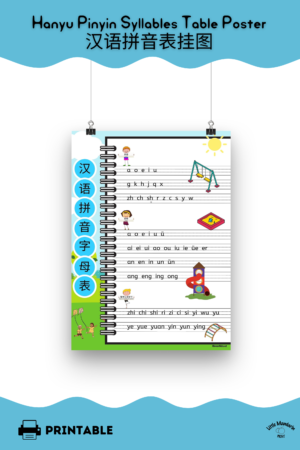
Post the Hanyu Pinyin Syllables Table Poster on the classroom wall. Call out an initial and a final, and have students race to find the matching syllable on the chart. The first to find and say it correctly gets a point.
Idea 4: Build a Pinyin Reference Wall
Create a classroom display with:
- A large pinyin chart (the A3 size Hanyu Pinyin Syllables Table Poster works perfectly)
- Index cards showing the 8 core rules with examples
- Pictures labeled with pinyin so students see real-world use
Students reference this independently, reducing their dependence on you for constant correction.
Idea 5: Pinyin-to-Character Connection
Once students can read pinyin, show them a new character with its pinyin. Say it together, then reveal the meaning or a picture. This teaches them that pinyin is a tool for learning characters, not an end goal.
Learning Resources to Support Your Study
Having the right materials makes a huge difference. Here are tools that work well for both independent learners and classroom settings:
For Handwriting Practice:
The Hanyu Pinyin Handwriting Practice Workbook for Kids (available on Amazon) is designed specifically for young learners. It includes:
- Proper stroke order and spacing guidance
- Lined practice sections for each syllable
- Review pages to reinforce learning
This workbook pairs perfectly with any pinyin study program and helps build neat, consistent handwriting from the start.
For Visual Reference:
The Hanyu Pinyin Syllables Table Poster from Chinese4kids is one of the most useful tools you can display. Available in A3 and A4 sizes, it shows:
- All 23 initials and 24 finals
- Complete syllable combinations
- Clear organization so students can understand the system at a glance
Post it in your classroom or home study space, and reference it daily. Students will naturally learn to use it independently.
For Additional Flashcard Practice:
Chinese Mandarin Pinyin Flashcards on Amazon provide portable, hands-on practice. Flashcards work especially well for students who learn by repetition and enjoy the tactile experience of flipping through cards.
What Comes Next: From Pinyin to Characters
Pinyin is the foundation, not the destination.
Once your child can read and produce pinyin sounds accurately, the natural next step is learning Chinese characters. The most effective approach is to start with the most common characters and words — the ones that appear repeatedly in everyday conversation and simple texts.
Mastering high-frequency vocabulary gives learners the ability to recognize a significant portion of content they encounter. This is why we built Vocabulary Made Easy — a course designed specifically for overseas children aged 6–10.
The course takes learners systematically through the 300 most essential Chinese words, aligned with HSK Levels 1 and 2. Each word includes its pinyin, character, meaning, and usage in context. Once your child has completed Vocabulary Made Easy, they have both:
- Solid pinyin skills (from mastering pronunciation)
- Core vocabulary knowledge (the 300 words that appear most often)
This combination opens the door to independent reading of leveled children’s books and simple texts — a huge milestone.
Key Takeaways
Pinyin is a consistent, learnable system. Once you understand the components (initials, finals, tones) and the 8 core rules, you can decode almost any Mandarin syllable.
Active practice matters more than passive reading. Speaking pinyin aloud, writing it, and matching it to real characters builds the skills you need.
For overseas children especially, pinyin provides clarity. Without immersion in the Chinese environment, pinyin gives learners a reliable map for pronunciation — essential for building confidence.
Pinyin is a beginning, not an ending. Use it as your foundation for learning characters and building vocabulary.
Helpful Resources from Chinese4kids
- 📖 Why Pinyin Is Essential for Kids Learning Chinese Abroad — Understand why pinyin matters especially for overseas learners, and how it fits into the broader learning journey
- 🖼️ Hanyu Pinyin Syllables Table Poster — A3 and A4 printable reference showing the full pinyin table, perfect for classroom walls or home study desks
- 📚 Vocabulary Made Easy Course — Take your pinyin foundation and build real vocabulary. Covers the 300 most essential Chinese words aligned with HSK 1–2
Other Useful Resources
- Hanyu Pinyin Handwriting Practice Workbook (Amazon) — Structured practice for proper character formation and pinyin handwriting
- Chinese Mandarin Pinyin Flashcards (Amazon) — Portable flashcard set for repetition-based learning
Share this guide with teachers and parents who are starting their Mandarin journey.
You May Also Be Interested:
If you’re building a complete Mandarin foundation for your child, these resources form a natural progression:
- Speak Chinese with Kids Course — After pinyin, practice conversational Mandarin with practical sentences for daily life
- Chinese4kids Membership – Access lesson plans, worksheets, and flashcards designed for teachers and heritage families
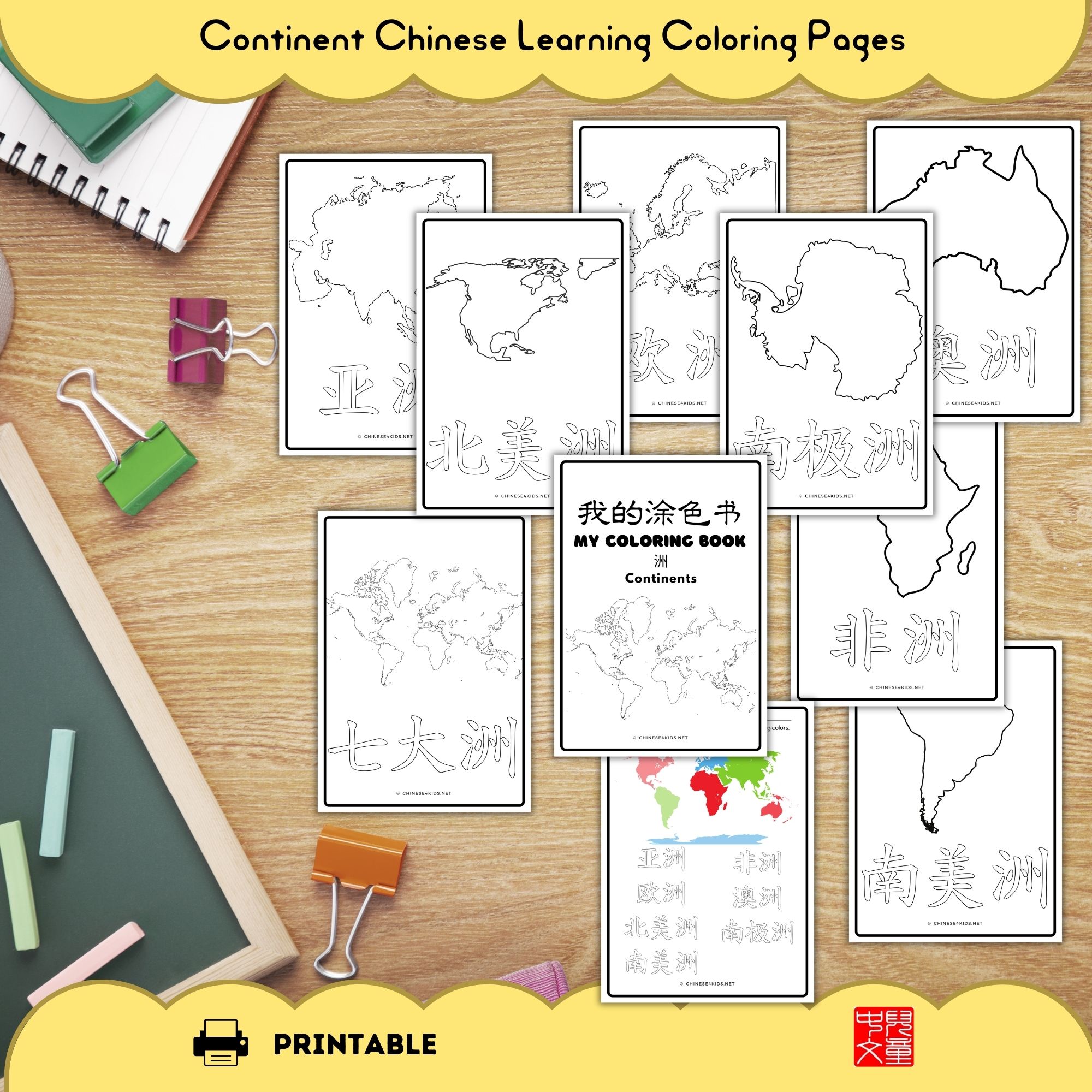
- Chinese learning worksheets collection – Printable activities that reinforce pinyin, vocabulary, and character recognition
- Chinese learning flashcards Hive – A growing library of Chinese learning flashcards organized by theme and level