Foundations

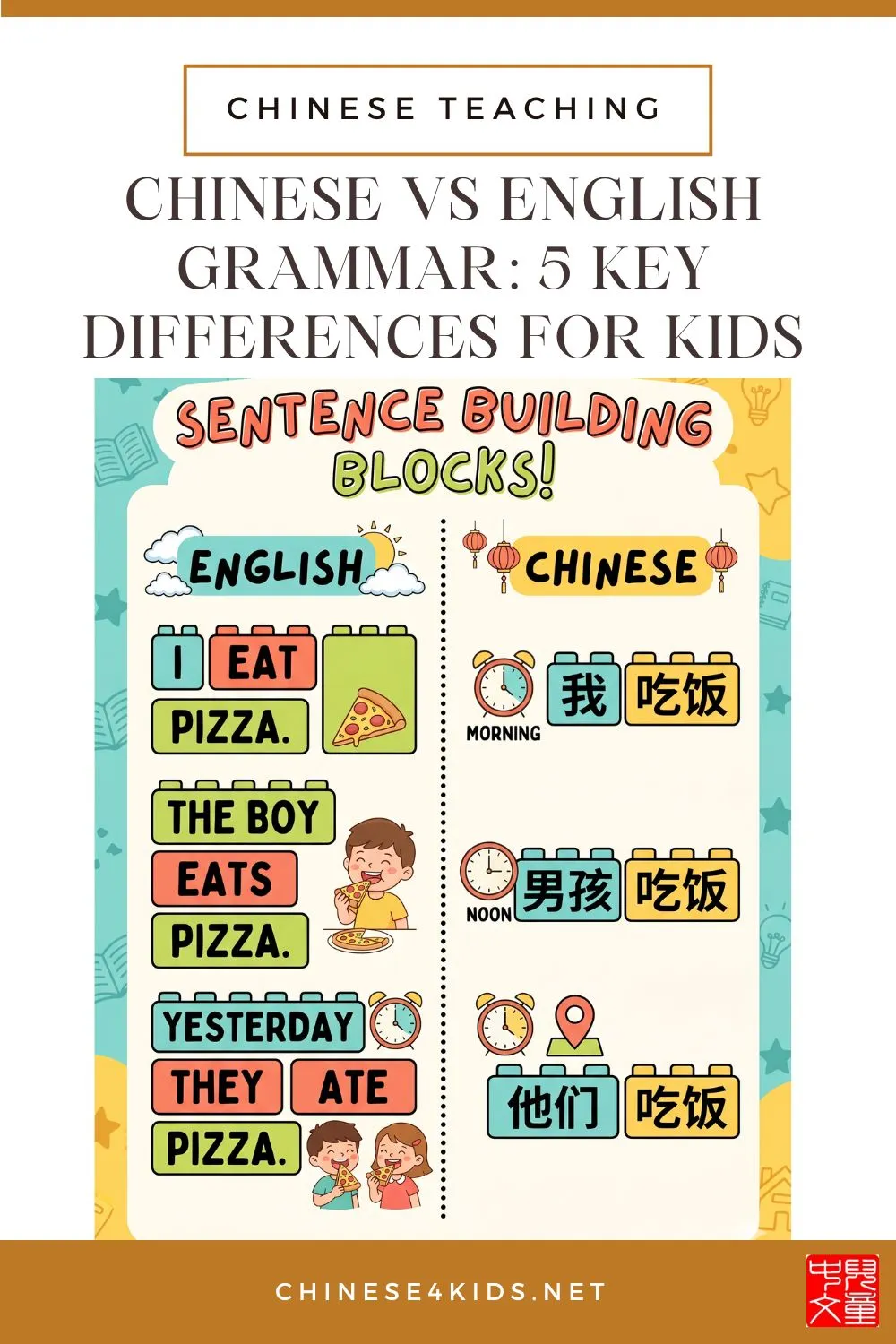
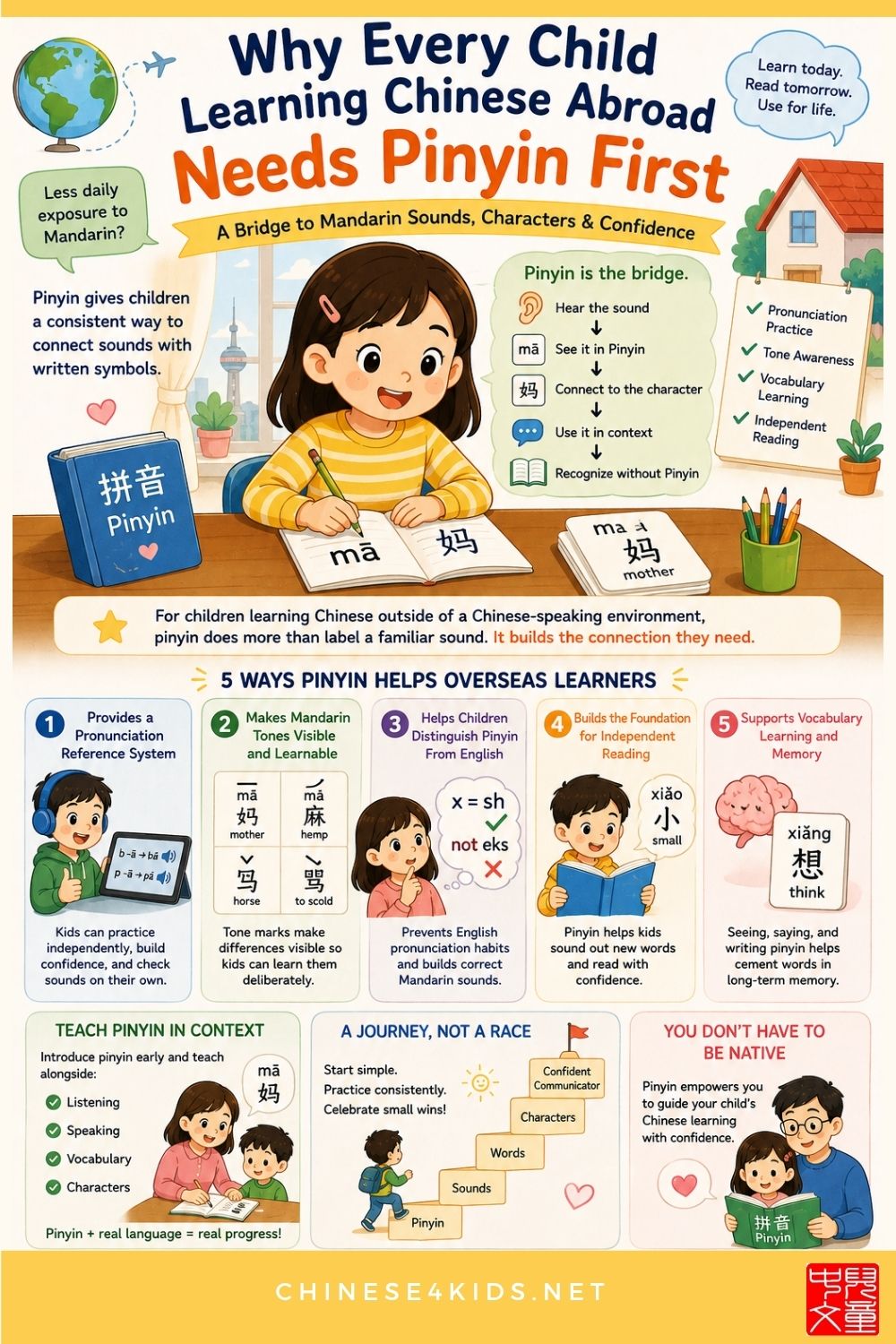
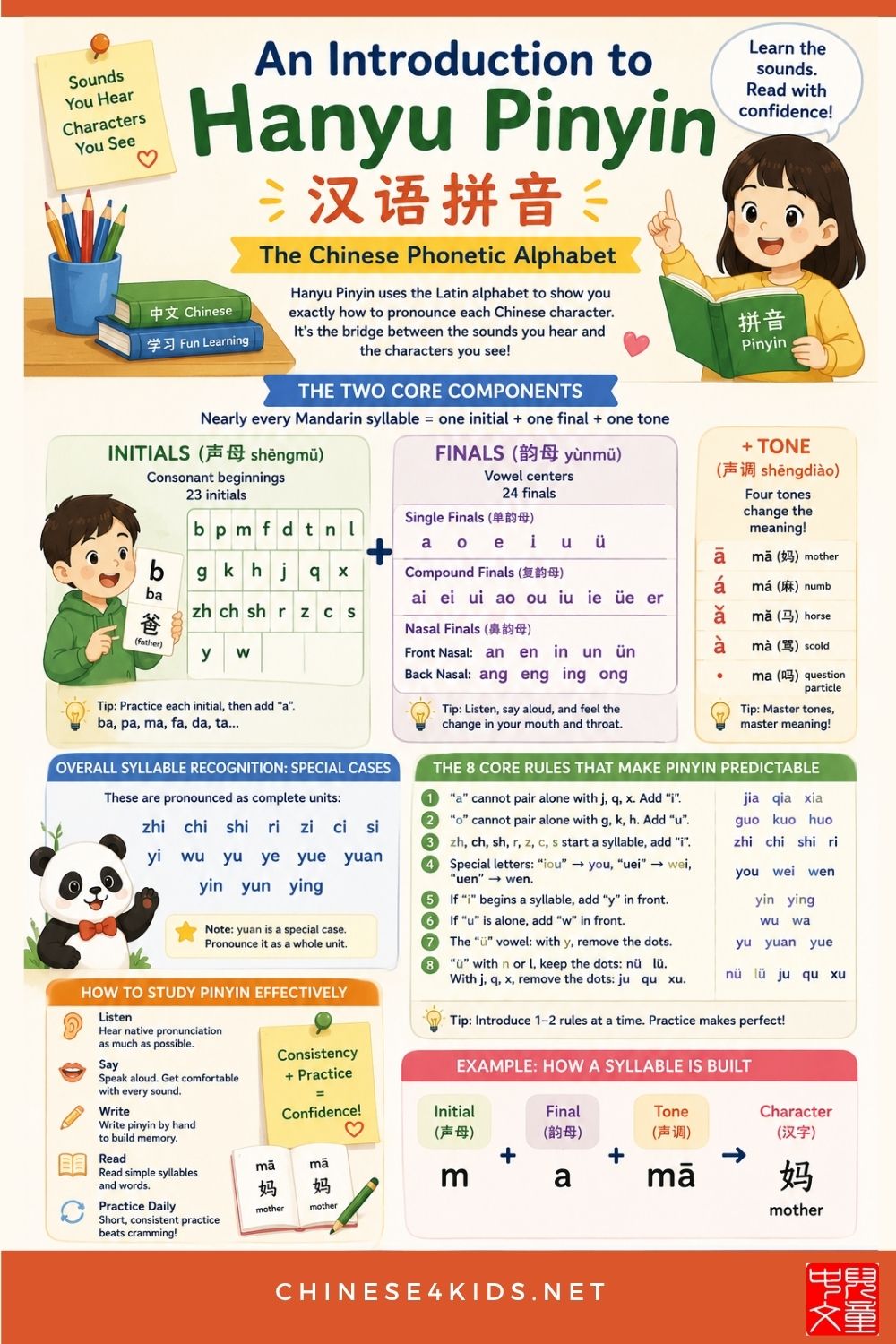
Every overseas Mandarin learner — heritage, non-heritage, adopted, or mixed-background — runs into the same five foundations: pinyin, tones, character recognition, vocabulary, and basic grammar. Get these right early and everything later gets easier. Get them wrong or skip them, and reading, writing, and confidence all stall. This category gives you concrete, parent-and-teacher-tested methods for each one: when to introduce pinyin and when to retire it, how to make tones stick without drilling, which characters to teach first and why, how to grow vocabulary from 30 words to 300 without overwhelm, and how to introduce grammar without making it feel like grammar. No vague advice to “read more” — just specific techniques, sequences, and resources you can use this week.

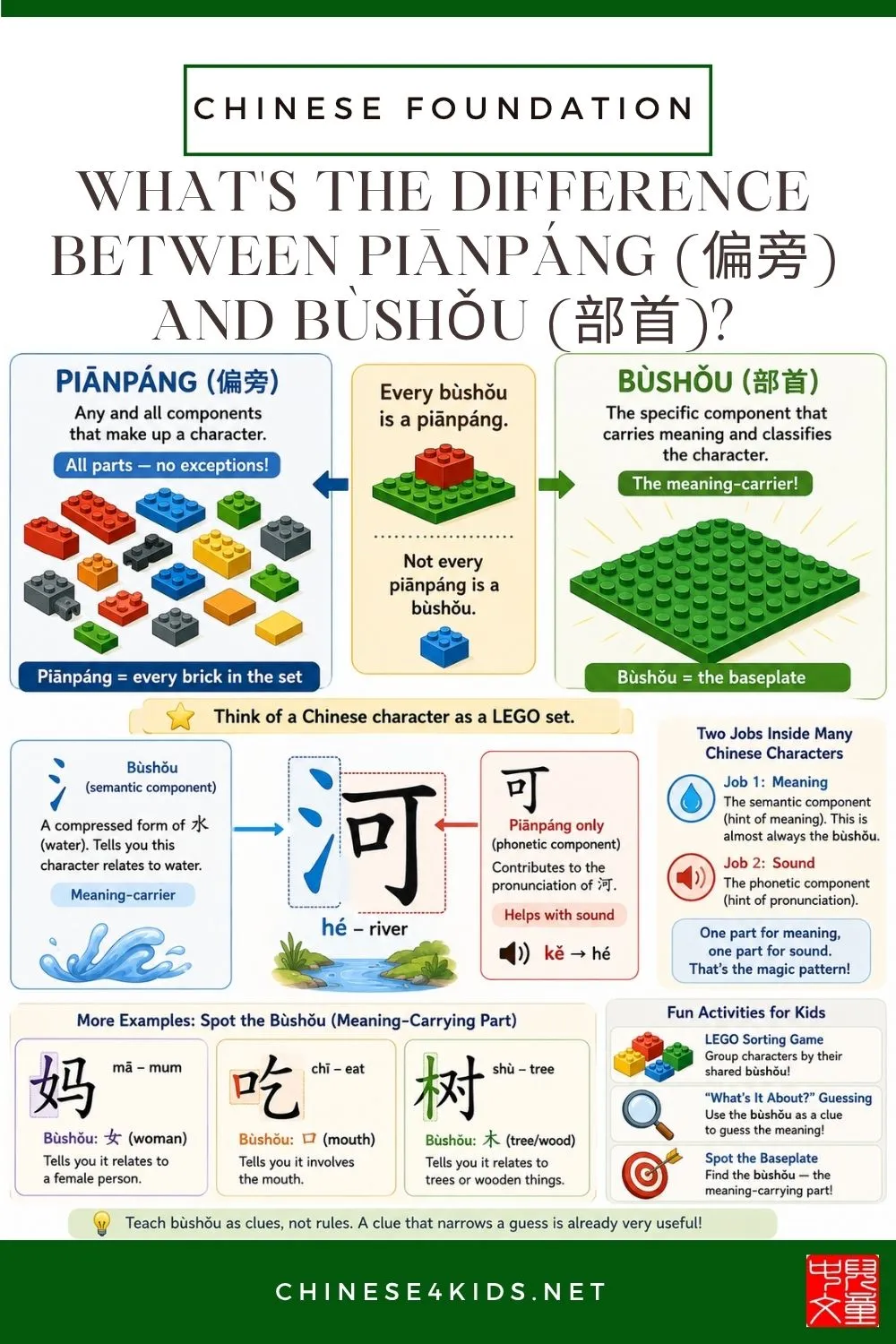
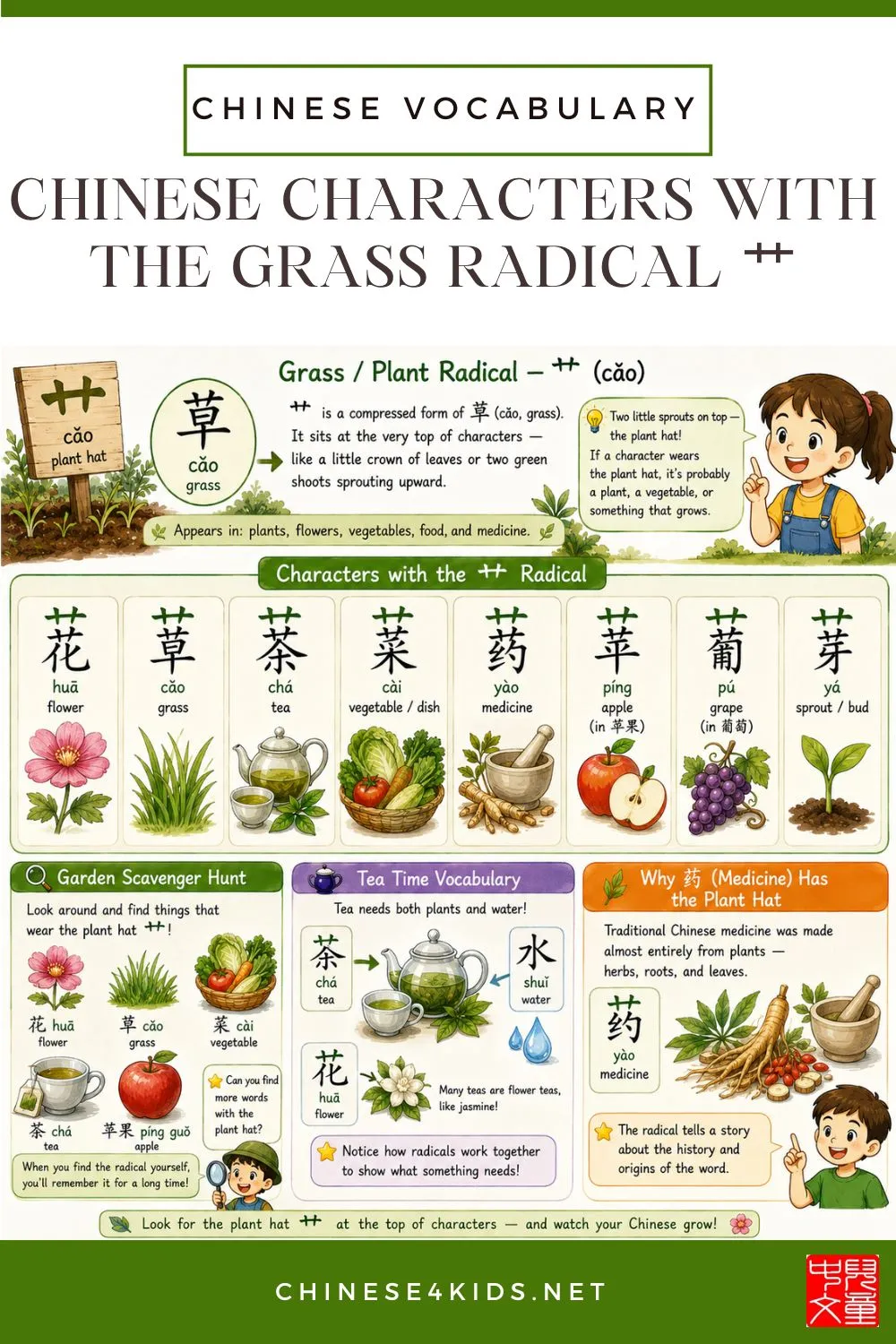
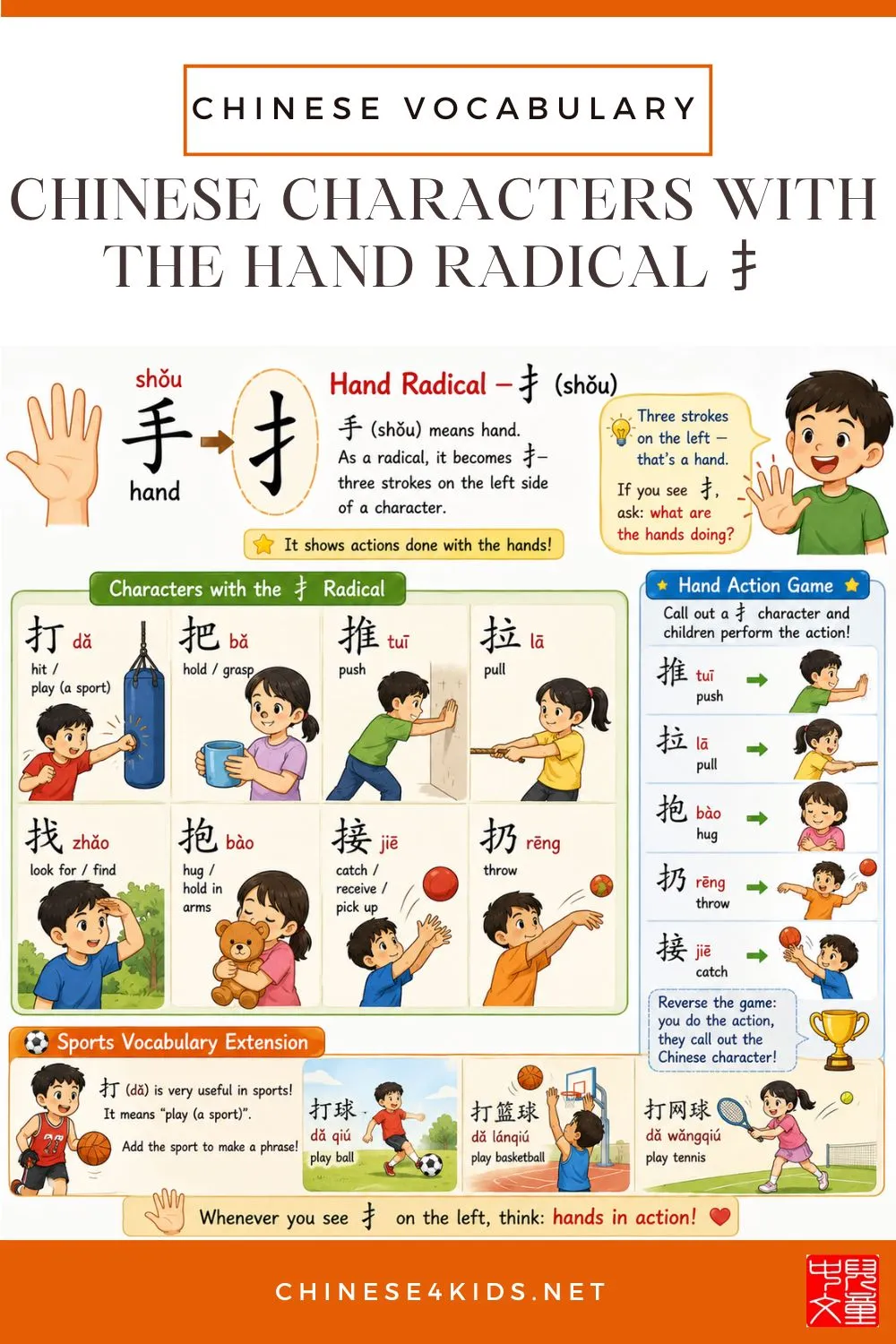
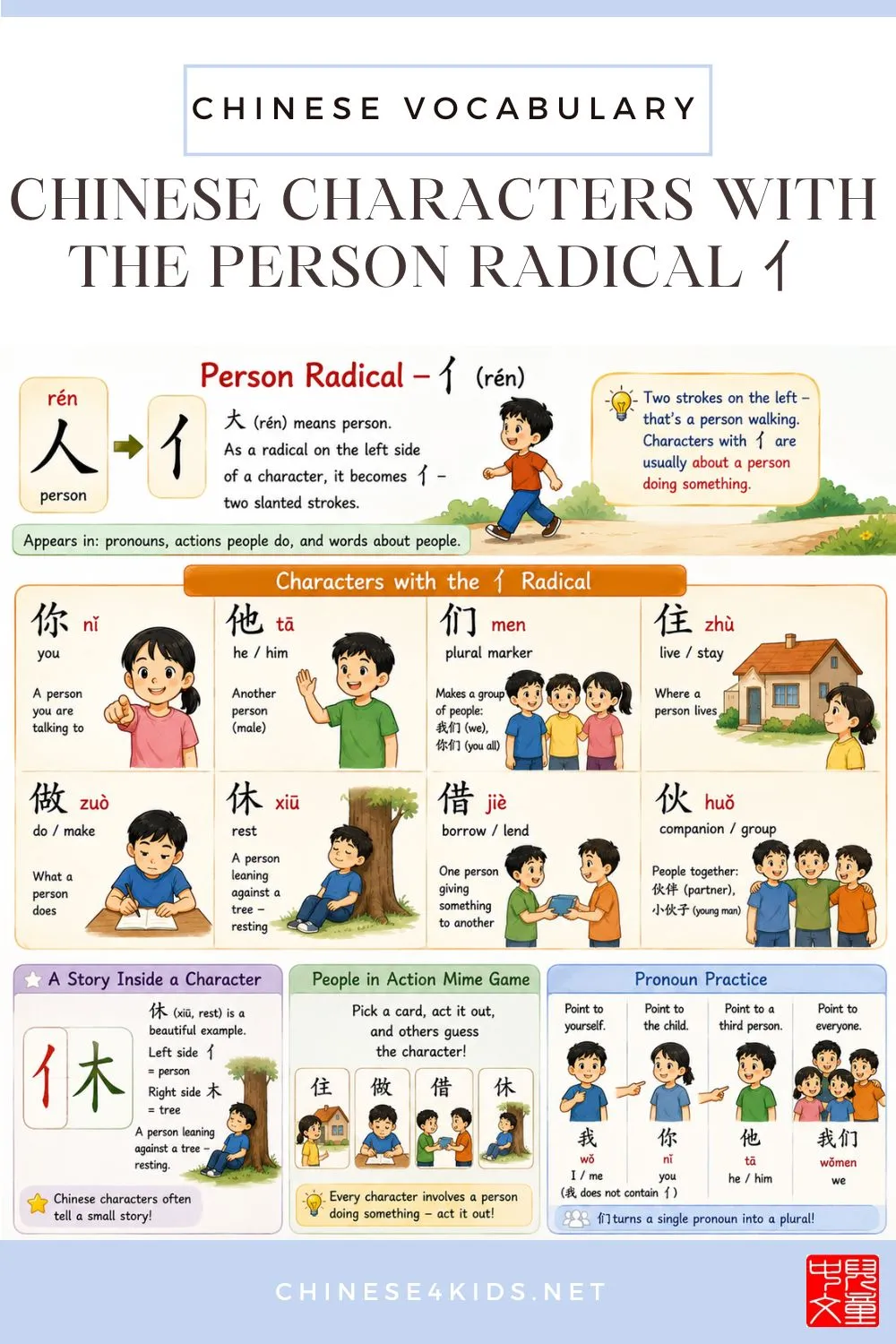
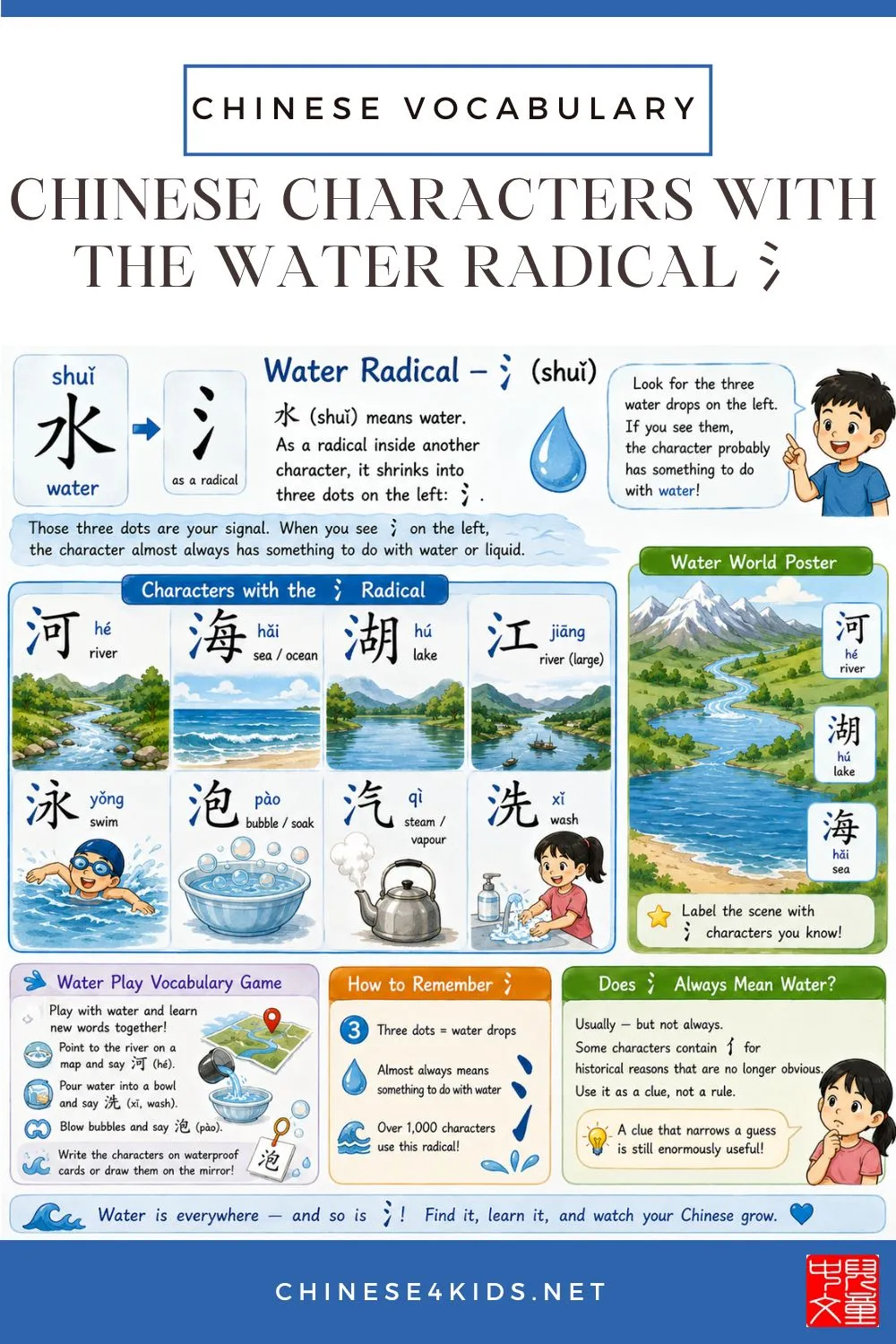
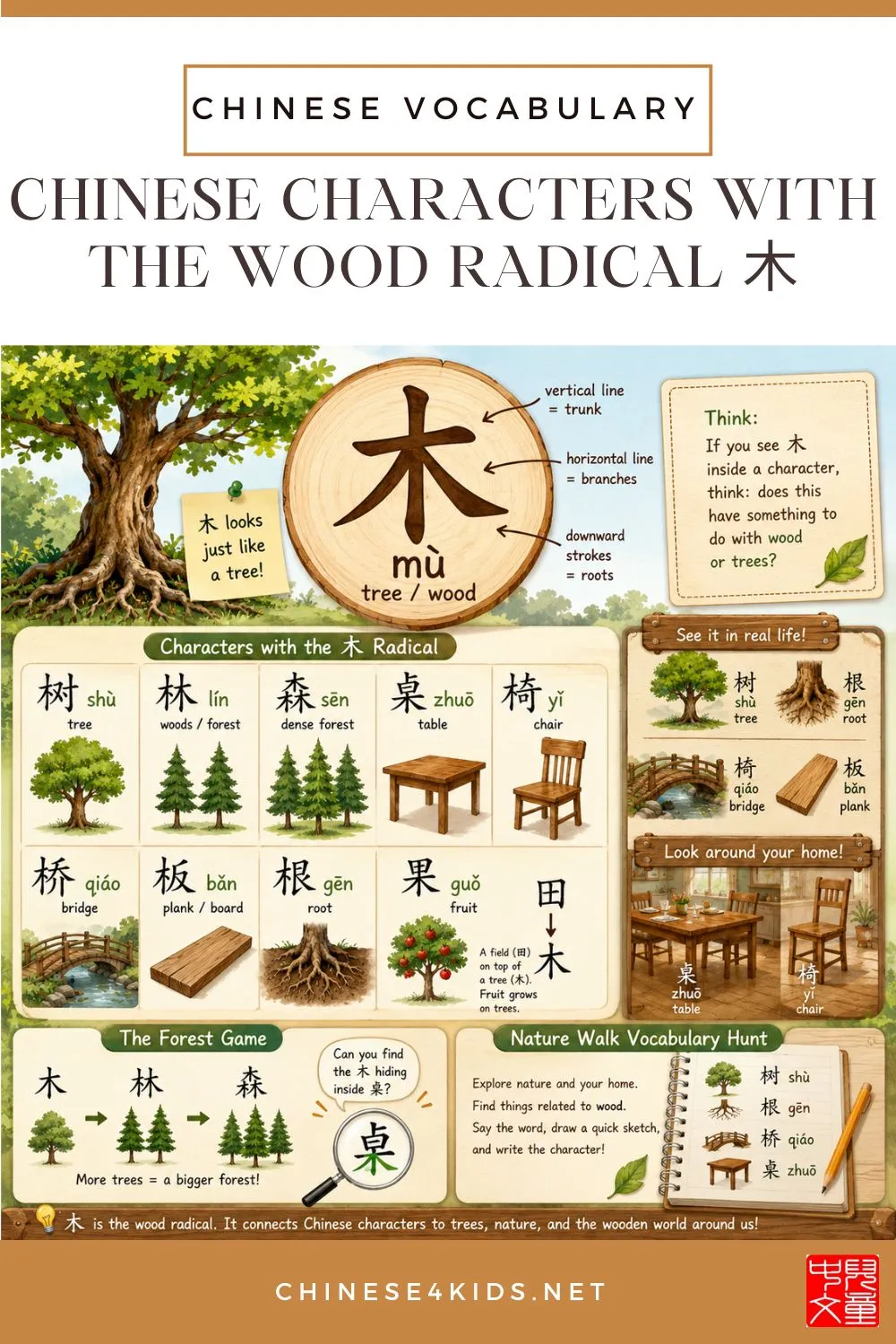
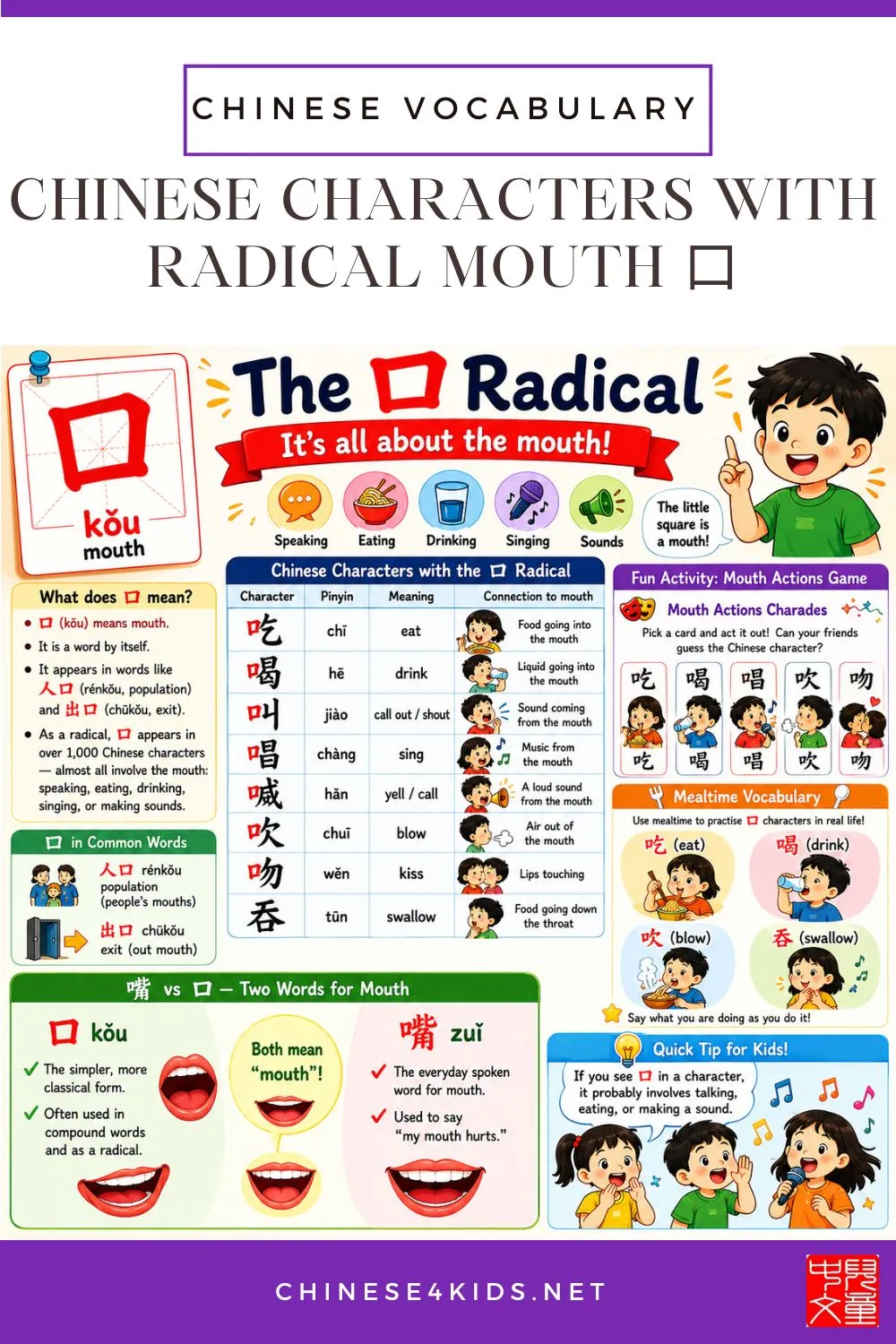
What’s the Difference Between Piānpáng (偏旁) and Bùshǒu (部首)?

Quick Summary Piānpáng (偏旁) means any component inside a Chinese character — the term covers all parts. Bùshǒu (部首) is the specific component that carries meaning and classifies the character in a dictionary. Every bùshǒu is a piānpáng. Not every piānpáng is a bùshǒu. Children don’t need to memorise these terms. What matters is learning […]

What’s the Difference Between Piānpáng (偏旁) and Bùshǒu (部首)? Read More »

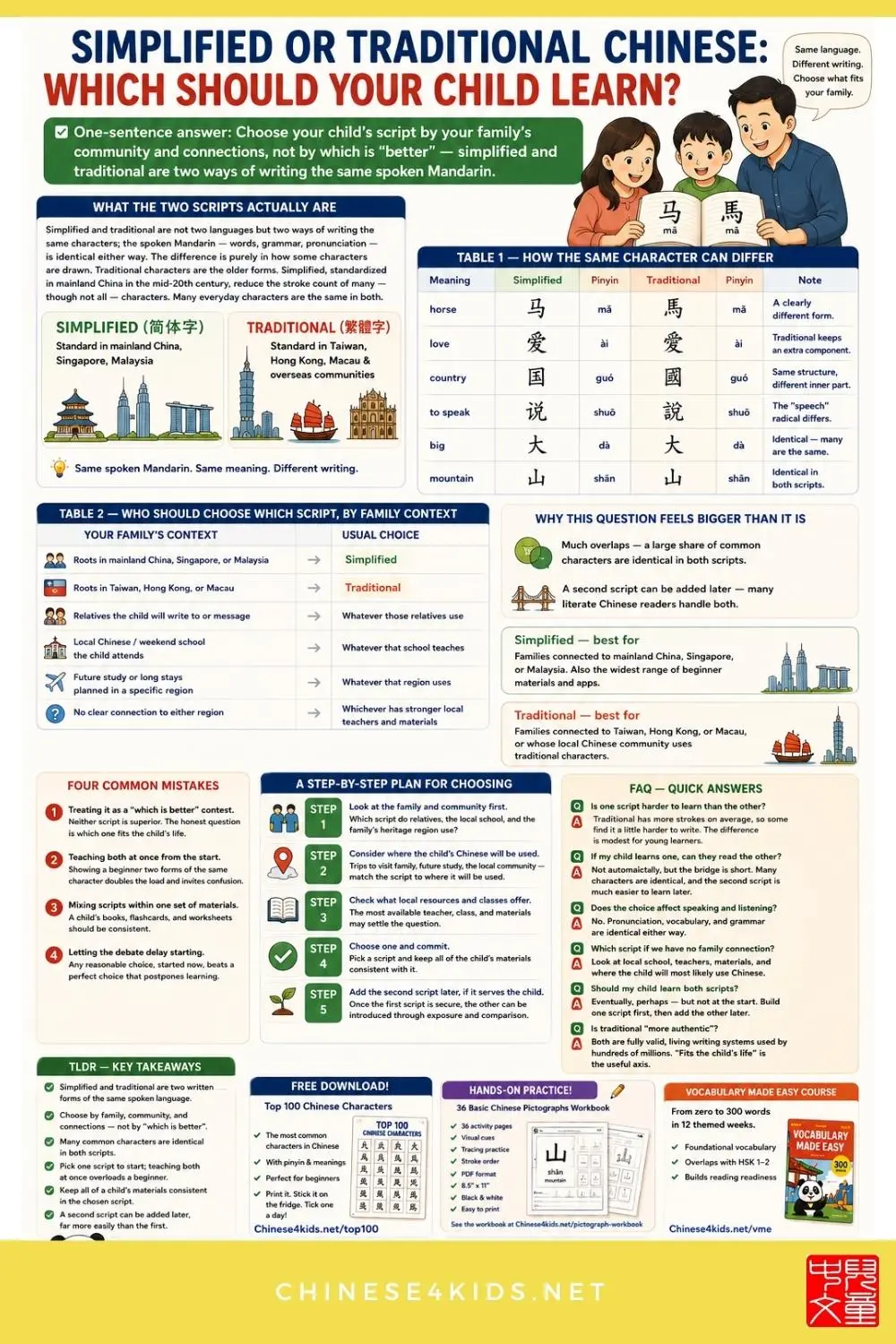
Simplified or Traditional? Discover how to choose the right Chinese script for your child based on your family's situation & learning goals.

Simplified or Traditional Chinese: Which Should Your Child Learn?

Simplified or traditional Chinese? Here is one-sentence answer: Choose your child’s script by your family’s community and connections, not by which is “better” — simplified and traditional are two ways of writing the same spoken Mandarin, so the decision is about fit, not language. What the two scripts actually are Simplified and traditional are not

Simplified or Traditional Chinese: Which Should Your Child Learn? Read More »

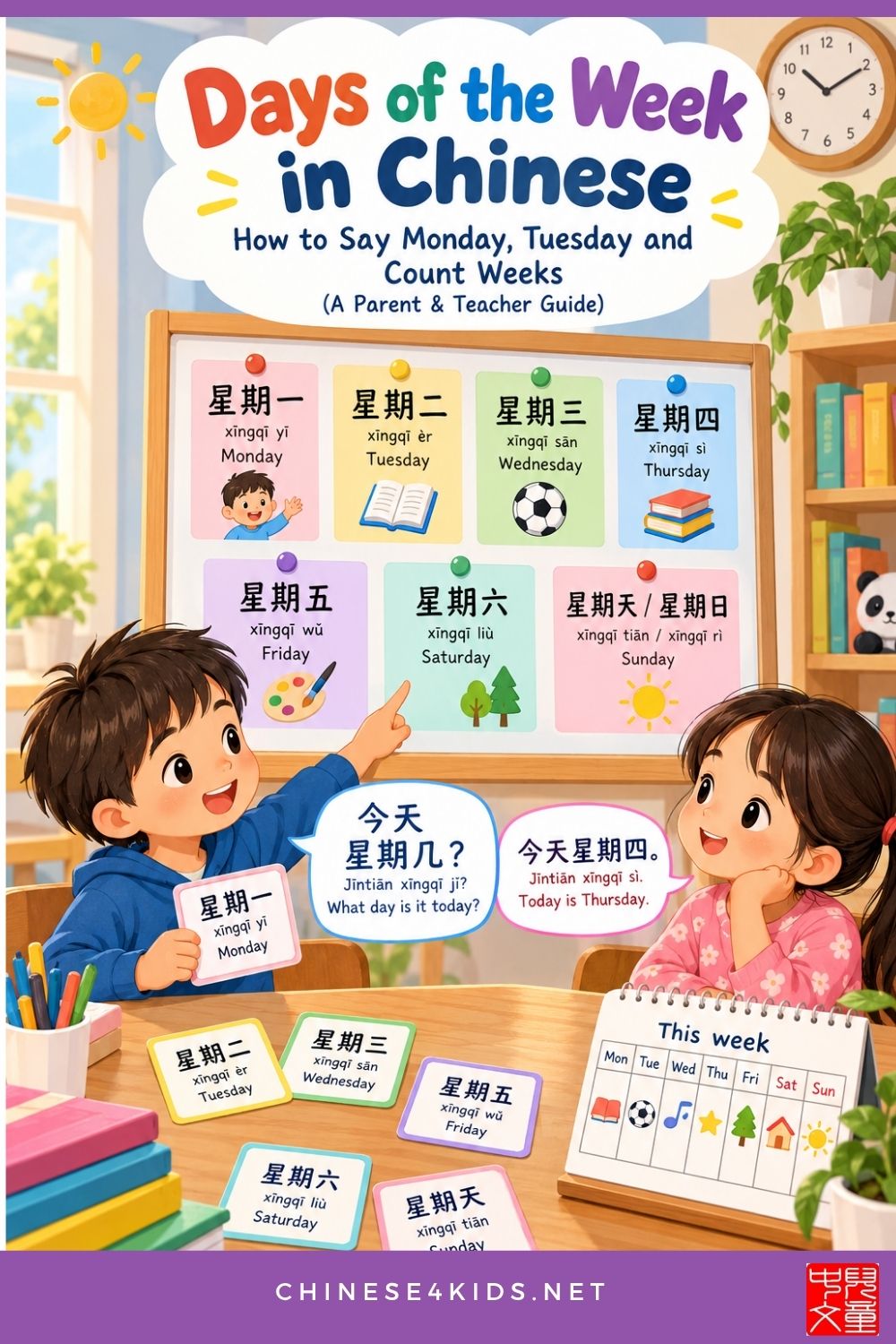
Learn the days of the week in Chinese the easy way. Say Monday to Sunday, count weeks, and find printables for kids learning Mandarin.

Days of the Week in Chinese: How to Say Monday, Tuesday and Count Weeks (A Parent & Teacher Guide)

Is your child learning Mandarin? Have they just asked “how do you say Monday in Chinese?” You’ve picked one of the easiest topics to teach. In English, the seven weekdays are seven different words. Children have to memorise each one. The days of the week in Chinese are far simpler. They follow one logical pattern.

Days of the Week in Chinese: How to Say Monday, Tuesday and Count Weeks (A Parent & Teacher Guide) Read More »

A simple guide to the 6 types of Chinese characters for parents and teachers. Examples, history, and what your child should learn first.

Introduction to Chinese Characters: The 6 Types Every Parent and Teacher Should Know

Why Understanding Chinese Characters Matters Chinese characters (汉字 hànzì) look intimidating. Thousands of them. No alphabet. Strokes that seem to go in every direction. Many parents and teachers feel a little lost before they even start. Here’s the good news: Chinese characters are not random. They follow a system. Once you understand the 6 types

Introduction to Chinese Characters: The 6 Types Every Parent and Teacher Should Know Read More »

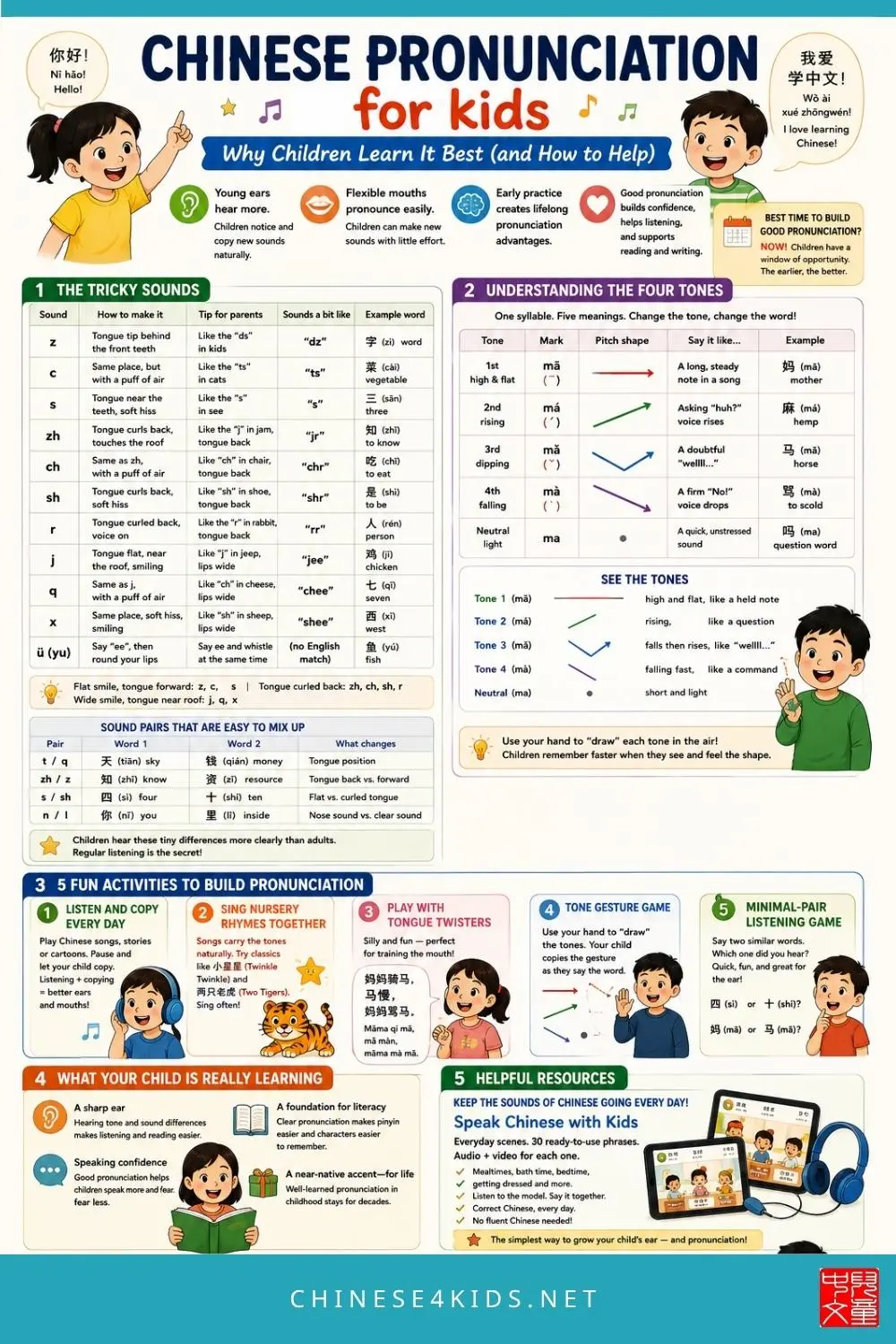
Child practising Chinese pronunciation and Mandarin tones

Chinese Pronunciation for Kids — Why Children Learn It Best (and How to Help)

Ask any learner what is hardest about Mandarin. You will hear two answers: characters, and Chinese pronunciation. Getting the sounds right takes time. It takes practice. And for adults, some sounds feel almost impossible. But here is the good news for parents: children learn Chinese pronunciation far more easily than adults do. If your child

Chinese Pronunciation for Kids — Why Children Learn It Best (and How to Help) Read More »