A few encouraging words can make a classroom feel more welcoming. When children are learning Chinese, they need opportunities to practise, make mistakes, try again, and celebrate their progress.
Chinese inspirational posters can help create that kind of environment. They bring useful Chinese phrases into children’s everyday surroundings while reminding them to believe in themselves, keep going, and approach challenges with a positive attitude.
Quick Answer: Which Chinese Inspirational Posters Work Best?
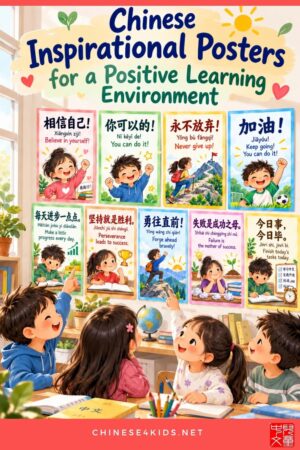
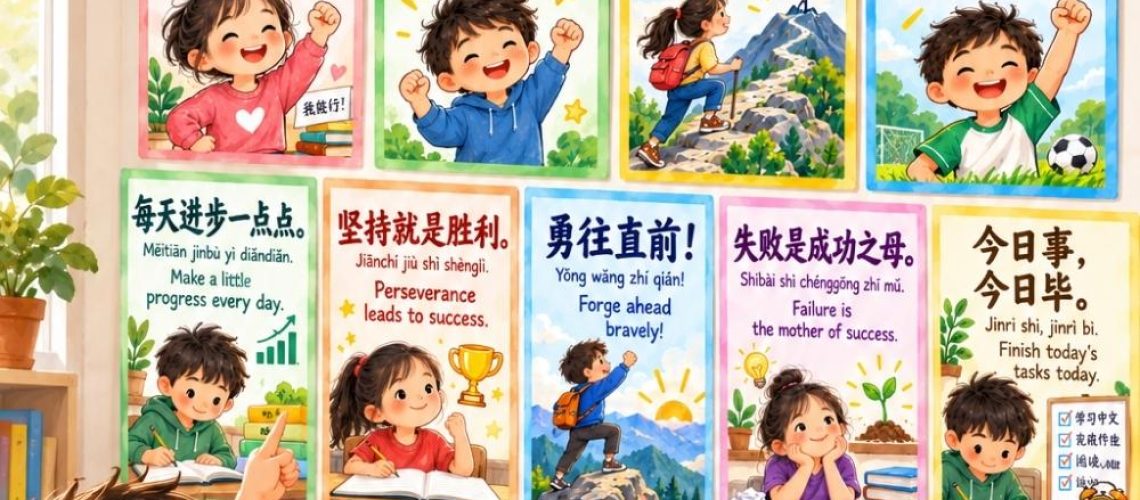
Short, positive phrases work best on a wall. Posters such as 相信自己!(xiāngxìn zìjǐ), “believe in yourself,” 加油!(jiāyóu), “keep going,” and 每天进步一点点。(měitiān jìnbù yì diǎndiǎn), “make a little progress every day,” give children a message they can read in seconds and remember.
Short, positive phrases work best on a wall. Posters such as 相信自己!(xiāngxìn zìjǐ), “believe in yourself,” 加油!(jiāyóu), “keep going,” and 每天进步一点点。(měitiān jìnbù yì diǎndiǎn), “make a little progress every day,” give children a message they can read in seconds and remember.
In this article, we’ll look at seven themes for a positive Chinese learning environment and how you can use motivational posters in a classroom or at home.
Why Use Chinese Inspirational Posters?
A classroom wall can do more than make a room look attractive. It can support learning, encourage discussion, and give children regular opportunities to see Chinese in context.
Motivational posters can help you:
- Create an encouraging atmosphere. Positive messages remind children that effort, curiosity, and persistence matter.
- Make Chinese visible every day. Children can revisit familiar phrases even when they aren’t in a formal lesson.
- Connect language with real life. A phrase becomes more memorable when children understand when and why to use it.
- Encourage conversation. A poster can be a starting point for a short discussion about confidence, mistakes, or personal goals.
For young learners, keep the message simple. Read the Chinese together, practise the pinyin, discuss the English meaning, and ask children to think of a situation in which they could use the phrase.
Believe in Yourself
Learning a new language can feel challenging, especially when children are still getting used to unfamiliar sounds and characters. Encouraging them to trust their abilities can help them approach new tasks with greater confidence.
相信自己!
Xiāngxìn zìjǐ!
Believe in yourself!
This short phrase is easy to remember and works well near a whiteboard, reading area, or place where children practise speaking Chinese.
You can also introduce:
你可以的!
Nǐ kěyǐ de!
You can do it!
Try saying 你可以的! before a child reads a sentence aloud, attempts a new character, or answers a question in Chinese. It is a useful phrase for everyday encouragement.
Don’t Give Up: Keep Going
Children don’t learn every new word or skill straight away. They may need several attempts before they feel comfortable with a new tone, character, or sentence pattern.
A simple reminder can help them keep trying.
永不放弃!
Yǒng bù fàngqì!
Never give up!
Another familiar expression is:
加油!
Jiāyóu!
Keep going! You can do it!
加油! is particularly useful because it is common in everyday Chinese. People use it to cheer someone on, offer encouragement, or show support.
Invite your students to use it when a classmate is practising a difficult word, taking part in a game, or trying something new.
Develop a Positive Learning Mindset
Children benefit from understanding that learning is a process. They don’t have to get everything right immediately; they can keep learning and work toward becoming more capable.
做最好的自己。
Zuò zuì hǎo de zìjǐ.
Be the best version of yourself.
This message encourages children to focus on their own growth rather than comparing themselves with others.
You could ask students:
- What is something you can do now that was difficult before?
- What would you like to improve?
- What is one small thing you can practise this week?
The goal is to help children recognize their progress and take pride in their efforts.
Encourage Perseverance
Some skills take longer to develop than others. Reading Chinese characters, remembering vocabulary, and using tones accurately all require practice.
坚持就是胜利。
Jiānchí jiù shì shènglì.
Perseverance leads to success.
This phrase reminds children that steady effort matters. It is especially suitable for a classroom display near a reading corner or independent-work area.
You can connect the message with a simple activity: ask children to choose one Chinese learning goal and record their practice over a week. At the end, discuss what they found easier and what they still want to work on.
Aim High and Move Forward Bravely
Children should have opportunities to try things that feel new or difficult. Setting a goal gives them something to work toward, while taking action helps them move closer to it.
勇往直前!
Yǒng wǎng zhí qián!
Forge ahead bravely!
Use this phrase when introducing a new project, starting a reading challenge, or encouraging students to participate in a Chinese-speaking activity.
You might ask each child to set a small goal, such as learning five new words, reading a short Chinese story, or greeting a classmate in Mandarin.
Remind them that a goal doesn’t have to be enormous. A clear next step is often enough to get started.
Help Children Learn from Mistakes
Mistakes are a normal part of learning. Children may pronounce a word incorrectly, forget a character, or misunderstand a sentence. What matters is helping them notice what happened and decide what to try next.
失败是成功之母。
Shībài shì chénggōng zhī mǔ.
Failure is the mother of success.
This well-known Chinese saying offers a starting point for discussing how mistakes can teach us something.
When a child makes an error, ask questions such as:
- What did you learn from that attempt?
- What could you try differently next time?
- Would you like to practise it together?
A poster with this phrase can help reinforce a classroom culture in which children feel comfortable trying, asking questions, and learning from feedback.
Encourage Children to Take Action
Sometimes the hardest part of a task is getting started. A gentle reminder can help children turn their plans into action and develop useful routines.
今日事,今日毕。
Jīnrì shì, jīnrì bì.
Finish today’s tasks today.
This traditional expression encourages children to complete what they need to do instead of continually putting it off.
You can connect it with a simple end-of-day checklist. Children might tick off their Chinese reading, vocabulary practice, homework, or classroom responsibilities.
Keep the focus on building manageable habits rather than expecting children to finish everything perfectly.
How to Use Inspirational Posters in Your Chinese Classroom
You don’t need to cover every wall. A few carefully chosen posters can be more effective than a room filled with competing messages.
Here are four practical ideas.
Choose a poster of the week
Display one phrase for a week. Read it aloud together, practise the pinyin, and discuss what it means. Invite students to notice opportunities to put the message into practice.
Connect the phrase to a real classroom moment
When a child is nervous about reading aloud, you might say 加油! When students are practising a difficult skill, introduce 坚持就是胜利。 The phrase becomes more meaningful when children hear it in context.
Let students choose their favorite
Invite students to select a phrase that speaks to them. Ask them to explain their choice in English or simple Chinese. This gives them a personal connection with the language.
Rotate the posters throughout the year
Use confidence-themed posters at the beginning of the school year, perseverance messages during a challenging unit, and learning-from-mistakes reminders when students are working on new skills.
Get the Chinese Inspirational Posters
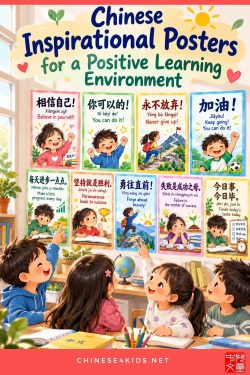
If you’d like to bring these messages into your own learning space, our Chinese Inspirational Posters for Classroom and Homeschooling collection includes 10 colorful motivational posters.
Each poster features a Chinese phrase, pinyin, and an English meaning. The set covers confidence, perseverance, positive learning habits, courage, learning from mistakes, and taking action.
Use them as classroom wall displays, bulletin-board decorations, or visual reminders in a homeschool or study corner. You can also use each poster as a small Chinese language lesson, helping children practise pronunciation and understand how the phrase is used.
More Chinese Posters for Your Classroom
Inspirational posters help create a positive learning environment, but children also benefit from seeing Chinese vocabulary and useful language around them. Combine motivational messages with educational posters to make your classroom both welcoming and engaging.
- 9 Chinese Learning Posters for Homeschool and Classroom – Add visual learning support to your Chinese classroom or homeschool space with this collection of Chinese learning posters.
- Chinese Basic Vocabulary Poster Bundle – Help children become familiar with essential Chinese vocabulary through visual displays they can refer to during lessons.
Together with the inspirational posters, these resources can help you create a colorful Chinese learning space that encourages children, supports vocabulary development and makes Chinese more visible in their everyday environment.
Explore the Chinese Inspirational Posters and bring more encouragement into your Chinese classroom or homeschool.
A positive learning environment develops through everyday interactions, not just what hangs on the wall. Choose a phrase, talk about its meaning, and look for small ways to put it into practice. Over time, those little reminders can become part of how children learn Chinese and approach new challenges.
Explore More Chinese Learning Resources
- 10 Motivational Quotes in Chinese
- 12 Chinese Sayings About Effort, Practice and Perseverance
- 16 Chinese Proverbs on Teaching and Learning
- Chinese Quotes collection
Share this post if you find it useful.