Quick Answer: What Are Some Motivational Quotes in Chinese?
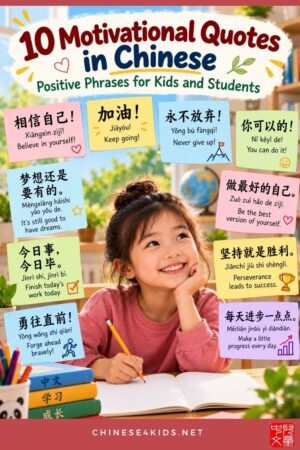
Motivational quotes in Chinese are encouraging words and expressions that inspire confidence, effort and a positive attitude. Some useful examples are 相信自己 (xiāngxìn zìjǐ), “believe in yourself”; 加油 (jiāyóu), “keep going” or “go for it”; and 坚持就是胜利 (jiānchí jiù shì shènglì), “perseverance leads to success.”
Motivational quotes in Chinese are encouraging words and expressions that inspire confidence, effort and a positive attitude. Some useful examples are 相信自己 (xiāngxìn zìjǐ), “believe in yourself”; 加油 (jiāyóu), “keep going” or “go for it”; and 坚持就是胜利 (jiānchí jiù shì shènglì), “perseverance leads to success.”
Children can use these expressions in everyday conversations, write them on notebooks, or display them in a Chinese classroom. They are also a fun way to learn Mandarin vocabulary while exploring positive messages.
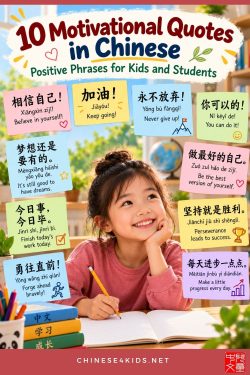
1. 相信自己!
Pinyin: Xiāngxìn zìjǐ!
Meaning: Believe in yourself!
Sometimes, the first step toward doing something difficult is believing that you can give it a try. This short Chinese expression encourages children to trust their abilities and approach new challenges with confidence.
It is useful before a test, a school performance, a sports competition or the first day of a new activity.
Example: A student feels nervous before giving a presentation in Chinese. Her teacher smiles and says, “相信自己!” The student takes a deep breath and begins.
Learn the Chinese:
- 相信 (xiāngxìn) means “to believe” or “to trust.”
- 自己 (zìjǐ) means “oneself.”
Try it: Ask your child to choose one thing they feel nervous about and say 相信自己!before giving it a try.
2. 永不放弃!
Pinyin: Yǒng bù fàngqì!
Meaning: Never give up!
Learning something new takes time. Children may struggle with a difficult Chinese character, forget vocabulary or make mistakes when speaking. This expression reminds them to keep trying when things get challenging.
Of course, perseverance can also mean taking a break, asking for help or trying a different approach.
Example: A child finds it difficult to remember the Chinese characters for several animals. Instead of giving up, she draws pictures, reviews her flashcards and tries again the next day.
Learn the Chinese:
- 永不 (yǒng bù) means “never.”
- 放弃 (fàngqì) means “to give up.”
Try it: Write 永不放弃!on a small card and let your child decorate it with pictures of something they are working toward.
3. 加油!
Pinyin: Jiāyóu!
Meaning: Keep going! Go for it!
Literally “add oil,” 加油 is the most common cheer in Mandarin. People say it to friends before a game, to classmates before a test and to anyone who needs a boost. It works like “Come on, you can do it!”
Children hear 加油 in real life all the time, from sports sidelines to school events, which makes it one of the most useful phrases on this list.
Example: Two classmates are practicing for a Chinese speech contest. Before one of them steps onto the stage, the other whispers, “加油!” and gives a thumbs-up.
Learn the Chinese:
- 加 (jiā) means “to add.”
- 油 (yóu) means “oil” or “fuel.”
Try it: Let children cheer each other on in Chinese. When a classmate reads aloud or answers a question, everyone says 加油!together.
4. 你可以的!
Pinyin: Nǐ kěyǐ de!
Meaning: You can do it!
This is a warm, natural expression of encouragement in everyday Mandarin. It is especially useful when someone feels uncertain or needs reassurance before attempting something new.
It sounds personal and friendly, making it a good phrase for parents and teachers to use with children.
Example: A child is learning to ride a bicycle. After a few wobbly attempts, her parent says, “你可以的!” She tries again, feeling a little more confident.
Learn the Chinese:
- 你 (nǐ) means “you.”
- 可以 (kěyǐ) means “can” or “be able to.”
- 的 (de) gives the expression a reassuring, encouraging tone.
Try it: Practice a short dialogue with your child:
A: 我不会。 (Wǒ bú huì.) “I can’t do it.”
B: 你可以的! (Nǐ kěyǐ de!) “You can do it!”
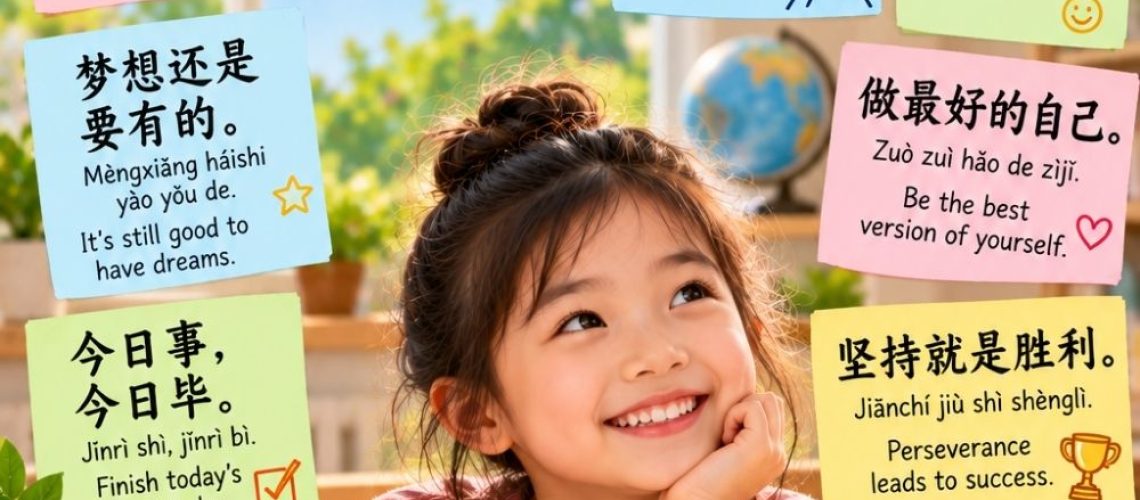
5. 梦想还是要有的。
Pinyin: Mèngxiǎng háishi yào yǒu de.
Meaning: It’s still good to have dreams.
Dreams give us something to look forward to and work toward. A child may dream of becoming a scientist, traveling around the world, writing a book or speaking several languages.
This popular modern expression encourages children to keep their hopes alive while remembering that achieving a goal often takes time, learning and practical steps.
Example: Mia dreams of reading a whole Chinese story by herself. She starts with short books and gradually learns more characters. Each small success brings her closer to her goal.
Learn the Chinese:
- 梦想 (mèngxiǎng) means “dream” or “aspiration.”
- 还是 (háishi) means “still” or “all the same” in this context.
- 要 (yào) means “should” or “need to.”
Try it: Ask children to draw their dreams and write one short sentence in Chinese about something they hope to do.
For example: 我的梦想是当一名老师。
Wǒ de mèngxiǎng shì dāng yì míng lǎoshī.
“My dream is to become a teacher.”
6. 做最好的自己。
Pinyin: Zuò zuì hǎo de zìjǐ.
Meaning: Be the best version of yourself.
Children often compare themselves with their classmates, siblings or friends. This expression encourages them to focus on their own growth instead.
Everyone has different strengths. One child may enjoy reading, another may be good at sports, and another may love music. The goal is to keep learning and developing, rather than trying to be exactly like someone else.
Example: A student notices that her classmate can read Chinese more quickly. Her teacher reminds her to focus on her own progress and celebrate the characters she has learned.
Learn the Chinese:
- 做 (zuò) means “to do” or “to be” in this expression.
- 最好 (zuì hǎo) means “the best.”
- 自己 (zìjǐ) means “oneself.”
Try it: Ask your child to name one thing they have improved at recently. It could be reading, drawing, swimming or speaking Chinese.
7. 勇往直前!
Pinyin: Yǒng wǎng zhí qián!
Meaning: Move forward bravely!
This energetic expression encourages people to face challenges and keep moving toward their goals. It is suitable for sports, school projects, performances and other situations that require courage.
It does not mean ignoring risks or rushing ahead without thinking. Sometimes moving forward bravely means asking for help or trying again after a setback.
Example: A student wants to speak Mandarin during class but worries about making mistakes. After practicing with a friend, she raises her hand and gives it a try.
Learn the Chinese:
- 勇 (yǒng) means “brave.”
- 往 (wǎng) means “to go.”
- 直 (zhí) means “straight.”
- 前 (qián) means “forward.”
Try it: Invite children to draw a character overcoming a challenge. They can add the words 勇往直前!to the picture.
8. 坚持就是胜利。
Pinyin: Jiānchí jiù shì shènglì.
Meaning: Perseverance leads to success.
This familiar Chinese expression highlights the value of persistence. Many worthwhile skills develop through repeated effort, from learning a musical instrument to recognizing Chinese characters.
Success does not always come immediately, and persistence does not guarantee every outcome. Still, continuing to learn, reflecting on mistakes and adapting our approach can help us improve.
Example: A child practices reading Chinese for ten minutes each evening. At first, she recognizes only a few characters. After several weeks, she can read more words and understand simple sentences.
Learn the Chinese:
- 坚持 (jiānchí) means “to persist” or “to persevere.”
- 就是 (jiù shì) means “is” or “is precisely.”
- 胜利 (shènglì) means “victory” or “success.”
Try it: Start a seven-day Chinese learning challenge. Choose one small task for each day and celebrate the effort children put in.
9. 每天进步一点点。
Pinyin: Měitiān jìnbù yì diǎndiǎn.
Meaning: Make a little progress every day.
This friendly expression reminds us that progress does not need to be dramatic. Learning one new word, reading a short paragraph or improving the pronunciation of a difficult sound can all count.
It is especially useful for children who feel overwhelmed by a large learning goal.
Example: A student wants to improve her Mandarin. She learns three new words each day and reviews the words she learned earlier. Over time, her vocabulary grows.
Learn the Chinese:
- 每天 (měitiān) means “every day.”
- 进步 (jìnbù) means “to make progress.”
- 一点点 (yì diǎndiǎn) means “a little bit.”
Try it: Create a progress chart where children record one small thing they learned each day. At the end of the week, look back at their achievements together.
10. 今天的努力,是明天的实力。
Pinyin: Jīntiān de nǔlì, shì míngtiān de shílì.
Meaning: Today’s effort builds tomorrow’s ability.
This is a motivational expression that connects the effort we make today with the skills we develop over time. The word 实力 refers to real ability or strength built through knowledge, experience and practice.
It is a useful reminder that learning does not happen overnight. The work children put into reading, practicing and asking questions can help them become more capable in the future.
Example: A child spends time learning Chinese tones, even though they seem difficult at first. With regular practice and feedback, the child gradually develops clearer pronunciation.
Learn the Chinese:
- 今天 (jīntiān) means “today.”
- 努力 (nǔlì) means “effort.”
- 明天 (míngtiān) means “tomorrow.”
- 实力 (shílì) means “ability” or “strength.”
Try it: Ask children to finish this sentence in English or Chinese: “Today, I will practice … so that tomorrow I can …”
How to Use Motivational Quotes in Chinese
These short Chinese expressions can become part of everyday language learning. Here are four simple ways to use them at home or in the classroom.
1. Write a quote on a notebook
Choose a short phrase such as 相信自己!or 每天进步一点点!Children can write it on the first page of a notebook, decorate the page and add its pinyin and English meaning.
2. Create a Chinese classroom display
Select a few quotes that match your classroom goals. For example, 每天进步一点点。works well for a display about learning, while 做最好的自己。encourages children to value their individual strengths.
Ask students to choose a favorite phrase and explain why it matters to them.
3. Use a quote of the week
Introduce one expression each week. Practice its pronunciation, explain the meaning and use it in a short dialogue.
Older learners can write a sentence about how the quote relates to their lives.
4. Turn quotes into a speaking activity
Write the Chinese expressions on separate cards. Ask one child to pick a card and read the phrase aloud. A partner can explain the meaning in English or give an example of when someone might use it.
This activity combines reading, speaking, listening and cultural learning.
Frequently Asked Questions
What is a popular motivational phrase in Chinese?
加油 (jiāyóu) is one of the most common expressions of encouragement in Mandarin. Literally “add oil,” it means “you can do it,” “keep going” or “come on,” depending on the situation. It is widely used to cheer someone on during a challenge.
How do you say “believe in yourself” in Chinese?
You can say 相信自己!(xiāngxìn zìjǐ!). It is a direct, encouraging expression that works well before a test, performance or other challenge.
What is a good Chinese quote for students?
每天进步一点点。 (Měitiān jìnbù yì diǎndiǎn.), meaning “Make a little progress every day,” is particularly suitable for students. It encourages steady learning without putting pressure on children to master everything at once.
Can children use Chinese motivational quotes in everyday conversation?
Yes. Expressions such as 加油!, 你可以的!and 相信自己!are useful in everyday situations. Other phrases, such as 今天的努力,是明天的实力, are longer and may be better suited to posters, writing activities or classroom discussions.
What is the difference between Chinese motivational quotes and Chinese proverbs?
Motivational quotes focus on encouragement, confidence, goals and personal growth. Chinese proverbs and traditional sayings often express broader lessons drawn from experience, history or classical literature. The categories overlap, but motivational expressions are particularly useful when children need a short, positive message.
For traditional sayings about effort, practice and perseverance, see 12 Chinese Sayings About Effort, Practice and Perseverance.
Final Thoughts
A few encouraging words can make a difficult task feel more manageable. Learning motivational quotes in Chinese also gives children useful Mandarin expressions they can read, understand and use in everyday life.
You don’t need to teach all ten at once. Start with one phrase that fits your child’s experience, practice saying it together and find a natural moment to use it.
For teachers, these expressions can also brighten a classroom display, add meaning to a notebook cover or provide a simple starting point for a Chinese speaking activity.
Explore more Chinese learning resources:
- 12 Chinese Sayings About Life
- 12 Chinese Sayings About Effort, Practice and Perseverance
- 16 Chinese Proverbs on Teaching and Learning
- Use Chinese Inspirational Posters in a Classroom to Create a Positive Chinese Learning Environment
For more ready-to-use materials, explore the Chinese4kids learning resources.
If you like this article, share it