Quick answer
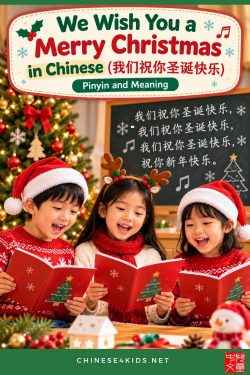
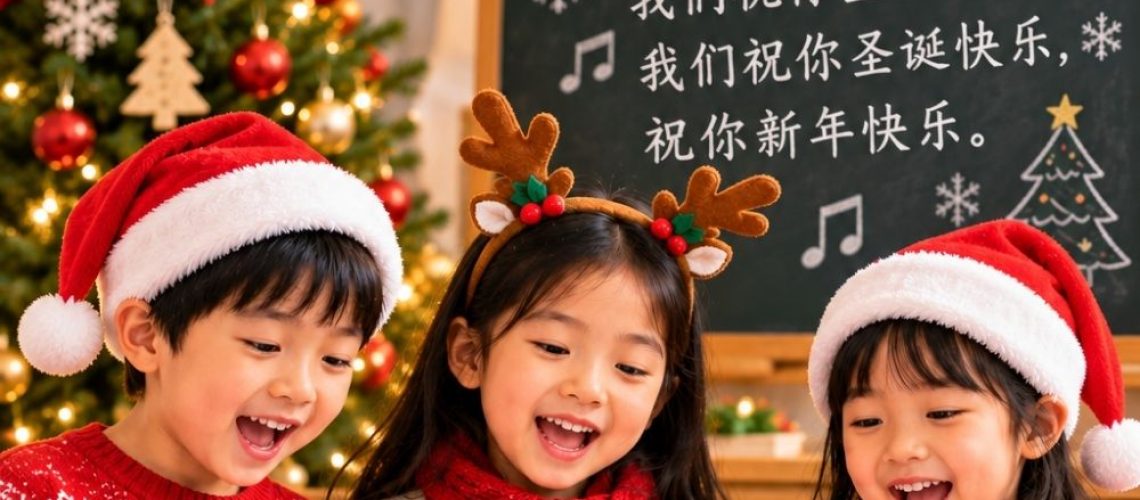
“We Wish You a Merry Christmas” in Chinese is 我们祝你圣诞快乐 (wǒmen zhù nǐ shèngdàn kuàilè). Its repeated greetings make it a fun way for children to practise Christmas vocabulary in Mandarin. This guide gives pinyin, English meanings, key vocabulary and six simple activities for parents and teachers.
“We Wish You a Merry Christmas” in Chinese is 我们祝你圣诞快乐 (wǒmen zhù nǐ shèngdàn kuàilè). Its repeated greetings make it a fun way for children to practise Christmas vocabulary in Mandarin. This guide gives pinyin, English meanings, key vocabulary and six simple activities for parents and teachers.
About the song
“We Wish You a Merry Christmas” is a traditional English Christmas carol often associated with the west of England. Its exact early history is unclear, but it has become a familiar Christmas song in many countries.
Many children already know the tune, which gives them a helpful starting point when learning the Chinese words. The repeated greetings also give beginners plenty of chances to listen, join in and practise useful phrases.
The Chinese lyrics
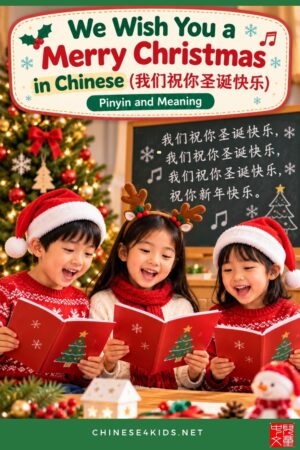
我们祝你圣诞快乐,我们祝你圣诞快乐,
Wǒmen zhù nǐ Shèngdàn kuàilè, wǒmen zhù nǐ Shèngdàn kuàilè,
We wish you a Merry Christmas, we wish you a Merry Christmas,
我们祝你圣诞快乐,祝你新年快乐。
Wǒmen zhù nǐ Shèngdàn kuàilè, zhù nǐ xīnnián kuàilè.
We wish you a Merry Christmas, and a Happy New Year.
把好消息带给你,带给你和你的家人,
Bǎ hǎo xiāoxi dài gěi nǐ, dài gěi nǐ hé nǐ de jiārén,
We bring good news to you, to you and your family,
祝你圣诞快乐,祝你新年快乐。
Zhù nǐ Shèngdàn kuàilè, zhù nǐ xīnnián kuàilè.
We wish you a Merry Christmas, and a Happy New Year
Key words and a sentence pattern
These are the key words in the song.
| Chinese | Pinyin | English |
|---|---|---|
| 圣诞节 | Shèngdànjié | Christmas (the holiday) |
| 圣诞快乐 | shèngdàn kuàilè | Merry Christmas |
| 新年快乐 | xīnnián kuàilè | Happy New Year |
| 快乐 | kuàilè | happy; happiness |
| 祝 | zhù | to wish |
| 我们 | wǒmen | we; us |
| 你 | nǐ | you |
| 好消息 | hǎo xiāoxi | good news |
| 带给 | dài gěi | to bring or give to someone |
| 家人 | jiārén | family members |
Both expressions are used to wish someone a Merry Christmas. 圣诞快乐 is a common, concise greeting.
The wish pattern: 祝你 + a happy occasion
The song teaches a useful pattern: 祝你 (zhù nǐ), meaning “wish you”, followed by a greeting. Children can reuse it for birthdays, New Year and other celebrations. Adding 我们 turns it into “we wish you”, as in the song’s title.
| Chinese | Pinyin | English |
|---|---|---|
| 祝你生日快乐 | zhù nǐ shēngrì kuàilè | Happy birthday to you |
| 祝你新年快乐 | zhù nǐ xīnnián kuàilè | Happy New Year to you |
| 祝你春节快乐 | zhù nǐ Chūnjié kuàilè | Happy Spring Festival (Chinese New Year) to you |
| 祝你节日快乐 | zhù nǐ jiérì kuàilè | Happy holiday to you |
For more birthday wishes and songs, see Happy Birthday in Chinese.
A second pattern: 把 … 带给 …
The closing lines use a pattern for “bring something to someone”: 把 + the thing + 带给 + the person. Beginners do not need an explanation of 把 grammar. Let them learn the pattern through the song and a few examples.
| Chinese | Pinyin | English |
|---|---|---|
| 把礼物带给你。 | Bǎ lǐwù dài gěi nǐ. | Bring the gift to you. |
| 把好消息带给家人。 | Bǎ hǎo xiāoxi dài gěi jiārén. | Bring the good news to the family. |
| 我把好消息带给家人。 | Wǒ bǎ hǎo xiāoxi dài gěi jiārén. | I bring the good news to my family. |
Six ways to use the song
1. Start with the greeting
Say 圣诞快乐 to your child for a few days, at breakfast or in a message, before you sing. When you sing the song, the main phrase already sounds familiar.
2. Echo-sing
Many children already know the tune, so hum it first and then add the Chinese words one line at a time. You sing a line and your child repeats it, then swap roles.
3. Make wish cards
Children draw a Christmas picture and add 圣诞快乐 or 新年快乐 for grandparents or friends. Younger children can trace or colour the characters, and older children can practise writing 快乐, paying attention to the shape and order of the strokes.
4. Play the wish game
Use the 祝你 + occasion pattern. Let your child draw a card showing an occasion, such as a birthday, New Year or a holiday, then say the matching greeting aloud: 祝你生日快乐, 祝你新年快乐, 祝你节日快乐.
5. Send a sung greeting
Record a short video of your child singing, or sing together on a video call, and send it to a grandparent or friend far away. It gives the song a real reason to be learned.
Ask your child to share one happy thing, such as playing with a friend, getting a gift or learning a new Chinese phrase. Then practise saying 我有一个好消息!(Wǒ yǒu yí ge hǎo xiāoxi!), which means “I have some good news!” It helps the song carry over into everyday Chinese.
Frequently asked questions
How do you say Merry Christmas in Chinese?
Say 圣诞快乐 (shèngdàn kuàilè) or 圣诞节快乐 (Shèngdànjié kuàilè). For more greetings, see 12 Merry Christmas Wishes and Messages in Chinese.
Is there one standard Chinese version of this carol?
No. Different Chinese adaptations use different wording.
What age is this song suitable for?
Preschool and primary-age children can learn the repeated lines by ear. Older children can use the song to practise reading and writing 圣诞快乐 and 新年快乐.
Can a song really help my child learn Chinese?
A familiar tune and repeated phrases can help children remember words and short phrases, but a song works best alongside speaking and reading practice. Melody can also blur the four tones, so say the key phrases in normal speech too. For tone games, see Chinese Tones for Kids.
More Christmas learning
- Jingle Bells in Chinese: another Christmas song to learn in Chinese.
- 12 Merry Christmas Wishes and Messages in Chinese: greetings you can use in cards and messages.
- Christmas Chinese Vocabulary Montessori 3-Part Flashcards: flashcards for Christmas words.
- Build Your Own Christmas Chinese Learning Activity Worksheets
- It’s Snowing: A Chinese Nursery Rhyme for Winter: a short rhyme for the winter months.
If you like this article, share it