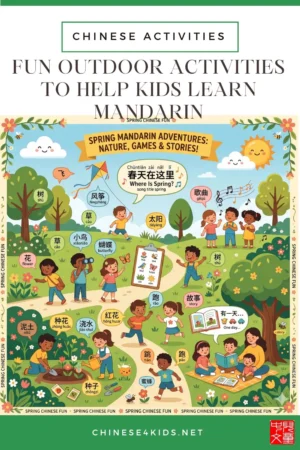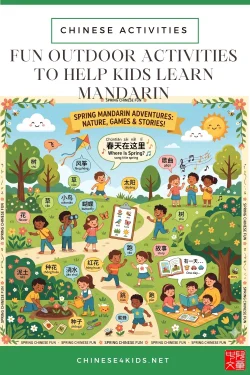
Spring is nature’s biggest show-off — and it’s also one of the best seasons to take Chinese lessons outside! For kids learning Mandarin as a foreign language, swapping the classroom for the garden, park, or backyard can make vocabulary stick faster, build confidence in speaking, and turn study time into something kids actually look forward to.
In this post, we’ve rounded up five hands-on, outdoor activities that weave Mandarin practice into the natural rhythm of spring — no textbooks required. Whether your child is just starting out or building on a solid foundation, there’s something here for every learner.
Why Outdoor Learning Works for Language Acquisition
Research consistently shows that experiential, context-rich learning helps children retain new vocabulary far better than rote memorisation. When a child points at a real butterfly and says “蝴蝶 (húdié)!” — rather than reading the word off a flashcard — the brain forms a stronger, multi-sensory memory.
Spring is tailor-made for this. Every walk to the park becomes a vocabulary lesson. Every garden visit is a new set of sentence-building opportunities. Best of all, kids are already excited to be outside — so the motivation does half the work for you.
💡 New to teaching Mandarin at home? Start with our Beginner Chinese Lessons for Kids to build a foundation before heading outdoors.
🌿 1. Nature Walks with a Chinese Twist
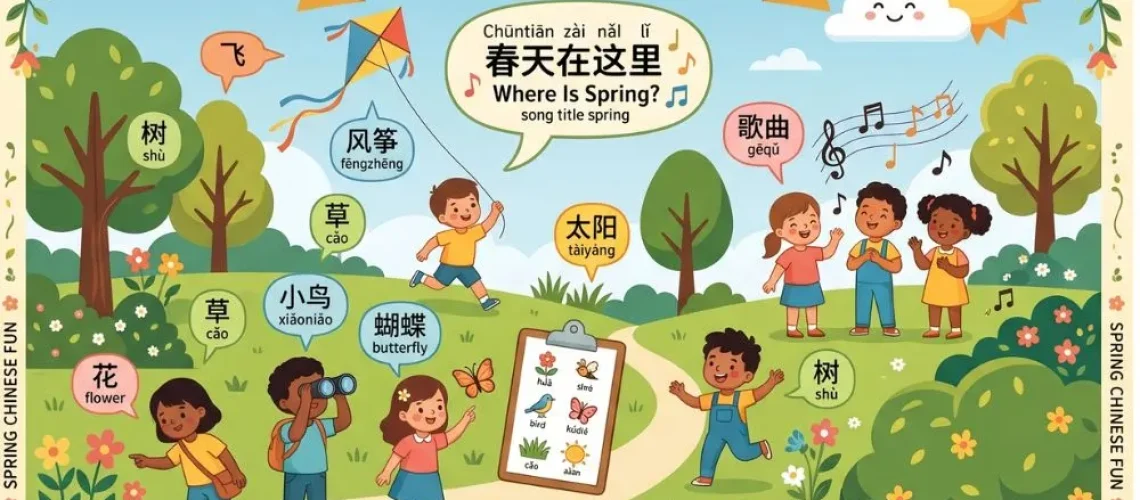
Turn a simple stroll into a Chinese vocabulary adventure! As you walk through the park or garden, point at spring things and teach their names in Mandarin. and name them in Mandarin together. Keep it light and conversational — the goal is exposure and repetition, not perfection.For example, you can say, “Look, a flower! That’s 花 (huā) in Chinese.” Encourage kids to repeat the words and use them in sentences, like “这朵花很漂亮 (Zhè duǒ huā hěn piàoliang) – This flower is very pretty.”
Spring Nature Words
| Chinese | Pinyin | English |
|---|---|---|
| 花 | huā | flower |
| 树 | shù | tree |
| 草 | cǎo | grass |
| 叶子 | yèzi | leaf |
| 蝴蝶 | húdié | butterfly |
| 太阳 | tàiyáng | sun |
| 云 | yún | cloud |
| 小鸟 | xiǎoniǎo | little bird |
| 蚂蚁 | mǎyǐ | ant |
| 蜜蜂 | mìfēng | bee |
Try These Sentences on Your Walk
这朵花很漂亮!(Zhè duǒ huā hěn piàoliang!) – This flower is so pretty!
你看,那是什么?(Nǐ kàn, nà shì shénme?) – Look, what’s that?
我看到一只蝴蝶!(Wǒ kàn dào yī zhī húdié!) – I see a butterfly!
天气很好!(Tiānqì hěn hǎo!) – The weather is great!
Make It a Scavenger Hunt
Write out a list of five to ten nature items in Chinese characters (or pinyin for beginners) and challenge your child to find each one. When they spot something, they call out its Chinese name before checking it off. It’s simple, competitive, and incredibly effective for building real-world vocabulary.
You can also create a scavenger hunt with a list of items to find, such as:
– 树 (shù) – tree
– 草 (cǎo) – grass
– 蝴蝶 (húdié) – butterfly
– 太阳 (tàiyáng) – sun
💡 Want a printable version? Check out our Spring Vocabulary Flashcards — perfect for scavenger hunts and on-the-go practice.
As they find each item, have them say the word aloud or write it down. This activity not only builds vocabulary but also connects language learning to real-world experiences.
2. Spring-Themed Games in Mandarin
Games are the secret weapon of language learning. They lower anxiety, boost repetition, and make kids forget they’re studying. Here are three outdoor favourites with a Mandarin spin.
Game 1: “I Spy” in Chinese (我看到了 – Wǒ kàn dào le)
Take turns spotting objects and describing them in Mandarin. Start simple:
我看到了红色的花。(Wǒ kàn dào le hóngsè de huā.) – I see a red flower.
我看到了大树。(Wǒ kàn dào le dà shù.) – I see a big tree.
As your child’s confidence grows, add adjectives — size, colour, shape. This naturally reinforces colour words and descriptive language without it feeling like a drill.
Game 2: Kite Flying with Chinese Instructions
Spring winds are a kite flyer’s dream — and a fantastic excuse to practise action words and directional phrases.
| Chinese | Pinyin | English |
|---|---|---|
| 跑 | pǎo | run |
| 跑快一点 | pǎo kuài yīdiǎn | run faster |
| 慢一点 | màn yīdiǎn | slow down |
| 风筝 | fēngzhēng | kite |
| 飞 | fēi | fly |
| 风 | fēng | wind |
Shout instructions to each other in Mandarin as you run and fly: “跑快一点!风筝飞得很高!” (Run faster! The kite is flying so high!) Kids pick up action verbs lightning-fast when their body is actually doing the action.
Game 3. Spring Charades
Act out spring-related verbs and have your child guess in Mandarin — or swap roles so they act and you guess. Start with easy actions:
跳 (tiào) – jump
跑 (pǎo) – run
闻花 (wén huā) – smell the flowers
浇水 (jiāo shuǐ) – water the plants
爬树 (pá shù) – climb a tree
This is a brilliant activity for practising Chinese verbs in a way that’s genuinely hilarious and memorable.
3. Storytelling in the Park
Find a shady spot, spread out a picnic blanket, and let imaginations run wild — in Mandarin! Collaborative storytelling is one of the richest ways to practise sentence structure, vocabulary, and creative thinking all at once.
How to Play
Take turns adding one sentence at a time to build a story together. Use simple sentence starters and build confidence gradually:
Starter: 有一天,太阳出来了。(Yǒu yī tiān, tàiyáng chūlái le.) – One day, the sun came out.
Next: 一只小鸟飞过来了。(Yī zhī xiǎoniǎo fēi guòlái le.) – A little bird flew over.
Then: 它看到了一朵大花。(Tā kàn dào le yī duǒ dà huā.) – It saw a big flower.
Don’t worry about grammatical perfection — focus on keeping the story going and celebrating every contribution. Silly stories are the best kind!
Add a Picture Book
Bring along a Chinese spring picture book and read it aloud together. Pause to ask simple comprehension questions:
这是什么?(Zhè shì shénme?) – What is this?
它是什么颜色?(Tā shì shénme yánsè?) – What colour is it?
你喜欢这个故事吗?(Nǐ xǐhuān zhège gùshi ma?) – Do you like this story?
💡 Looking for great Chinese books for young learners? Browse our Recommended Chinese Books for Kids list, organised by age and level.
4. Planting a Chinese Garden
Gardening and language learning have more in common than you’d think — both require patience, consistency, and a little nurturing every day. This spring, plant something together and turn every gardening session into a mini Mandarin lesson.
Gardening Vocabulary
| Chinese | Pinyin | English |
|---|---|---|
| 种子 | zhǒngzi | seeds |
| 花盆 | huāpén | flower pot |
| 泥土 | nítǔ | soil |
| 水壶 | shuǐhú | watering can |
| 阳光 | yángguāng | sunlight |
| 种花 | zhòng huā | plant flowers |
| 浇水 | jiāo shuǐ | water (the plants) |
| 长大 | zhǎng dà | grow up / grow big |
Useful Phrases to Use Together
– 我们一起种花吧!(Wǒmen yīqǐ zhòng huā ba!)
– Let’s plant flowers together!每天浇水。(Měitiān jiāo shuǐ.)
– Water every day.种子发芽了!(Zhǒngzi fā yá le!)
– The seed has sprouted!花开了!(Huā kāi le!) – The flower has bloomed!
Make it a daily ritual: each morning when your child waters the plant, they say one Chinese sentence about it. Over the weeks, watch their plant and their vocabulary grow together.
💡 For more themed vocabulary sets like this one, visit our Chinese Vocabulary by Topic page — free lists covering food, animals, family, seasons, and more.
🎵 5. Bonus: Spring Songs & Rhymes
Music is one of the most powerful tools for language learning at any age. The rhythmic patterns of songs help children remember tones, pronunciation, and vocabulary far more naturally than repetition alone.
A few spring-themed songs worth learning together:
春天在哪里 (Chūntiān zài nǎlǐ) – “Where Is Spring?” — a beloved children’s song that’s perfect for beginners. It’s upbeat, repetitive, and covers great vocabulary like 青草地 (qīng cǎodì, green meadow) and 花朵 (huāduǒ, flower).
小燕子 (Xiǎo Yànzi) – “Little Swallow” — a classic about the arrival of swallows in spring, ideal for slightly older or more advanced learners.
Sing along during car rides, at the dinner table, or while gardening. Repetition without pressure is the sweet spot for young language learners.
💡 Want more songs and rhymes? Explore our Chinese Songs for Kids collection — with lyrics, pinyin, and translations included.
Quick Tips for Parents
A few things to keep in mind as you take Chinese learning outdoors this spring:
Keep sessions short. Ten to fifteen focused minutes outdoors beats a distracted hour at the table. Little and often is the golden rule.
Don’t correct every mistake. Fluency comes from confidence, and confidence comes from feeling safe to try. Celebrate attempts, gently model the correct form, and move on.
Use Chinese consistently in context. The more your child hears the same word in the same situation — pointing at a flower and saying 花 every single walk — the faster it sticks.
Follow their lead. If your child gets excited about ants, lean into ant vocabulary. Motivated learners absorb language at an incredible rate.
Learning Chinese doesn’t have to be confined to a classroom—spring offers endless opportunities to make language learning exciting and immersive. By combining outdoor adventures with fun activities, kids can practice Mandarin in a way that feels natural and enjoyable. Whether it’s a nature walk, a game of charades, or planting a garden, these activities will help kids blossom in their Chinese skills while celebrating the season. So grab your sunscreen, head outside, and let the learning begin!
if you like this article, share it