Quick Answer
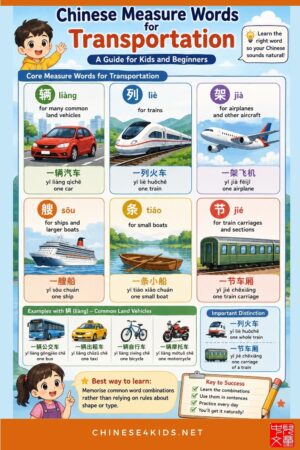
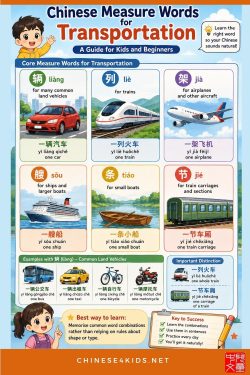
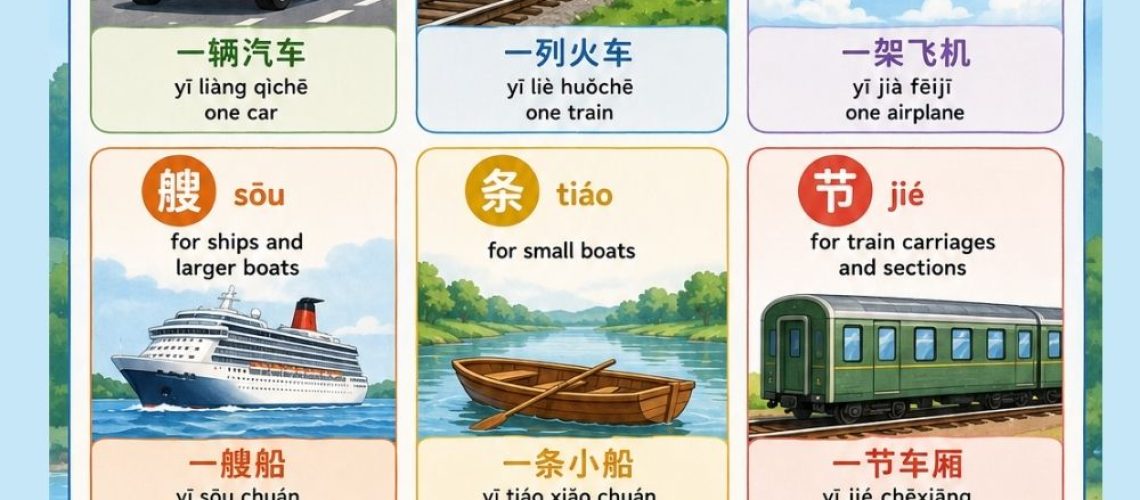
The most useful Chinese measure words for transportation are 辆 (liàng) for many common land vehicles, 列 (liè) for trains, 架 (jià) for airplanes and other aircraft, and 艘 (sōu) for ships and many boats. You may also encounter 节 (jié) for train carriages and 条 (tiáo) for routes, lines, and some small boats. The best way to learn Chinese measure words is to memorise common word combinations rather than relying only on broad rules about an object’s shape or type.
The most useful Chinese measure words for transportation are 辆 (liàng) for many common land vehicles, 列 (liè) for trains, 架 (jià) for airplanes and other aircraft, and 艘 (sōu) for ships and many boats. You may also encounter 节 (jié) for train carriages and 条 (tiáo) for routes, lines, and some small boats. The best way to learn Chinese measure words is to memorise common word combinations rather than relying only on broad rules about an object’s shape or type.
Chinese Measure Words for Transportation at a Glance
| English | Chinese | Measure Word | Example |
|---|---|---|---|
| Car | 汽车 | 辆 | 一辆汽车 |
| Bus | 公交车 | 辆 | 一辆公交车 |
| Bicycle | 自行车 | 辆 | 一辆自行车 |
| Motorcycle | 摩托车 | 辆 | 一辆摩托车 |
| Taxi | 出租车 | 辆 | 一辆出租车 |
| Train | 火车 | 列 | 一列火车 |
| Airplane | 飞机 | 架 | 一架飞机 |
| Ship/Larger boat | 船/轮船 | 艘 | 一艘船 |
| Small boat | 小船 | 条 | 一条小船 |
What Are Measure Words for Transportation?
In Chinese, you cannot say a number directly before most nouns. You need a measure word (量词, liàngcí) in between. These small words describe what is being counted.
For transportation, measure words help you count different types of vehicles correctly.
But here is the most important principle for learning: measure words are learned as word combinations, not as abstract rules.
Instead of memorizing that “trains use 列,” it is better to learn:
- 一列火车 (one train)
- 一辆汽车 (one car)
- 一架飞机 (one airplane)
Then you will naturally recognize the pattern.
辆 (liàng) — Common Land Vehicles
辆 is used for many ground vehicles with wheels.
🚗 一辆汽车 (yī liàng qìchē) — One car
🚌 一辆公交车 (yī liàng gōngjiāo chē) — One bus
🚲 一辆自行车 (yī liàng zìxíng chē) — One bicycle
🏍️ 一辆摩托车 (yī liàng mótuō chē) — One motorcycle
🚕 一辆出租车 (yī liàng chūzū chē) — One taxi
A useful pattern to notice:
These are common ground vehicles. But remember: measure words are learned as combinations, not by memorizing physical descriptions.
列 (liè) — Trains
🚂 一列火车 (yī liè huǒchē) — One train
Important: Even though trains have wheels, the standard measure word is 列, not 辆. This is a perfect example of why learning combinations is more reliable than learning rules based on shape.
架 (jià) — Airplanes and Aircraft
- ✈️ 一架飞机 (yī jià fēijī) — One airplane
- 🚁 两架直升机 (liǎng jià zhísheng jī) — Two helicopters
A useful pattern to notice: 架 is the standard measure word for airplanes and many other aircraft. Like many Chinese measure words, 架 is best learned as part of common vocabulary combinations.
艘 (sōu) — Ships and Larger Boats
- ⛴️ 一艘船 (yī sōu chuán) — One ship/boat
- 🚢 两艘游轮 (liǎng sōu yóu lún) — Two cruise ships
A useful pattern to notice: 艘 is the standard measure word for ships and many boats, especially larger vessels. However, Chinese speakers may also use 条 for smaller or narrower boats:
- 🚣 一条小船 (yī tiáo xiǎo chuán) — One small boat
This is a perfect example of why learning measure words as combinations is more reliable than learning rules. You may see both 一艘船 and 一条小船 in Chinese. The choice depends on the type of boat and the conventional expression being used.
What Is the Chinese Measure Word for…?
What Is the Chinese Measure Word for a Car?
The most common measure word for a car is 辆 (liàng): 一辆汽车.
What Is the Chinese Measure Word for a Train?
The standard measure word for a train is 列 (liè): 一列火车.
What Is the Chinese Measure Word for an Airplane?
The most common measure word for an airplane is 架 (jià): for example, 一架飞机.
What Is the Chinese Measure Word for a Bus?
The most common measure word for a bus is 辆 (liàng): 一辆公交车.
What Is the Chinese Measure Word for a Bicycle?
The most common measure word for a bicycle is 辆 (liàng): 一辆自行车.
What Is the Chinese Measure Word for a Ship?
The most common measure word for a ship is 艘 (sōu): 一艘船.
More Transportation-Related Measure Words
Once you have learned the core four measure words, you may also encounter these useful words for counting different aspects of transportation:
节 (jié) — Train Carriages and Sections
节 is used to count sections of things. For trains, it can count individual carriages:
- 🚂 一节车厢 (yī jié chēxiāng) — One train carriage
- 🚂 五节车厢 (wǔ jié chēxiāng) — Five train carriages
A useful distinction to remember:
- 一列火车 = one whole train (the vehicle)
- 一节车厢 = one carriage of a train (part of the train)
This shows that Chinese measure words can count things at different levels. A train is one 列, but it can have many 节s (carriages).
条 (tiáo) — Routes, Lines, and Small Boats
条 can count routes and lines for transportation. It can also be used for smaller or narrower boats:
- 🚇 一条地铁线 (yī tiáo dìtiě xiàn) — One subway line
- 🚌 一条公交线路 (yī tiáo gōngjiāo xiànlù) — One bus route
- 🚣 一条小船 (yī tiáo xiǎo chuán) — One small boat
Remember:
- 一辆公交车 = one bus (the vehicle)
- 一条公交线路 = one bus route (the line/path)
- 一艘船 = one ship or larger boat
- 一条小船 = one small boat
This shows that measure words work with context and the specific words you are counting.
What About Other Combinations?
More Common Land Vehicles
- 一辆电动自行车 (yī liàng diàndòng zìxíng chē) — One electric bicycle
- 一辆摩托车 (yī liàng mótuō chē) — One motorcycle/motorbike
- 一辆电动滑板车 (yī liàng diàndòng huábǎn chē) — One electric scooter
Like cars and bicycles, these use 辆 because they are ground vehicles with wheels.
Practice: Test Your Understanding
Level 1: Choose the Best Measure Word
- I need a car. 我需要一 ___ 汽车。
a) 架 b) 艘 c) 辆
Answer: c) 辆 - Two airplanes. 两 ___ 飞机。
a) 艘 b) 架 c) 列
Answer: b) 架 - One bicycle. 一 ___ 自行车。
a) 辆 b) 列 c) 架
Answer: a) 辆 - One ship. 一 ___ 船。
a) 辆 b) 艘 c) 架
Answer: b) 艘 - One train. 一 ___ 火车。
a) 架 b) 艘 c) 列
Answer: c) 列
Level 2: Choose the Best Measure Word
Fill in the blank with the measure word that sounds most natural:
- 这里有五 ___ 汽车。
Best answer: 辆
(一辆汽车 is the common combination to learn.) - 我乘坐了一 ___ 飞机。
Best answer: 架
(一架飞机 is the standard way to count airplanes.) - 港口有十 ___ 船。
Best answer: 艘
(一艘船 is the standard combination for watercraft.) - 一 ___ 火车正在进站。
Best answer: 列
(一列火车 refers to the train.)
Activities for Kids and Classrooms
Activity 1: Spot the Vehicles Game 🚗
For parents and teachers:
Point to or show pictures of different vehicles and have your child say the complete phrase:
- 一辆汽车 (one car)
- 一辆公交车 (one bus)
- 一架飞机 (one airplane)
- 一艘船 (one ship)
- 一辆自行车 (one bicycle)
- 一列火车 (one train)
What they learn: Visual recognition + connecting words to real objects.
Activity 2: Transportation Conversation 🚌
For parents and teachers:
Create simple transportation scenarios that focus on counting:
Parent: 这是什么? (What is this?)
Child: 这是一辆公交车。(This is one bus.)
Parent: 天空有什么? (What’s in the sky?)
Child: 天空有一架飞机。(There’s one airplane in the sky.)
For a second activity, teach that measure words aren’t always needed:
Parent: 你想坐什么? (What do you want to ride?)
Child: 我想坐公交车。(I want to ride the bus.)
— Note: No measure word is needed here because you are not counting.
What they learn: Counting with measure words + understanding that MW is only needed when counting.
Activity 3: Sorting Game 🎒
For parents and teachers:
Create word cards for different vehicles and sort them by measure word:
| 辆 | 列 | 架 | 艘 |
|---|---|---|---|
| 汽车 | 火车 | 飞机 | 船 |
| 公交车 | 直升机 | 游轮 | |
| 自行车 | |||
| 摩托车 | |||
| 出租车 |
Ask the child to organize the cards into the four groups.
What they learn: Pattern recognition + classification skills.
Practice Transportation Vocabulary with Flashcards
Once children know the names of common vehicles, they can practise putting them together with the correct measure words. Our Getting Around in Chinese: Transportation Flashcard Set gives children a visual way to practise transportation vocabulary and build phrases such as 一辆汽车, 一列火车, 一架飞机, and 一艘船.
Do You Always Need a Measure Word?
No. You generally need a measure word when you are counting a noun.
- 一辆汽车 — one car ✅ (counting)
- 两架飞机 — two airplanes ✅ (counting)
- 我喜欢汽车。 — I like cars. ❌ (no measure word needed)
- 我坐公交车。 — I take the bus. ❌ (no measure word needed)
This prevents beginners from thinking that a measure word must always appear before a noun. Measure words are only necessary when you are counting or specifying quantities.
Simple Learning Path
Phase 1: Master the Core 4 (Week 1)
Learn these essential word combinations:
- 一辆汽车 (one car)
- 一列火车 (one train)
- 一架飞机 (one airplane)
- 一艘船 (one ship)
Goal: Use these phrases naturally when talking about transportation.
Phase 2: Expand Your Vocabulary (Week 2)
Add more vehicles to your core combinations:
- 一辆公交车 (one bus)
- 一辆自行车 (one bicycle)
- 一辆摩托车 (one motorcycle)
- 两架直升机 (two helicopters)
- 两艘游轮 (two cruise ships)
Goal: Recognize that 辆 is the primary measure word for most common ground vehicles, and 架 extends to other aircraft.
Phase 3: Notice the Patterns and Learn Related Words (Week 3+)
As you learn more vocabulary, notice:
- Different types of vehicles use the same measure word
- 一辆电动自行车 follows the 辆 pattern
- 一条地铁线 uses 条 because you are counting the subway line, not the train itself
You can also start learning related transportation measure words:
- 节 for train carriages: 一节车厢
- 条 for routes and lines: 一条地铁线
Goal: Understand that measure words can count things at different levels, and that combinations and contexts matter more than trying to apply one rigid rule.
Learn Measure Words with Real Vocabulary
In Chinese-speaking cities, transportation is a daily conversation topic:
- “你坐了一辆出租车吗?” (Did you take a taxi?)
- “我坐了一架飞机去北京。” (I took an airplane to Beijing.)
- “港口有很多艘船。” (There are many ships in the harbor.)
- “一列火车正在进站。” (One train is entering the station.)
Learning these measure words helps you understand how Chinese speakers organize and discuss transportation in everyday life.
Frequently Asked Questions
Why is 辆 so common for vehicles?
辆 is the standard measure word for many common land vehicles (cars, buses, bicycles, motorcycles). This reflects how Chinese speakers categorize ground transportation. Learning 一辆汽车, 一辆公交车, 一辆自行车 as unified combinations helps you recognize the pattern.
Why does 飞机 use 架, not 辆?
Airplanes are counted with 架 because they form a separate category of transportation. 架 is the standard measure word for aircraft. This is a separate category from ground vehicles, and beginners should learn 一架飞机 as its own combination.
What about boats and ships?
艘 is the standard measure word for ships and many boats. For smaller boats, you may also see 条 used: 一条小船 (one small boat). The choice depends on the type of boat and the conventional expression being used.
Can I use 辆 for all vehicles?
No. 辆 works for most common ground vehicles (cars, buses, bicycles, motorcycles), but not for trains (列), airplanes (架), or ships (艘). Measure words depend on conventional word combinations, so it is best to learn common phrases rather than creating your own.
Why is 列 used for trains instead of 辆?
Even though trains have wheels, the standard measure word is 列 (liè), not 辆. This is a perfect example of why learning combinations is more reliable than learning physical rules. 一列火车 is the correct way to count trains.
Is 艘 used for boats and ships?
Yes. 艘 is the standard measure word for ships and many boats. However, Chinese speakers may also use 条 for smaller boats, such as 一条小船 (one small boat). This shows why learning measure words as combinations is more reliable than learning strict rules — context and the specific words matter.
What is the Chinese measure word for a small boat?
A common measure word for a small boat is 条 (tiáo): 一条小船 (one small boat). While 艘 is the standard measure word for larger ships and boats, 条 is often used with smaller boats and fits the broader pattern of 条 being used for long or narrow things.
What if I use the wrong measure word?
Native speakers will understand you, especially if you use 辆 where another measure word would be better. Using the correct measure word shows you are paying attention to how Chinese works and makes your Chinese sound more natural. But do not worry about perfection—communication is the goal.
What is the difference between 一列火车 and 一节车厢?
一列火车 refers to the whole train (the vehicle itself). 一节车厢 refers to one carriage (one section of the train). This shows that Chinese measure words can count things at different levels — a train is one 列, but it is made up of many 节s (carriages).
Should I memorize these measure words?
Yes, but memorize them as combinations, not as isolated rules. Learn 一辆汽车, 一列火车, 一架飞机, 一艘船 as complete phrases. This way, when you encounter similar transportation vocabulary, the pattern will feel natural.
Related Learning
Explore measure words in other categories:
- Chinese Measure Words for Body Parts
- Chinese Measure Words for Household Items
- Chinese Measure Words for Tableware
- Chinese Measure Words for Food
- Chinese Measure Words: A Complete Guide
Key Takeaway
Start by learning the four core combinations:
- 一辆汽车 (one car)
- 一列火车 (one train)
- 一架飞机 (one airplane)
- 一艘船 (one ship)
Then add related combinations such as 一节车厢 (one train carriage) and 一条地铁线 (one subway line) as your vocabulary grows. Learning measure words as common combinations — rather than trying to apply physical rules — is how children and beginners naturally acquire this skill.
What to Learn Next
Practice these measure words in real situations. Try naming vehicles you see, describing traffic, or talking about trips you have taken.
Then explore related categories:
- Chinese Measure Words for Food
- Chinese Measure Words for Household Items
- Chinese Measure Words: A Complete Guide
or extra practice, browse our Complete Measure Words Bundle with interactive flashcards, printable worksheets, and reference guides.
Happy learning! 加油 (jiāyóu)!
A Note About 班 and 趟
You may also encounter 班 and 趟 in transportation-related Chinese. 班 can describe a scheduled service, such as 一班飞机 (one scheduled flight), while 趟 can describe a trip or journey, such as 去一趟北京 (make a trip to Beijing). These words describe the service or journey rather than the vehicle itself.
For beginners, focus first on 辆、列、架、艘. Then learn 节 and 条 as useful related measure words.
If you like this article, share it