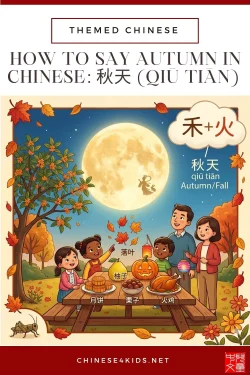
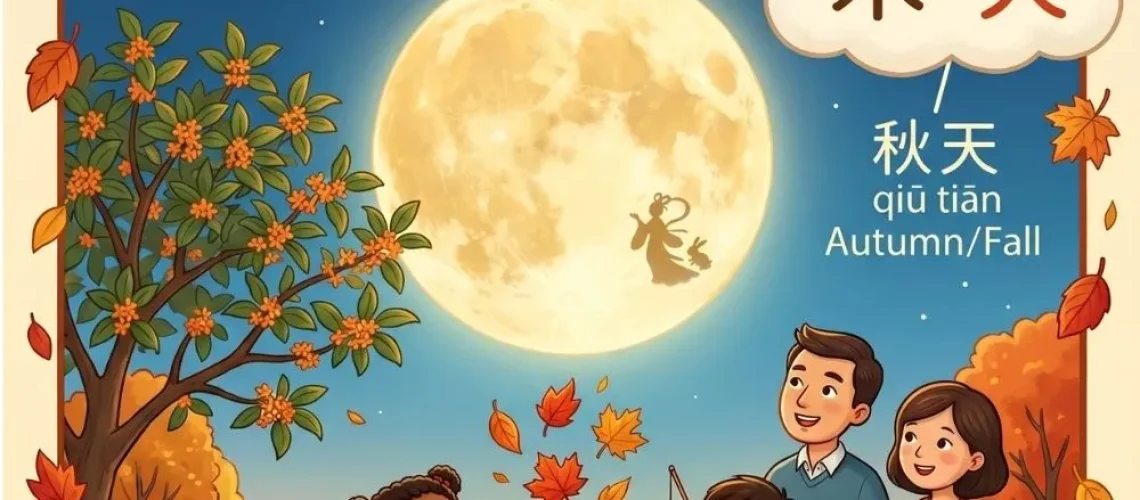
Autumn is a season of colour, harvest, and celebration.
In Chinese culture, autumn brings the most poetic festival of the year — the Mid-Autumn Festival, when families gather under the full moon to share mooncakes and admire the night sky. It is also the season of falling leaves, cool mornings, harvest food, and the return to school.
For children learning Mandarin, autumn is one of the richest vocabulary themes of the year. The words connect to nature, festivals, food, and autumn activities that children in Chinese communities around the world all share.
Quick Answer: How to Say Autumn in Chinese
| English | Chinese | Pinyin |
|---|---|---|
| Autumn / Fall | 秋天 | qiū tiān |
| Autumn (formal) | 秋季 | qiū jì |
| Mid-Autumn Festival | 中秋节 | Zhōngqiūjié |
| Autumn wind | 秋风 | qiū fēng |
| Autumn rain | 秋雨 | qiū yǔ |
| Autumn harvest | 秋收 |
Autumn in Chinese is 秋天 (qiū tiān). Both “autumn” and “fall” translate to 秋天 in Mandarin — Chinese has only one word for the season. The word 天 means sky or day, giving the feeling of “the cool, clear days of autumn.”
Autumn in Chinese is 秋天 (qiū tiān)
- Both “fall” and “autumn” translate to 秋天 in Mandarin
- The Mid-Autumn Festival is 中秋节 (Zhōngqiūjié)
- Key autumn words include 秋风 (autumn breeze), 秋雨 (autumn rain), 落叶 (falling leaves), and 月饼 (mooncake)
- Autumn is one of the most culturally significant seasons in Chinese tradition — home to the Mid-Autumn Festival and the harvest season
- For overseas families, autumn also brings Halloween (万圣节) and Thanksgiving (感恩节) — both covered in this guide
What Is Autumn in Chinese?
Autumn in Chinese is 秋天 (qiū tiān). It is the third of the four seasons, sitting between summer (夏天) and winter (冬天). In China, autumn runs from September through November. It is the season of harvest, falling leaves, cool and crisp air, and the Mid-Autumn Festival.
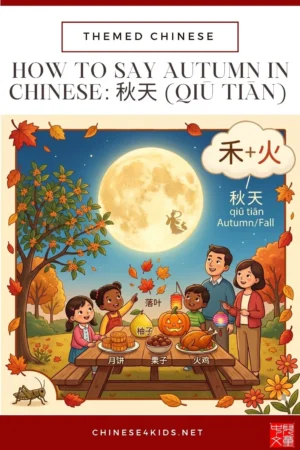
The character 秋 originally depicted a cricket — the sound of crickets chirping was the ancient Chinese signal that summer was ending. The modern character combines 禾 (grain) and 火 (fire), representing farmers burning fields after the harvest. Both “autumn” and “fall” in English translate to the same Chinese word: 秋天.
→ Learn all four seasons: What Are the Four Seasons in Chinese? 春夏秋冬
Definition
Autumn in Chinese: 秋天 (qiū tiān)
Character: 秋
Pinyin: qiū (1st tone) + tiān (1st tone)
Meaning: The third of the four seasons. In China, autumn runs from September through November. It is the season of harvest, falling leaves, cool air, and the Mid-Autumn Festival.
The four seasons together: 春夏秋冬 (chūn xià qiū dōng) — spring, summer, autumn, winter
Autumn vs Fall in Chinese
In English, the season has two names — “autumn” (used in British English and formal writing) and “fall” (commonly used in American English). Many parents searching for Chinese vocabulary will search for one or the other.
In Chinese, there is only one word for both:
| English | Chinese | Pinyin |
|---|---|---|
| Autumn | 秋天 | qiū tiān |
| Fall | 秋天 | qiū tiān |
Whether you say “autumn” or “fall” in English, the Chinese is always 秋天.
This makes it simple for children to learn. One season. One name.
What Does 秋 Mean?
The character 秋 has one of the most vivid and surprising origin stories of all the season characters.
In its earliest form — carved on oracle bones thousands of years ago — 秋 was a pictograph of a cricket. The sound of crickets was the ancient Chinese signal that summer was ending and the cool season was arriving.
Later, the character was reanalysed. The modern character 秋 is a left-right compound:
| Component | Chinese | Pinyin | Meaning |
|---|---|---|---|
| 禾 | hé | hé | grain, cereal crops |
| 火 | huǒ | huǒ | fire, flame |
The image: grain ripening in the fields, and farmers burning the stubble after harvest to kill pests. A season of completion and renewal.
There is also a beautiful visual memory hook: the fiery reds and oranges of autumn leaves look exactly like 火 — fire. Autumn itself looks like the right side of the character.
Teaching tip: Show children the character 秋. Point out 禾 on the left (like a wheat stalk) and 火 on the right (fire). Ask: “What colour are autumn leaves? Do they look like fire?” This visual connection makes the character unforgettable.
Chinese Autumn Symbols
Autumn in Chinese culture is associated with a rich set of symbols and images. These are the most important for children to know:
| Symbol | Chinese | Pinyin | Meaning |
|---|---|---|---|
| Moon goddess | 嫦娥 | Cháng’é | The immortal woman who lives on the moon |
| Jade rabbit | 玉兔 | Yùtù | The rabbit that lives on the moon and pounds medicine |
| Mooncake | 月饼 | yuèbǐng | The iconic food of Mid-Autumn Festival |
| Osmanthus flower | 桂花 | guìhuā | Blooms in autumn; associated with the moon and Mid-Autumn Festival |
| Pomelo | 柚子 | yòuzi | Traditional Mid-Autumn Festival fruit |
| Falling leaves | 落叶 | luòyè | The defining image of autumn |
| Cricket | 蟋蟀 | xīshuài | The original inspiration for the character 秋 |
The osmanthus flower (桂花) deserves special mention. It blooms in autumn across China and fills the air with a sweet fragrance. It is deeply associated with the Mid-Autumn Festival and the moon — in legend, a vast osmanthus tree grows on the moon itself. 桂花糕 (osmanthus cake) and 桂花茶 (osmanthus tea) are popular autumn treats.
🔊 Listen and Repeat
秋天 — qiū tiān (autumn)
凉快 — liángkuai (cool)
落叶 — luòyè (falling leaves)
月饼 — yuèbǐng (mooncake)
中秋节 — Zhōngqiūjié (Mid-Autumn Festival)
南瓜 — nánguā (pumpkin)
Listen and repeat each word out loud. 秋 is 1st tone — long and flat, like holding a steady note.
Autumn Weather in Chinese
Autumn air is crisp and clear. After the heat of summer, the cool mornings and golden light of autumn make it one of the most pleasant seasons to spend time outdoors.
| Chinese | Pinyin | English |
|---|---|---|
| 天气 | tiānqì | weather |
| 凉快 | liángkuai | cool and pleasant |
| 凉爽 | liángshuǎng | refreshingly cool |
| 干燥 | gānzào | dry |
| 刮风 | guā fēng | windy |
| 秋风 | qiū fēng | autumn breeze |
| 下雨 | xià yǔ | raining |
| 秋雨 | qiū yǔ | autumn rain |
| 阴天 | yīn tiān | overcast / grey sky |
| 落叶 | luòyè | falling leaves |
A famous Chinese saying about autumn rain:
一层秋雨一层凉。
Yī céng qiū yǔ yī céng liáng.
“With every autumn shower, it gets a little cooler.”
Useful daily question:
今天天气怎么样?
Jīntiān tiānqì zěnme yàng?
“What is the weather like today?”
On a cool autumn morning:
今天很凉快,是秋天了!
Jīntiān hěn liángkuai, shì qiūtiān le!
“It’s cool today — autumn is here!”
→ Learn more weather vocabulary: Weather in Chinese — Talk About the Weather with Kids
Autumn Clothes in Chinese
As temperatures drop, layering becomes part of daily life — and a perfect daily vocabulary opportunity.
| Chinese | Pinyin | English |
|---|---|---|
| 毛衣 | máoyī | sweater / jumper |
| 外套 | wàitào | jacket / coat |
| 长裤 | chángkù | long trousers |
| 牛仔裤 | niúzǎikù | jeans |
| 靴子 | xuēzi | boots |
| 围巾 | wéijīn | scarf |
| 帽子 | màozi | hat |
| 手套 | shǒutào | gloves |
| 雨衣 | yǔyī | raincoat |
| 运动鞋 | yùndòngxié | trainers / sneakers |
Autumn clothes tip: Mornings are cold; afternoons can still be warm. This makes autumn excellent for practising opposites:
早上冷,下午暖和。
Zǎoshang lěng, xiàwǔ nuǎnhuo.
Cold in the morning, warm in the afternoon.
Resource: Our Seasonal Clothes Theme Chinese Learning Pack covers all four seasons with flashcards, a word wall poster, vocabulary quiz, and audio — one download for the whole year.
Autumn Activities in Chinese
Autumn invites families outside for walks, harvests, and festivals. These are some of the most culturally meaningful activities in the Chinese autumn calendar.
| Chinese | Pinyin | English |
|---|---|---|
| 赏月 | shǎng yuè | admire the moon |
| 赏叶 | shǎng yè | admire the autumn leaves |
| 捡落叶 | jiǎn luòyè | collect fallen leaves |
| 爬山 | pá shān | go hiking |
| 踏秋 | tà qiū | autumn outing (walking in the autumn scenery) |
| 摘苹果 | zhāi píngguǒ | apple picking |
| 摘南瓜 | zhāi nánguā | pumpkin picking |
| 放风筝 | fàng fēngzhēng | fly a kite |
| 野餐 | yěcān | picnic |
| 看烟火 | kàn yānhuǒ | watch fireworks |
赏叶 (shǎng yè) — admiring the autumn leaves — is a beloved tradition shared across Chinese communities worldwide. Taking a child to see red and gold leaves and naming the colours in Chinese is one of the simplest and most beautiful autumn vocabulary activities.
秋天的叶子红了!
Qiūtiān de yèzi hóng le!
The autumn leaves have turned red!
Autumn Festivals in Chinese
中秋节 — Mid-Autumn Festival
中秋节 (Zhōngqiūjié) is the most poetic festival in the Chinese calendar. It falls on the 15th day of the 8th lunar month — when the moon is at its fullest and brightest — usually in September or October.
The name 中秋 means “middle of autumn” — the midpoint of the autumn season, when the harvest moon rises.
The festival is associated with the legend of 嫦娥 (Cháng’é), the moon goddess, who drank an immortality elixir and floated up to live on the moon forever. On Mid-Autumn night, families gaze at the moon and think of her.
The three central activities of Mid-Autumn Festival are:
- Family reunion dinner (家人团聚, jiārén tuánjù) — gathering to eat together
- Admiring the moon (赏月, shǎng yuè) — watching the full moon rise
- Eating mooncakes (吃月饼, chī yuèbǐng) — the festival’s iconic food
| Chinese | Pinyin | English |
|---|---|---|
| 中秋节 | Zhōngqiūjié | Mid-Autumn Festival |
| 中秋节快乐 | Zhōngqiūjié kuàilè | Happy Mid-Autumn Festival |
| 月饼 | yuèbǐng | mooncake |
| 灯笼 | dēnglong | lantern |
| 嫦娥 | Cháng’é | the moon goddess |
| 玉兔 | Yùtù | the jade rabbit (lives on the moon) |
| 赏月 | shǎng yuè | admire the moon |
| 团圆 | tuányuán | family reunion |
| 柚子 | yòuzi | pomelo (traditional festival fruit) |
| 孔明灯 | Kǒngmíng dēng | sky lantern |
Cultural note for parents: Mid-Autumn Festival is one of the most widely celebrated Chinese festivals outside mainland China — observed in Taiwan, Hong Kong, Singapore, Malaysia, Vietnam, and Chinese communities worldwide. The full moon is the same moon your child can see from anywhere in the world. Stepping outside on Mid-Autumn night and looking up together is one of the simplest and most powerful ways to connect children to their Chinese heritage.
>→ Read our celebration guide: Chinese Mid-Autumn Festival Celebration → All Chinese festivals: Celebrations, Festivals, and Special Occasions in Chinese Culture
Looking for Mid-Autumn Festival printable activities? Our Fall Theme Chinese Learning Pack includes themed autumn worksheets, flashcards, and activities — perfect for the festival season.
Autumn Food in Chinese
Autumn is harvest season. The food is warm, earthy, and abundant — perfect for expanding vocabulary at the dinner table.
螃蟹 (pángxiè — crab) is one of China’s most celebrated autumn foods. Hairy crabs (大闸蟹, dàzháxiè) from Yangcheng Lake are considered a seasonal delicacy, eaten only in autumn when they are at their best. Autumn crab season is a topic of genuine excitement in Chinese food culture.
Food vocabulary tip: Lay out autumn fruits and vegetables on the table and name them in Chinese together before meals: 苹果!南瓜!葡萄!Even 30 seconds of naming is effective daily practice.
🍂 Practise these autumn words with printable flashcards and coloring worksheets → Color and Learn Chinese Vocabulary Workbook — Seasons
| Chinese | Pinyin | English |
|---|---|---|
| 苹果 | píngguǒ | apple |
| 南瓜 | nánguā | pumpkin |
| 葡萄 | pútao | grapes |
| 柚子 | yòuzi | pomelo |
| 栗子 | lìzi | chestnut |
| 月饼 | yuèbǐng | mooncake |
| 螃蟹 | pángxiè | crab (a famous autumn delicacy) |
| 红薯 | hóngshǔ | sweet potato |
| 玉米 | yùmǐ | corn |
| 热汤 | rè tāng | hot soup |
Halloween and Thanksgiving in Chinese
For heritage families living outside China — especially in the US, Canada, UK, and Australia — autumn also brings Halloween and Thanksgiving. These are wonderful opportunities to layer Chinese vocabulary into familiar celebrations.
万圣节 — Halloween
万圣节 (Wànshèngjié) is the Chinese name for Halloween. The name means “Festival of All Saints.”
| Chinese | Pinyin | English |
|---|---|---|
| 万圣节 | Wànshèngjié | Halloween |
| 南瓜灯 | nánguā dēng | Jack-o’-lantern (pumpkin lantern) |
| 鬼 | guǐ | ghost |
| 怪物 | guàiwù | monster |
| 蜘蛛 | zhīzhū | spider |
| 蝙蝠 | biānfú | bat |
| 女巫 | nǚwū | witch |
| 糖果 | tángguǒ | candy / sweets |
| 变装 | biànzhuāng | dress up in costume |
| 不给糖就捣蛋 | bù gěi táng jiù dǎodàn | trick or treat |
→ Resource: Activities for Learning Chinese at Halloween — Halloween-themed Chinese learning activities for kids
感恩节 — Thanksgiving
感恩节 (Gǎn’ēnjié) is the Chinese name for Thanksgiving. The name means “Festival of Gratitude.”
| Chinese | Pinyin | English |
|---|---|---|
| 感恩节 | Gǎn’ēnjié | Thanksgiving |
| 感恩 | gǎn’ēn | gratitude / to be thankful |
| 火鸡 | huǒjī | turkey |
| 南瓜派 | nánguā pài | pumpkin pie |
| 家人 | jiārén | family |
| 团聚 | tuánjù | reunion / gather together |
| 丰收 | fēngshōu | abundant harvest |
| 感谢 | gǎnxiè | to thank |
→ Resource: Thanksgiving in Chinese — Thanksgiving vocabulary and activities
→ Product: Thanksgiving Theme Chinese Learning Pack for Kids — themed flashcards, worksheets, and activities
Sentence Patterns for Autumn
Practise these sentences with your child during real autumn moments.
Talk about autumn:
秋天来了!(Qiūtiān lái le!) — Autumn is here!
我喜欢秋天。(Wǒ xǐhuān qiūtiān.) — I like autumn.
秋天很凉快。(Qiūtiān hěn liángkuai.) — Autumn is cool.
秋天是我最喜欢的季节。(Qiūtiān shì wǒ zuì xǐhuān de jìjié.) — Autumn is my favourite season.
about the weather:
今天很凉快。(Jīntiān hěn liángkuai.) — Today is nice and cool.
秋风吹来了。(Qiū fēng chuī lái le.) — The autumn breeze has arrived.
树叶变黄了。(Shùyè biàn huáng le.) — The leaves have turned yellow.
Talk about activities:
我们去捡落叶吧!(Wǒmen qù jiǎn luòyè ba!) — Let’s go collect fallen leaves!
今晚我们赏月。(Jīnwǎn wǒmen shǎng yuè.) — Tonight we are going to admire the moon.
我想吃月饼!(Wǒ xiǎng chī yuèbǐng!) — I want to eat mooncakes!
about getting dressed:
秋天要穿毛衣。(Qiūtiān yào chuān máoyī.) — Wear a sweater in autumn.
今天要带外套。(Jīntiān yào dài wàitào.) — Bring a jacket today.
Tips for Teaching Autumn Vocabulary
Autumn is rich in sensory detail — colour, texture, smell, sound. All of these are vocabulary opportunities waiting to happen.
1. Leaf walk with Chinese labels. Go outside and collect fallen leaves together. Back home, describe them in Chinese: 红色 (red), 黄色 (yellow), 橙色 (orange), 大 (big), 小 (small).
2. Mid-Autumn Festival moon night. Go outside on Mid-Autumn night and look at the moon together. Say: 今晚的月亮好圆!(Jīnwǎn de yuèliàng hǎo yuán! — “The moon is so round tonight!”) Eat mooncakes and talk about 嫦娥. The memory will last for years.
3. Harvest table. Lay out autumn fruits and vegetables — 苹果, 南瓜, 葡萄 — and name them together in Chinese before meals. Even 30 seconds of naming is effective daily practice.
4. Connect Halloween and Thanksgiving. For overseas families, use familiar western celebrations to bring Chinese vocabulary in naturally. Carving a 南瓜灯 together while talking about 鬼 and 怪物 makes both languages feel at home in your household.
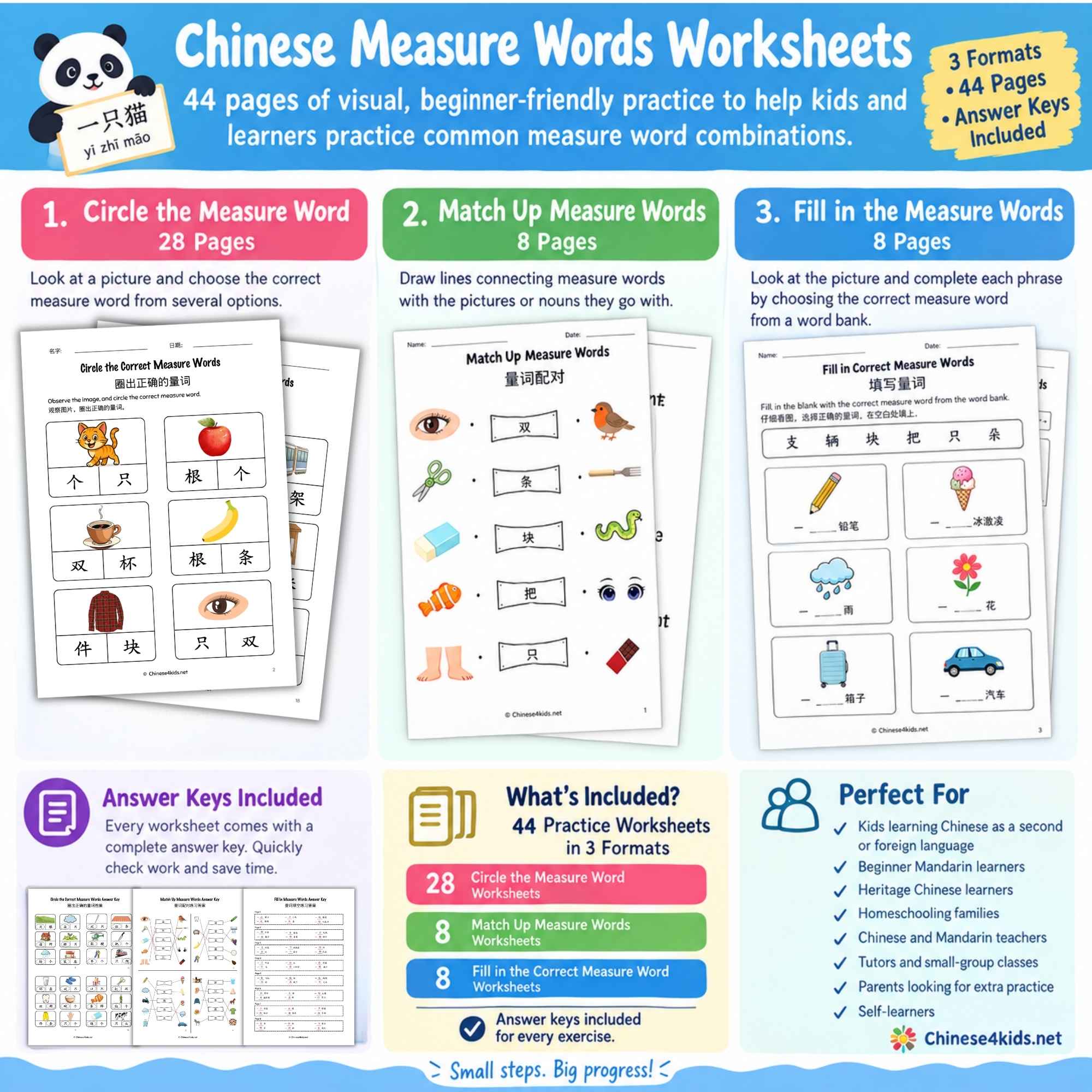
5. Autumn coloring and worksheets. The cooler weather brings children back inside. Coloring and vocabulary worksheets are a natural fit for autumn afternoons — especially when the theme matches what children are seeing outside.
Resources for Autumn Chinese Vocabulary
🆓 Free Articles on Chinese4kids.net
- What Are the Four Seasons in Chinese? 春夏秋冬 — hub article for all four seasons
- Fall into Autumn with Fun Mandarin Chinese Learning Activities — autumn activity ideas
- Chinese Mid-Autumn Festival Celebration — festival traditions and books
- Activities for Learning Chinese at Halloween — Halloween Chinese vocabulary and activities
- Thanksgiving in Chinese — Thanksgiving vocabulary
- Weather in Chinese — Talk About the Weather with Kids
- Celebrations, Festivals, and Special Occasions in Chinese Culture
🛍️ Printable Products (Instant Download)
- Color and Learn Chinese Vocabulary Workbook — Seasons — all four seasons including autumn, with coloring sheets and a mini book
- Fall Theme Chinese Learning Pack — themed autumn Chinese learning activities and worksheets
- Thanksgiving Theme Chinese Learning Pack for Kids — Thanksgiving vocabulary, flashcards, and activities
- Seasonal Clothes Theme Chinese Learning Pack — flashcards, word wall, quiz, audio for all four seasons
- Chinese Monthly Coloring Pages (12 months) — September, October, and November pages cover autumn themes
📚 Membership & Courses
- Chinese4kids Membership — access all worksheets, flashcard library, and coloring pages
- Speak Chinese with Kids Course — for parents who want to use Mandarin naturally at home
Quick Reference: Autumn in Chinese
| English | Chinese | Pinyin | Tone |
|---|---|---|---|
| Autumn / Fall | 秋天 | qiū tiān | 1st + 1st |
| Mid-Autumn Festival | 中秋节 | Zhōngqiūjié | 1st + 1st + 2nd |
| Cool | 凉快 | liángkuai | 2nd + neutral |
| Dry | 干燥 | gānzào | 1st + 4th |
| Falling leaves | 落叶 | luòyè | 4th + 4th |
| Mooncake | 月饼 | yuèbǐng | 4th + 3rd |
| Pumpkin | 南瓜 | nánguā | 2nd + 1st |
| Apple | 苹果 | píngguǒ | 2nd + 3rd |
| Harvest | 丰收 | fēngshōu | 1st + 1st |
| Lantern | 灯笼 | dēnglong | 1st + neutral |
Frequently Asked Questions
How do you say autumn in Chinese?
Autumn in Chinese is 秋天 (qiū tiān). In American English, the season is also called “fall” — but in Chinese, there is only one word for both: 秋天.
How do you say fall in Chinese?
Fall in Chinese is 秋天 (qiū tiān) — the same word as “autumn.” Chinese uses a single word for the season, whether you call it fall or autumn in English..
What does 秋天 mean?
秋天 (qiū tiān) means autumn. 秋 means autumn, and 天 means sky or day. Together, 秋天 gives the feeling of “the clear, cool days of autumn.”
What does the character 秋 mean?
The character 秋 originally showed a picture of a cricket — because the sound of crickets signals the start of autumn in Chinese culture. The modern character is made up of 禾 (grain) on the left and 火 (fire) on the right, representing farmers burning the fields after harvest to kill pests. The fiery red colours of autumn leaves are also a natural memory hook for this character.
What is the Mid-Autumn Festival?
The Mid-Autumn Festival is 中秋节 (Zhōngqiūjié). It falls on the 15th day of the 8th lunar month — usually in September or October — when the moon is at its fullest. Families gather for a reunion dinner, eat mooncakes (月饼), carry lanterns, and admire the full moon. It is one of the most important festivals in Chinese culture, celebrated across China and Chinese communities worldwide.
How do you say mooncake in Chinese?
Mooncake in Chinese is 月饼 (yuèbǐng). 月 means moon, and 饼 means flat cake or biscuit. Mooncakes are the iconic food of the Mid-Autumn Festival — round like the full moon, filled with lotus paste, red bean, or other fillings.
How do you say Halloween in Chinese?
Halloween in Chinese is 万圣节 (Wànshèngjié), meaning “Festival of All Saints.” Common Halloween vocabulary includes 南瓜灯 (pumpkin lantern / jack-o’-lantern), 鬼 (ghost), 怪物 (monster), and 糖果 (candy).
How do you say Thanksgiving in Chinese?
Thanksgiving in Chinese is 感恩节 (Gǎn’ēnjié), meaning “Festival of Gratitude.” Key words include 火鸡 (turkey), 南瓜派 (pumpkin pie), and 感谢 (to thank / express gratitude).
How do you say “autumn is cool” in Chinese?
“Autumn is cool” in Chinese is 秋天很凉快 (Qiūtiān hěn liángkuai). You can also say 今天很凉快 (Jīntiān hěn liángkuai) — “Today is cool” — when getting dressed on a fresh autumn morning.
Summary
Autumn in Chinese — 秋天 (qiū tiān) — is one of the most culturally rich vocabulary themes in Mandarin for children.
From the falling leaves and crisp cool air to mooncakes under a full moon, autumn connects language to nature, food, and celebrations that children feel and remember.
Start with 秋天 and the weather (凉快, 落叶). Add the Mid-Autumn Festival vocabulary (月饼, 赏月). For families abroad, bring in Halloween (南瓜灯, 鬼) and Thanksgiving (感恩节, 火鸡). Let real autumn moments do the teaching.
你喜欢秋天吗?Does your child love autumn? Tell us in the comments!
If you like this article, share it