How Do You Feel? — Mandarin Emotions Flashcard Set
€ 5,00
Help your child find the words for their feelings in Mandarin. Ten emotion words, from happy and excited to nervous and bored, come with picture cards, matching character cards and short sentences about everyday moments. Pinyin and English are included, so you can learn alongside your child, even if you don’t speak Mandarin. Ages 4–10.
Learn 10 feelings in Mandarin and say how you feel
Children have big feelings, and they feel better when they can name them. If your child can already say “I’m nervous” or “I’m bored” in English, this set gives them the Mandarin words to go with them. It goes beyond happy and sad to the feelings school-age children really have. They meet each word two ways: first on its own, then in a sentence about a moment they might recognise.
What’s inside
Word flashcards (PDF, 20 cards)
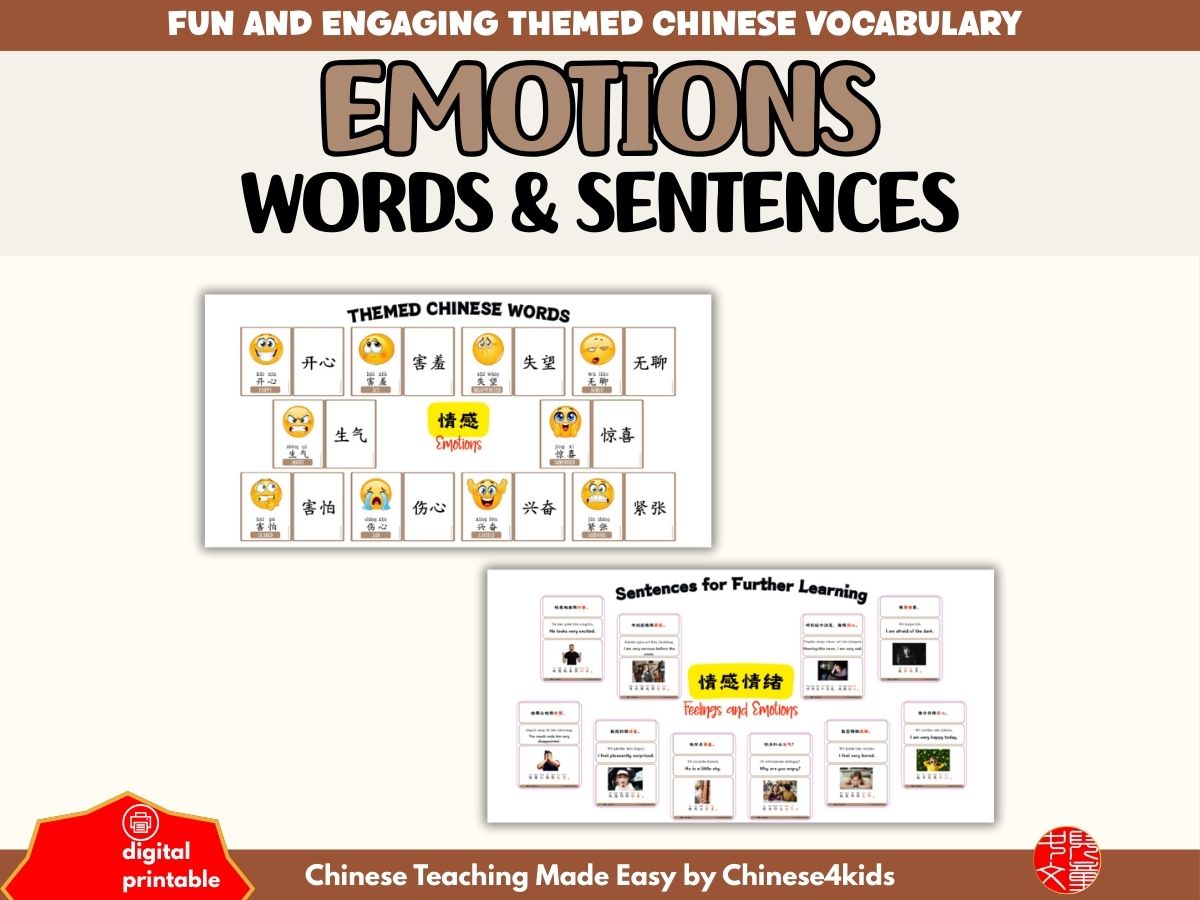
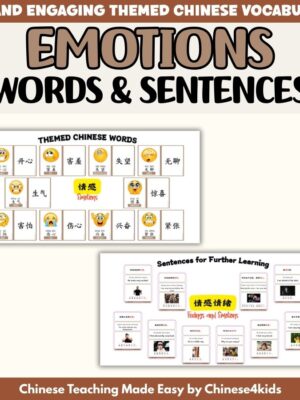
Each of the 10 picture cards shows an expressive face with the pinyin, the Chinese word and the English word: 开心 (happy), 兴奋 (excited), 紧张 (nervous), 害怕 (scared), 伤心 (sad), 失望 (disappointed), 惊喜 (surprised), 害羞 (shy), 生气 (angry) and 无聊 (bored). The 10 matching cards show the Chinese word on its own. Your child can pair them with the faces and check their own answers, with no grown-up needed.
Sentence cards (PDF, 10 cards)
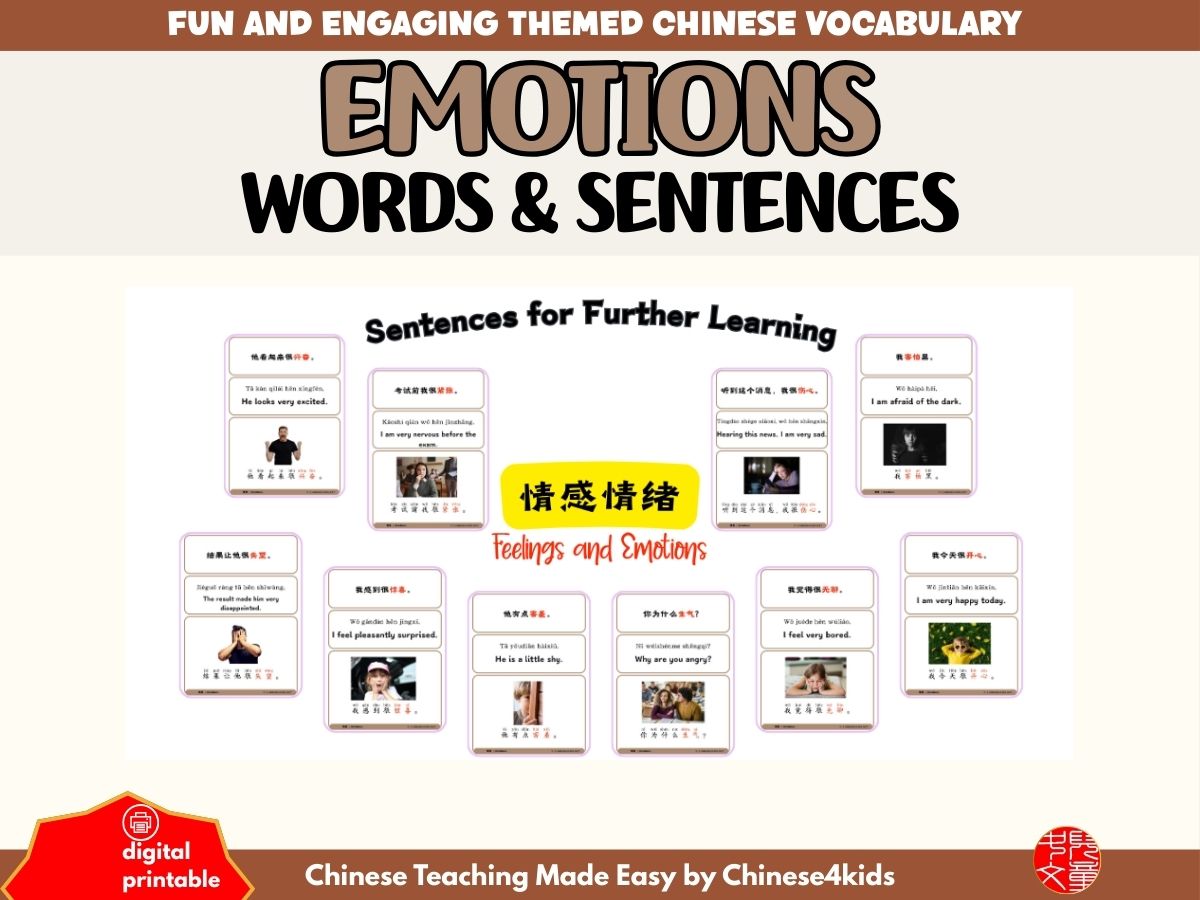
Each card uses one feeling in a short sentence about a real moment, with a photo, pinyin and an English translation. The feeling word is highlighted in red. A few of the sentences:
我今天很开心。 (I am very happy today.)
考试前我很紧张。 (I am very nervous before the exam.)
我害怕黑。 (I am afraid of the dark.)
他有点害羞。 (He is a little shy.)
你为什么生气? (Why are you angry?)
我觉得很无聊。 (I feel very bored.)
The other sentences are about feeling excited, sad, disappointed and pleasantly surprised. Along the way your child will also meet a few ways to say how someone feels, such as 很, 有点, 觉得 and 感到, in real sentences.
Ways to enjoy the cards
Show your face: hold up a picture card and let your child make that face and say the word. The pinyin is on the card if you need a hint.
Feelings check-in: at the end of the day, let your child pick the card that fits how they feel. Any card is a good answer.
Match: pair each picture card with its Chinese word card.
How does he feel? read a sentence card together, then talk about when you last felt that way.
Start with two or three words if that feels right. Five minutes a day is plenty, and tones don’t have to be perfect at the start. Seeing and saying the words a little each day helps them stick.
Who it’s for
Children aged 4–10, and the parents, grandparents, homeschoolers and teachers who learn alongside them. You don’t need to speak Mandarin to use it.
Good to know
This is a digital download of 2 PDFs. Nothing is shipped.
Print at home or at a print shop, then cut out the cards.
License: personal use and one classroom only. Please don’t distribute or share the files.
Related products
What Do You Study? School Subjects in Mandarin: Flashcard Set to Pinterest (opens in a new window)





 How Do You Feel? — Mandarin Emotions Flashcard Set


